English
 Arabic
 Français
 Spanish
 Portuguese
 Deutsch
 Turkish
 Dutch
Dutch
 Italiano
 Russian
 Romaian
 Portuguese (Brazil)
 Greek
Greek
 Réunionnais
 India
India
Striker Spotlight: Unlocking Mayra Ramírez's TOTS Live Card in FC 24
Jeux |
2024-04-21 05:48:38
 Entreprises locales
 Runsound music
 La silver économie
 Affiliation Matrice 3x9
 Récompenses
 Babarun (BBRN)
 Calculez vos calories
 Collab Influenceurs
 Événementiels
 Procaly
 Affiliation
 Prêts Immobiliers

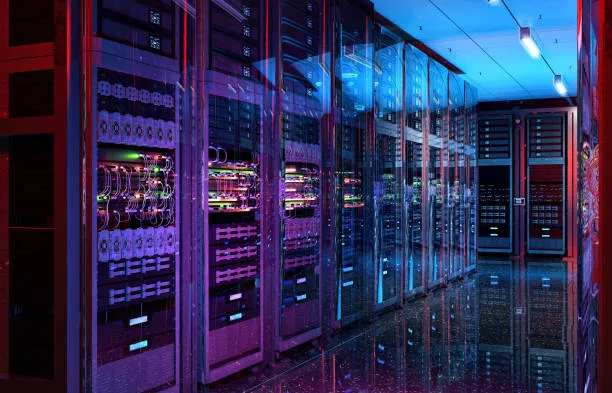
India's digital economy is expanding rapidly as enterprises, cloud providers, government organizations, and telecom companies continue investing in modern IT infrastructure. This transformation has increased the need for reliable physical systems capable of supporting high-density computing environments. Among these essential components, data center racks have become a critical foundation for ensuring efficient equipment organization, cooling, cable management, and long-term operational scalability.
The India Data Center Racks Market reflects the country's accelerating investment in digital infrastructure. According to an industry analysis published by MarkNtel Advisors, the market was valued at USD 211 million in 2025 and is projected to grow from USD 227 million in 2026 to USD 746 million by 2032, registering a CAGR of around 21.93% during the forecast period. Organizations are increasingly adopting data center infrastructure solutions that improve equipment density, airflow efficiency, and operational flexibility.
The rapid adoption of cloud computing has significantly increased demand for advanced server infrastructure across India. Businesses are migrating workloads to cloud platforms while maintaining hybrid IT environments that require scalable and standardized rack systems. As new hyperscale and colocation facilities are developed, operators are investing in racks designed to support higher equipment density and future expansion without disrupting existing operations.
Artificial intelligence, machine learning, and high-performance computing applications consume greater processing power than traditional enterprise workloads. These technologies require advanced rack designs capable of supporting heavier equipment loads, enhanced airflow management, and higher power distribution. Modern rack solutions are evolving to accommodate GPU-intensive deployments while maintaining operational efficiency across increasingly complex computing environments. According to the International Energy Agency, AI-driven data centers are expected to significantly influence global electricity demand over the coming years.
Organizations increasingly prefer modular rack systems because they simplify expansion while minimizing infrastructure modifications. Standardized rack architectures enable faster deployment, easier maintenance, and improved cable management. This flexibility is particularly valuable for colocation providers serving multiple customers with varying infrastructure requirements. Modular designs also support evolving hardware technologies without requiring complete facility redesigns.
Power consumption remains one of the largest operational expenses for data centers. Consequently, rack manufacturers are developing solutions that enhance airflow, support efficient cooling strategies, and optimize equipment placement. These innovations help operators reduce energy usage while maintaining system reliability. Efficient rack infrastructure also aligns with broader sustainability initiatives as organizations seek to lower operational costs and environmental impact. The Uptime Institute has consistently identified power efficiency and operational resilience as major priorities for modern data center operators.
India's expanding digital ecosystem, increasing cloud adoption, AI-driven computing requirements, and ongoing investments in hyperscale facilities are expected to sustain demand for advanced rack infrastructure throughout the coming years. As enterprises continue modernizing their IT environments, flexible, scalable, and energy-efficient rack systems will remain an essential component supporting the country's rapidly evolving digital infrastructure.