English
 Arabic
 Français
 Spanish
 Portuguese
 Deutsch
 Turkish
 Dutch
Dutch
 Italiano
 Russian
 Romaian
 Portuguese (Brazil)
 Greek
Greek
 Réunionnais
 India
India
Biopolymer Coatings Market to Hit $2.0 Billion By 2030
Blog |
2023-09-20 06:28:44
 Entreprises locales
 Runsound music
 La silver économie
 Affiliation Matrice 3x9
 Récompenses
 Babarun (BBRN)
 Calculez vos calories
 Collab Influenceurs
 Événementiels
 Procaly
 Affiliation
 Prêts Immobiliers

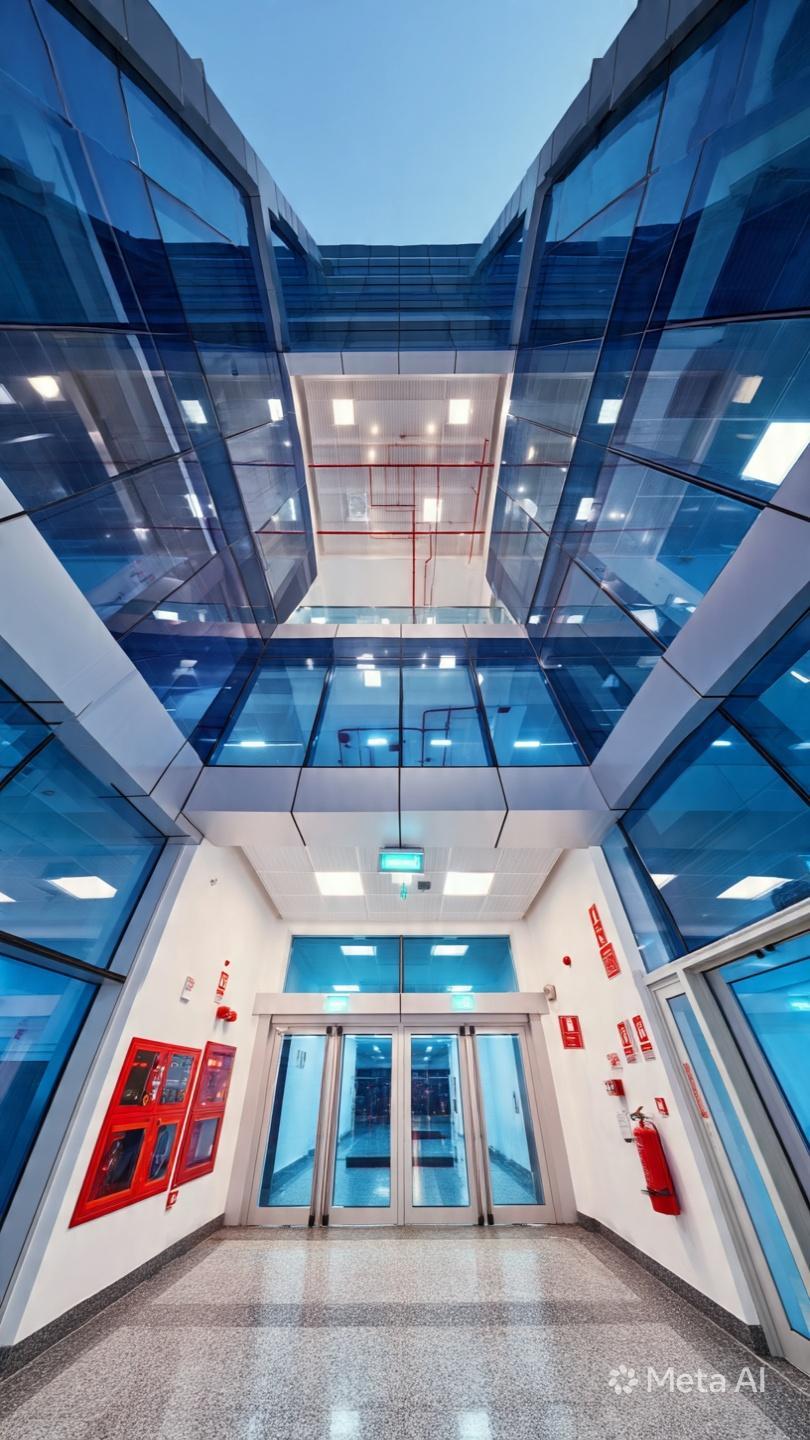
Every service penetration cut through a fire-rated wall for a cable, pipe, or duct is a potential gap in that wall's fire resistance unless it is sealed correctly. Passive firestopping UAE requirements exist precisely because these small, easily overlooked details determine whether compartmentation actually works when it matters.
Passive fire protection relies on construction elements, rather than active detection or suppression, to contain fire and smoke within a defined compartment. Fire-rated walls, floors, and ceilings only maintain their rating if every penetration through them, whether for mechanical, electrical, plumbing, or data services, is sealed with a tested and listed firestop system matching the wall's rated performance.
Fire-resistive joints, including head-of-wall, wall-to-wall, and floor-to-floor connections, fall under the same logic. A rated wall with an unsealed joint at the slab edge above it has effectively lost part of its intended protection, even though the wall itself looks complete.
Firestopping problems rarely stem from a single dramatic error; they accumulate from small shortcuts across a project.
● Penetrations get sealed with generic sealant or expanding foam instead of a tested and listed firestop system matching the assembly's fire rating
● Trades install additional cables or pipes after initial firestop work is complete, without resealing the penetration to match
● Firestop installation gets covered by ceiling tiles, cladding, or finishes before inspection, making later verification difficult without invasive checks
Because these issues are invisible once finishes are installed, passive firestopping UAE compliance depends heavily on catching problems during construction, which is exactly why many project teams bring in fire safety consultants in UAE before the first penetration is sealed rather than after.
Recent regulatory updates have tightened who can legitimately install, supply, or inspect firestop systems. Class G contractors must now hold certification through recognised programmes such as FM 4991 Approved or the UL Qualified Firestop Contractor Program. Suppliers issuing Engineering Judgements for non-standard configurations must be qualified under the UL Technical Evaluation Developer Program, and registered Houses of Expertise reviewing or inspecting this work must include engineers who have completed the IFC Firestop Special Inspector Program.
These requirements exist because firestop failures are almost impossible to detect visually once a project is complete, so the regulatory response has focused on tightening who is qualified to install and verify the work in the first place, rather than relying solely on after-the-fact inspection.
Third-party inspection of passive fire protection systems, typically carried out by fire safety consultants in UAE accredited to ISO 17020, checks installed firestopping against its tested and listed system reference, confirming the correct product, application method, and depth were used for the specific penetration type and fire rating involved. Inspectors accredited to ISO 17020 document each finding against a defined acceptance criterion rather than a general visual pass, which gives both the client and Civil Defence a defensible record.
Timing matters here more than in almost any other passive fire discipline. Inspecting firestopping before it is concealed by finishes is the only reliable way to verify installation quality without cutting into completed work, so scheduling inspection milestones around the construction sequence, rather than around a generic project timeline, is essential.
Passive firestopping UAE compliance is easy to underestimate precisely because the work itself is small-scale and repetitive across hundreds of penetrations on a typical building. Getting it right depends on qualified contractors, proper Engineering Judgements for non-standard details, and independent inspection scheduled before finishes go up, not after a problem surfaces during a later fire safety audit.
If your project has firestopping work approaching completion, it is worth confirming inspection has been scheduled before ceilings and finishes close it off, and engaging fire safety consultants in UAE who hold current ISO 17020 accreditation for this scope.
The passive method of fire protection involves the use of building components such as rated walls and firestopping, whereas the active method of fire protection involves systems that detect and react to a fire occurrence.
This is because the fire resistance of the penetration relies on the specific combination of the penetrating item, the type of wall, and the sealing material used, and failure to use the same combination without engineering judgement may affect the fire resistance of the penetration.
The class G contractor certification involves contractors who have been certified using the recognized programs, such as FM 4991 Approved or UL Qualified Firestop Contractor Program.
Such inspections may involve invasive tests, and hence they should be carried out before the penetration is covered.
The penetration should be resealed to ensure that it resembles the original tested system.