Kegel Exercises: A Complete How-To Guide for Women

Kegel exercises have become one of the most recommended wellness practices for improving pelvic health, bladder control, and overall body strength. Whether you are a young woman, a new mother, or entering menopause, these simple exercises can help strengthen the muscles that support your bladder, uterus, and bowel.

In recent years, interest in Kegel exercises for women and Pelvic floor exercises has increased dramatically because more women are learning how important pelvic health is for daily comfort and long-term wellness. These exercises are easy to perform, require no equipment, and can be done almost anywhere.

This guide explains everything you need to know about Kegel exercises, including their benefits, techniques, mistakes to avoid, and how they compare with yoga and other wellness routines.


What Are Kegel Exercises?

Kegel exercises are muscle contractions designed to strengthen the pelvic floor muscles. The pelvic floor is a group of muscles that support the bladder, uterus, and rectum. When these muscles become weak, women may experience issues such as urinary leakage, reduced core stability, or discomfort after childbirth.

Doctors and physiotherapists often recommend Pelvic floor exercises as part of a healthy lifestyle because they help improve muscle control and support reproductive health.

The exercises were first introduced by Dr. Arnold Kegel in the 1940s as a non-surgical method to improve pelvic muscle strength.


Why Pelvic Floor Health Matters

Your pelvic floor muscles work continuously throughout the day. They help:

  • Control urination and bowel movements
  • Support pelvic organs
  • Improve posture and core strength
  • Enhance recovery after childbirth
  • Support sexual wellness

Weak pelvic muscles may lead to pelvic floor dysfunction, urinary incontinence, or discomfort during physical activity.

That is why experts strongly recommend Benefits of pelvic floor training for women of all ages.


Common Causes of Weak Pelvic Floor Muscles

Several factors can weaken pelvic muscles over time:

Pregnancy and Childbirth

The pressure placed on pelvic muscles during pregnancy and delivery can stretch and weaken them.

Aging

As women age, muscles naturally lose strength and elasticity.

Obesity

Extra body weight increases pressure on the pelvic floor.

Chronic Coughing

Conditions such as asthma or smoking-related coughing can strain pelvic muscles.

Heavy Lifting

Repeated lifting without proper support can weaken the pelvic area.

Lack of Exercise

Inactive lifestyles often contribute to poor muscle tone.


Signs You May Need Kegel Exercises

Women experiencing the following symptoms may benefit from Kegel exercises:

  • Urine leakage while sneezing or laughing
  • Frequent urge to urinate
  • Difficulty controlling bladder movements
  • Weak core muscles
  • Reduced pelvic stability
  • Postpartum weakness

Regular Women's health exercises that target the pelvic floor can help improve these conditions naturally.


The Amazing Benefits of Kegel Exercises

The popularity of Kegel exercises continues to rise because the results can significantly improve daily life.

Improved Bladder Control

One of the biggest advantages is reduced urinary leakage.

Better Postpartum Recovery

Kegels help restore strength after childbirth.

Enhanced Core Stability

Pelvic muscles are connected to the abdominal and lower back muscles.

Increased Sexual Wellness

Stronger pelvic muscles may improve sensation and muscle control.

Reduced Risk of Pelvic Organ Prolapse

Pelvic floor strengthening supports internal organs more effectively.

These are some of the major Benefits of pelvic floor training supported by health professionals worldwide.


How to Identify the Correct Pelvic Floor Muscles

Before starting Kegels, it is important to locate the right muscles.

A common method is to try stopping urination midway. The muscles used for this action are your pelvic floor muscles.

However, avoid regularly practicing during urination because it may affect bladder health.

Another way is to imagine tightening the muscles that prevent passing gas.


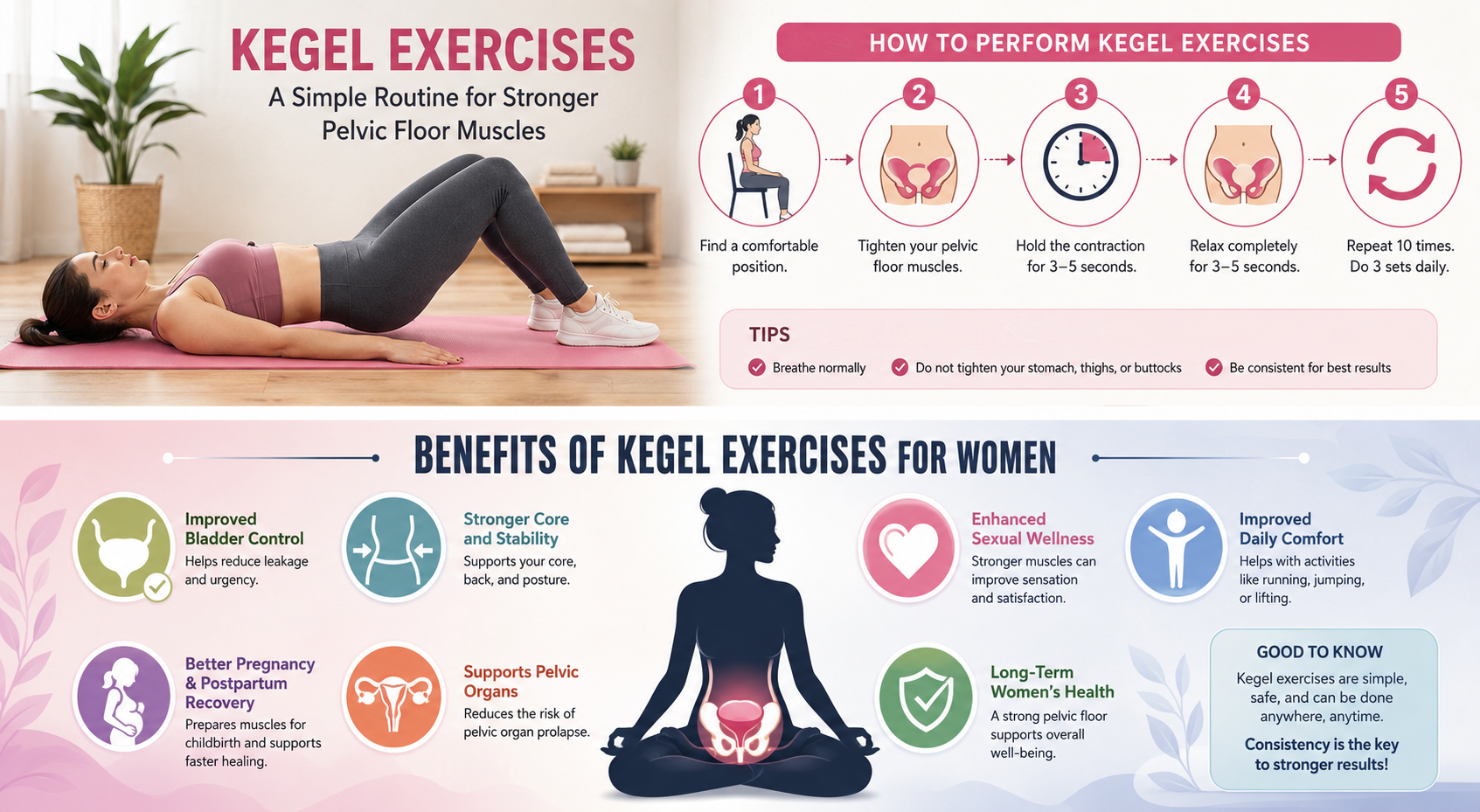
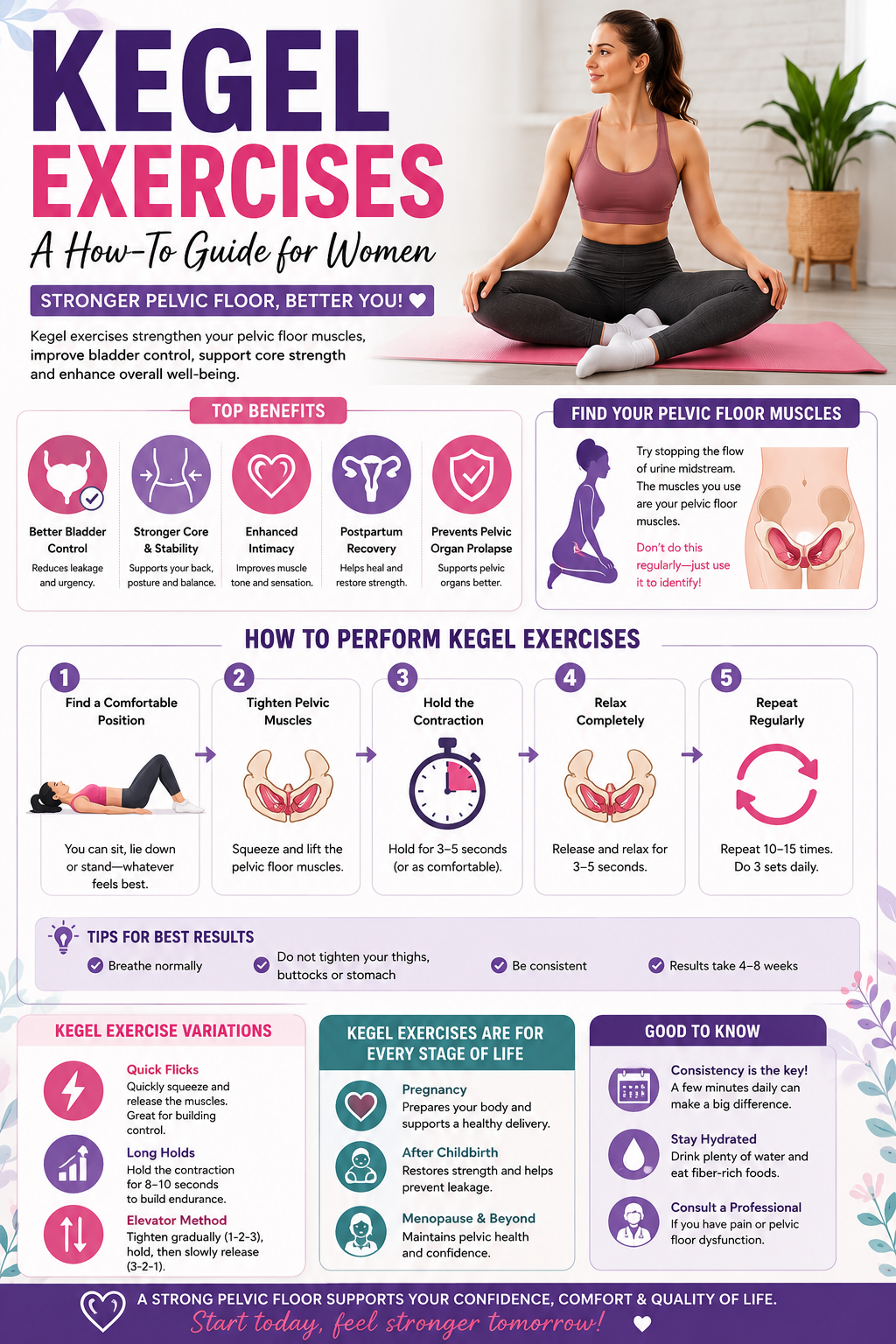
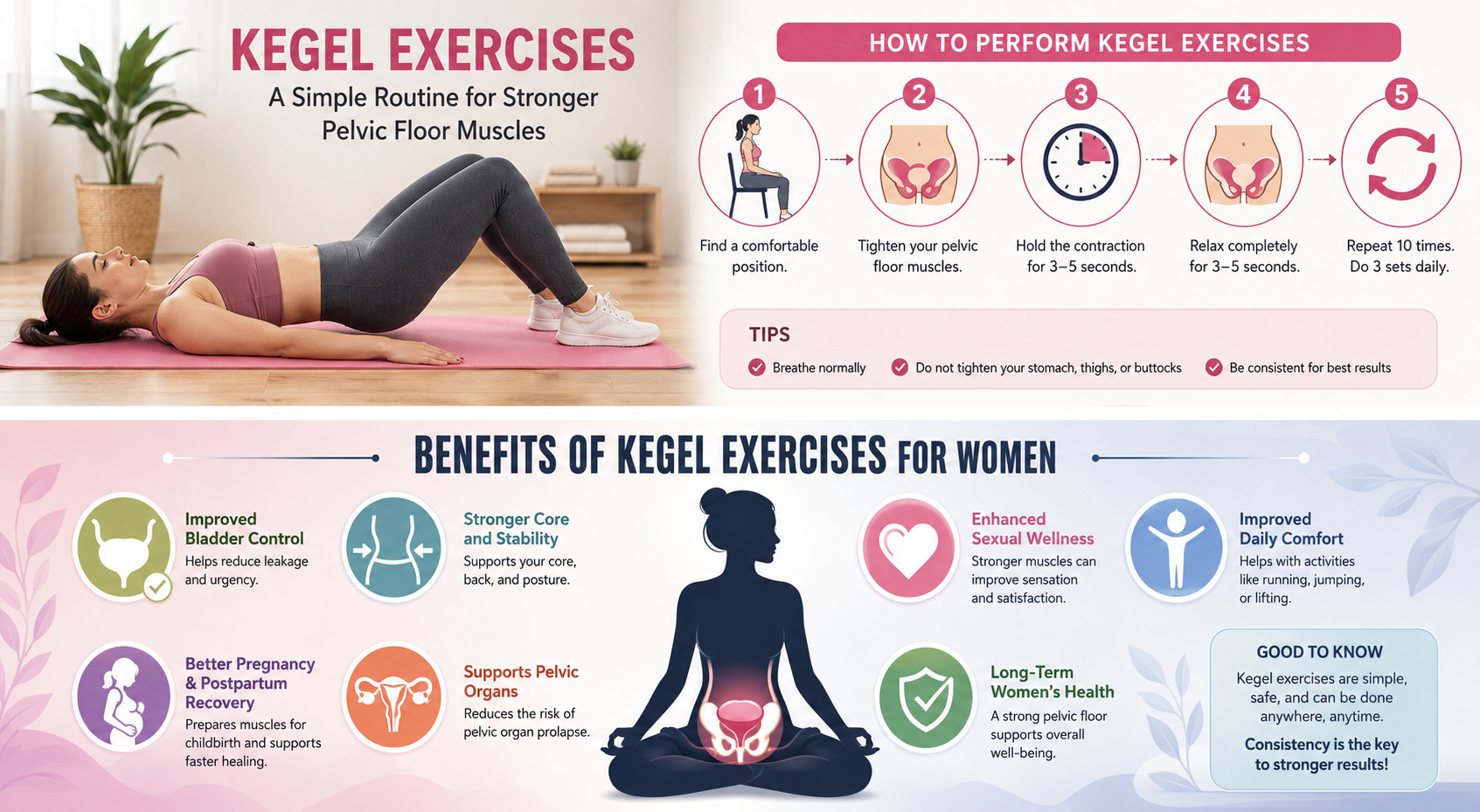
Step-by-Step Guide: How to Perform Kegel Exercises

Many beginners are unsure about How to perform pelvic floor exercises correctly. Following proper technique is essential for success.

Step 1: Find a Comfortable Position

You can sit, lie down, or stand comfortably.

Step 2: Tighten Pelvic Muscles

Slowly contract the pelvic floor muscles.

Step 3: Hold the Contraction

Try holding for 3 to 5 seconds initially.

Step 4: Relax Completely

Relax the muscles for the same amount of time.

Step 5: Repeat

Aim for 10 repetitions per session.

Experts recommend practicing three sets daily.

The key to mastering How to perform pelvic floor exercises is consistency and proper breathing.


Breathing Tips During Kegel Exercises

Breathing correctly helps improve muscle activation.

Do:

  • Breathe naturally
  • Relax your abdomen
  • Keep shoulders loose

Avoid:

  • Holding your breath
  • Tightening thighs or buttocks
  • Straining excessively

Common Mistakes Women Make

Even though Kegel exercises are simple, many people perform them incorrectly.

Using the Wrong Muscles

Avoid tightening the stomach, legs, or buttocks.

Overtraining

Too many repetitions may cause muscle fatigue.

Inconsistent Practice

Results require regular daily practice.

Holding Breath

Always breathe normally.

Proper technique is essential for maximizing the Benefits of pelvic floor training.


Best Daily Routine for Beginners

A beginner-friendly schedule may look like this:

Time Repetitions
Morning 10 Kegels
Afternoon 10 Kegels
Evening 10 Kegels

Gradually increase the hold time from 5 seconds to 10 seconds.

Adding Kegels to your daily Fitness routines for pelvic health can produce noticeable improvements within a few weeks.


Kegel Exercises During Pregnancy

Pregnant women often benefit greatly from pelvic floor strengthening.

These exercises may help:

  • Support the growing baby
  • Reduce bladder leakage
  • Prepare muscles for childbirth
  • Improve postpartum recovery

However, women with pregnancy complications should consult a healthcare professional first.


Kegel Exercises After Childbirth

Postpartum pelvic weakness is very common.

Gentle Pelvic floor exercises after delivery can:

  • Improve healing
  • Restore muscle tone
  • Reduce urinary leakage
  • Improve pelvic stability

Most women can begin mild exercises shortly after delivery if approved by their doctor.


Advanced Kegel Exercise Techniques

Once basic exercises become easy, you can try advanced variations.

Quick Flicks

Rapidly tighten and release pelvic muscles.

Long Holds

Hold contractions for 10 seconds.

Elevator Method

Gradually tighten muscles in stages, then slowly release.

These techniques improve endurance and control.


Compare Yoga and Kegel Exercises

Many women ask how pelvic floor training differs from yoga.

Yoga Benefits

Yoga improves flexibility, posture, breathing, and stress reduction.

Kegel Benefits

Kegels directly strengthen pelvic muscles and improve bladder control.

When discussing Compare Yoga and Kegel exercises, the best approach is often combining both routines for complete wellness support.

Yoga poses such as bridge pose, child's pose, and cat-cow may complement Kegel training effectively.


Physical Therapy and Pelvic Floor Health

Women with severe pelvic weakness or pelvic floor dysfunction may benefit from professional support.

Specialized physiotherapists often use:

  • Biofeedback therapy
  • Guided muscle training
  • Stretching exercises
  • Core strengthening

These customized Physical therapy exercises can improve recovery and muscle coordination.


Kegel Exercises for Men

Although this guide focuses on women, pelvic floor health is important for men too.

Growing online interest in men kegel exercises and kegel exercises for men shows that awareness is increasing globally.

Men may use Kegel exercises to:

  • Improve bladder control
  • Support prostate health
  • Strengthen pelvic muscles
  • Improve recovery after surgery

Searches for kegel for men and pelvic floor exercises for men have increased significantly in recent years.


Reverse Kegel Exercises

Reverse Kegels involve relaxing and lengthening pelvic floor muscles instead of tightening them.

These exercises may help reduce excessive muscle tension and improve flexibility.

People with pelvic pain or muscle tightness sometimes benefit from reverse Kegels under professional guidance.


Foods and Lifestyle Tips for Pelvic Health

Exercise alone is not enough for complete pelvic wellness.

Healthy habits include:

  • Drinking enough water
  • Maintaining healthy body weight
  • Avoiding smoking
  • Preventing constipation
  • Staying physically active

Combining Kegels with balanced nutrition enhances overall results.


How Long Does It Take to See Results?

Most women begin noticing improvements within 4 to 8 weeks.

Results depend on:

  • Exercise consistency
  • Muscle condition
  • Proper technique
  • Overall health

Patience and regular practice are important.


Who Should Avoid Kegel Exercises?

Kegels are safe for most people, but some conditions require caution.

Consult a doctor if you have:

  • Severe pelvic pain
  • Recent surgery
  • Active urinary infection
  • Overactive pelvic muscles

Improper training may worsen symptoms in some cases.


Building Long-Term Fitness Routines for Pelvic Health

Long-term wellness requires consistency.

The best Fitness routines for pelvic health often combine:

  • Kegel exercises
  • Core strengthening
  • Yoga
  • Walking
  • Stretching
  • Healthy lifestyle habits

Daily movement and pelvic awareness help maintain strength over time.


Final Thoughts

Kegel exercises are one of the simplest yet most effective ways to support pelvic health naturally. From improving bladder control to enhancing postpartum recovery, these exercises offer valuable benefits for women at every stage of life.

Regular Pelvic floor exercises can strengthen core muscles, support reproductive health, and improve overall quality of life. Whether you are a beginner or looking to enhance your wellness routine, learning How to perform pelvic floor exercises correctly is an important step toward better health.

Combining Kegels with yoga, healthy habits, and guided Physical therapy exercises can create a balanced approach to pelvic wellness. As awareness grows worldwide, more women and men are recognizing the importance of pelvic health and incorporating these simple movements into their daily routines.

By staying consistent and practicing proper technique, you can experience the full Benefits of pelvic floor training and enjoy stronger pelvic support for years to come.


توثيق المستخدمين

  1. kegel exercises women
  2. kegel for men
  3. kegel exercises for men video
Babafig https://www.babafig.com