English
 Arabic
 Français
 Spanish
 Portuguese
 Deutsch
 Turkish
 Dutch
Dutch
 Italiano
 Russian
 Romaian
 Portuguese (Brazil)
 Greek
Greek
 Réunionnais
 India
India
Innovation and Functionality in Promotional Luggage Design
Drone |
2023-12-26 02:43:23
 Babarun (BBRN)
 Collab Influenceurs
 Coupon
 Procaly
 Récompenses
 Événementiels
 Parrainage
 Calculez vos calories
 Affiliation Matrice 3x9
 La silver économie
 Maps Membres
 BabaShopCenter
 Bot IA de Trading
 Runsound music
 Films partner IMDb
 Affiliation
 Prêts Immobiliers
Babarun (BBRN)
Collab Influenceurs
Coupon
Procaly
Récompenses
Événementiels
Parrainage
Calculez vos calories
Affiliation Matrice 3x9
La silver économie
Maps Membres
BabaShopCenter
Bot IA de Trading
Runsound music
Films partner IMDb
Affiliation
Prêts Immobiliers
TOON ALLES
Prêts Immobiliers
Babarun (BBRN)
Collab Influenceurs
Coupon
Procaly
Récompenses
Événementiels
Parrainage
Calculez vos calories
Affiliation Matrice 3x9
La silver économie
Maps Membres
BabaShopCenter
Bot IA de Trading
Runsound music
Films partner IMDb
Affiliation
Prêts Immobiliers
TOON ALLES

Upgrade to Pro
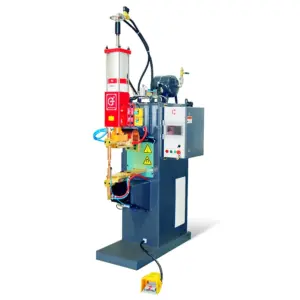
In today’s fast-paced industrial landscape, manufacturers are seeking welding solutions that combine speed, precision, and repeatability. Projection welding has emerged as a trusted method for joining metals efficiently, particularly in high-volume production lines. For manufacturing engineers, OEMs, and automation integrators, understanding the principles, applications, and best practices of projection welding is essential for optimizing product quality and operational efficiency.
At Heron Welder, we specialize in providing state-of-the-art projection welding machines, automated solutions, and support tailored to industrial production needs. In this guide, we’ll explore everything you need to know about projection welding, from fundamentals to real-world applications.
Projection welding is a type of resistance welding where electrical current is concentrated at predetermined points, or projections, on a metal workpiece. Unlike traditional spot welding that requires careful alignment of electrodes, projection welding uses small embossed projections on one or both workpieces. When pressure and current are applied, the projections melt quickly, forming strong, precise welds at each contact point.
Consistent weld quality – Projections ensure a controlled and uniform weld.
High-speed production – Ideal for mass production of small to medium components.
Reduced electrode wear – Concentrated current minimizes electrode degradation.
Versatility – Works with various metals, including stainless steel, carbon steel, and aluminum.
The projection welding process relies on the principles of resistance heating:
Preparation – Projections are created on the metal surface by embossing or stamping.
Electrode Contact – Electrodes apply pressure to the workpieces.
Current Application – A high-amperage electrical pulse passes through the projections.
Localized Melting – Heat generated at the projections melts the metal at those points.
Formation of Welds – The molten metal solidifies under pressure, creating a strong joint.
The precision of projection welding lies in its ability to concentrate energy only at desired points, reducing distortion and improving repeatability compared to conventional welding techniques.
Projection welding is widely used across multiple industries due to its speed and reliability:
Battery tabs and connectors
Transmission components
Brake and clutch parts
Transformer cores
Relay contacts
Busbars and connectors
Sheet metal assemblies
Fastener and nut welding
High-volume production components
By leveraging automated projection welding systems, manufacturers can achieve consistent welds while reducing manual labor and production time.
While both are forms of resistance welding, projection and spot welding differ in application and efficiency:
| Feature | Projection Welding | Spot Welding |
|---|---|---|
| Welding points | Predetermined projections | Direct electrode contact |
| Electrode wear | Lower due to concentrated heating | Higher due to larger contact area |
| Suitable for | High-volume, small components | General sheet metal joining |
| Weld consistency | High, precise | Moderate, depends on operator skill |
| Ideal for automation | Excellent | Good |
Heron’s projection welding machines are designed for high-volume automation, allowing manufacturers to maintain quality while scaling production efficiently.
To maximize projection welding efficiency and quality:
Design Projections Properly – Ensure projections are uniform in height, shape, and spacing.
Optimize Electrode Geometry – Choose electrodes with appropriate diameter and shape to match projections.
Control Current and Force – Fine-tune parameters for each metal type and thickness.
Regular Maintenance – Inspect electrodes and projections to prevent inconsistencies.
Integrate Automation – Use robotic arms and CNC controllers for precise positioning in high-volume production.
At Heron, we provide not only the machines but also customized solutions and guidance to help manufacturers implement these best practices effectively.
As a global leader in industrial welding equipment, Heron Welder offers:
High-quality projection welding machines for small and large-scale production
Automated welding lines that integrate with robotics and conveyor systems
Technical expertise in resistance welding, FSPR, and clinching systems
Consultation and customization to match unique manufacturing requirements
Our goal is to empower manufacturers and OEMs to optimize production while ensuring strong, consistent welds for every application.
1. Can projection welding be used on aluminum?
Yes, aluminum can be projection welded with proper current control and electrode material. Heron provides MFDC projection welders optimized for non-ferrous metals.
2. What is the difference between single and multi-projection welding?
Single-projection welding joins one point at a time, while multi-projection welding can join multiple points simultaneously, improving speed and consistency in mass production.
3. How do I reduce electrode wear in projection welding?
Using the correct electrode material, maintaining projection dimensions, and controlling welding parameters are key. Heron offers electrodes designed for long service life.
4. Is projection welding suitable for high-volume automotive production?
Absolutely. Its repeatability and speed make it ideal for automotive parts like battery tabs, connectors, and brake components.
5. Can Heron integrate projection welding into automated production lines?
Yes, we specialize in fully automated systems, combining projection welding with robotic arms, CNC controllers, and production conveyors for turnkey solutions.
Projection welding is a high-precision, high-speed solution for modern manufacturing, offering repeatable and durable welds across a variety of industries. With Heron Welder’s expertise in resistance welding machines, automation integration, and technical support, manufacturers can confidently optimize production lines and meet the demands.