

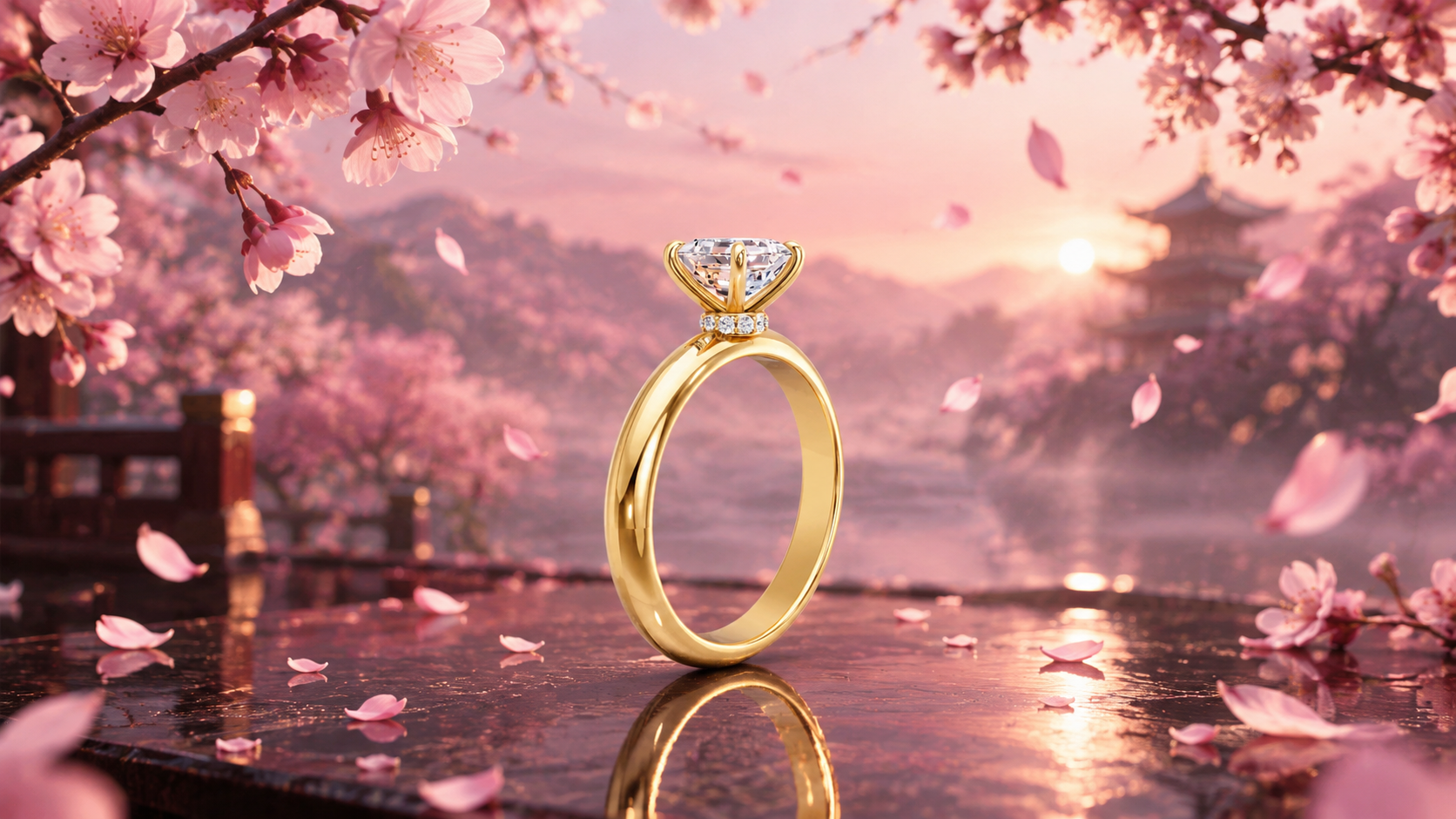

Choosing an engagement ring involves more than finding a diamond you like. The way different stones work together can change the entire appearance of a ring. This is especially true for a hidden halo diamond ring, where smaller diamonds sit beneath the center stone and create an additional detail that becomes visible from certain angles.
The center diamond usually receives the most attention, but the smaller stones around it also matter. Their size, shape, color, and placement can affect how balanced the ring looks. Understanding these details can help you choose a combination that feels right without making the design unnecessarily complicated.
Start With the Center Diamond Shape
The center diamond is the main part of the ring, so it is a good starting point when choosing your stone combination. Different shapes have different proportions, and the hidden halo should complement those proportions.
Round Cut Diamonds
Round diamonds have a balanced outline that works well with many hidden halo settings. Small round diamonds beneath the center stone can follow its shape and create a consistent appearance.
This combination is a good choice if you prefer a traditional center stone with an additional detail underneath. It also gives you flexibility when selecting the size and arrangement of the smaller diamonds.
Oval and Pear Cut Diamonds
Oval and pear-shaped diamonds have longer outlines, so their hidden halo settings need careful placement. The smaller stones should follow the shape of the center diamond rather than look crowded around it.
For pear-shaped diamonds, pay attention to the pointed end. The setting should support the shape without making the surrounding stones look uneven.
Emerald and Radiant Cut Diamonds
Emerald and radiant cuts have different visual characteristics. Emerald cuts have straight edges and step-cut facets, while radiant cuts have a more detailed faceted appearance.
A hidden halo with small round diamonds can complement both shapes. However, the size and placement of the stones should suit the center diamond's dimensions.
Match the Size of the Hidden Halo Stones
One common mistake when choosing a hidden halo is focusing only on the center diamond. The smaller diamonds also need to be considered carefully.
If the hidden halo stones are too large, they may compete with the center diamond. If they are too small or poorly positioned, their arrangement may not look consistent from the side.
The goal is to create a combination where each stone has its own place.
Consider these points before making your selection:
-
Center diamond size: Larger center diamonds may need a different halo proportion than smaller ones.
-
Stone spacing: The smaller diamonds should sit evenly around the setting.
-
Setting height: The position of the hidden halo can affect how much of it is visible.
-
Side profile: Check how the smaller stones look when viewing the ring from different angles.
Ask your jeweler for side-view images or design previews before confirming the final arrangement.
Choose Diamonds With Matching Color
Color is another important factor when combining a center diamond with smaller halo stones. Even when the diamonds are individually attractive, noticeable color differences can affect how the complete ring looks.
For example, if your center diamond is in the D–F color range, choosing smaller diamonds from a similar range can help maintain a consistent appearance.
You do not always need every diamond to have exactly the same grade. However, selecting stones with similar color characteristics can help avoid unwanted differences.
Metal color also plays a role. White gold and platinum can create a different overall appearance compared with yellow or rose gold. Think about the metal you want before finalizing the diamond combination.
Consider Clarity Across All the Stones
Clarity refers to the small internal or surface characteristics found in a diamond. While the center diamond usually receives more attention, the smaller stones should also be selected with care.
For the center stone, clarity can be an important consideration because it is the most visible diamond in the ring.
Smaller hidden halo diamonds do not always need the same clarity grade as the center stone. Their size and position mean that minor characteristics may be less noticeable.
A practical approach is to:
-
Prioritize the appearance of the center diamond.
-
Choose smaller diamonds that look clean to the naked eye.
-
Avoid paying extra for grades that do not create a noticeable visual difference.
-
Check the overall appearance under normal lighting.
This approach can help you manage your budget while maintaining a well-matched design.
Should You Add Side Stones to a Hidden Halo?
A hidden halo does not have to be the only additional diamond detail. Some engagement rings also include side stones along the band.
However, combining multiple diamond features requires careful planning. The center stone, hidden halo, and side stones should work together rather than compete for attention.
For example, a round center diamond with a hidden halo and small side stones can create a balanced arrangement. An oval center diamond may also work with a hidden halo and a few carefully placed side diamonds.
Think about how much detail you actually want. If you prefer the center diamond to remain the main focus, a simple hidden halo may be enough.
Lab Grown Diamonds Can Give You More Flexibility
Lab grown diamonds are another option worth considering when selecting a hidden halo engagement ring. They have the same basic chemical, physical, and optical properties as mined diamonds.
One advantage is that they can provide more flexibility when planning a ring within a particular budget. You may have more room to consider the center diamond's shape, size, and quality while also choosing suitable smaller stones.
Before purchasing, check the diamond specifications and ask whether the center and hidden halo stones have been selected to complement each other.
At Antiquecut, you can explore ring designs and custom options that allow you to consider different diamond shapes, metal choices, and personal preferences when planning your engagement ring.
Think About Everyday Comfort and Maintenance
A beautiful stone combination should also work for everyday wear. Hidden halo settings can have small spaces around the diamonds where dust, soap, and other particles collect.
When selecting your ring, consider the following:
-
Check whether the hidden halo is securely set.
-
Make sure the setting does not feel uncomfortable against your fingers.
-
Ask whether the ring can sit properly with your future wedding band.
-
Choose a setting that allows regular cleaning.
-
Have the prongs and smaller diamonds checked during routine maintenance.
These small details can make a difference over the years, especially if you plan to wear your engagement ring every day.
Find a Stone Combination That Feels Right
There is no single diamond combination that works for everyone. Some people prefer a round center diamond with matching small stones, while others may choose an oval or emerald cut with a different arrangement.
The most important thing is to consider the complete ring rather than selecting each diamond separately. Shape, size, color, clarity, and setting height should all work together.
If you are comparing different designs, View Collection of hidden halo engagement rings to explore different center stone shapes and setting combinations.
Take your time, compare side profiles, and ask questions before making your decision. The right combination is one that matches your taste, feels comfortable to wear, and carries the meaning you want your engagement ring to represent.


