

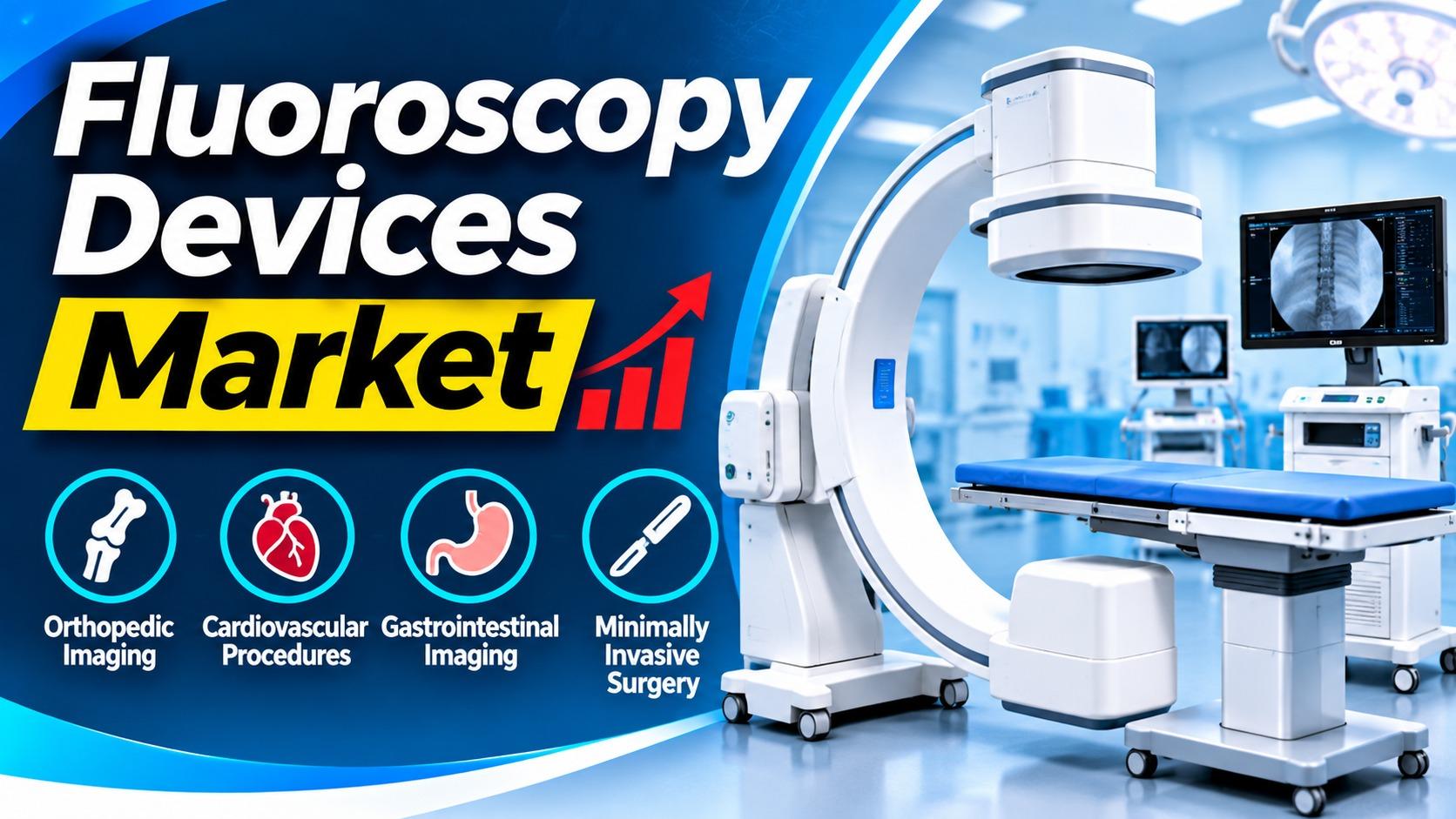

According to Straits Research, the global fluoroscopy devices market size was valued at USD 5.53 billion in 2025 and is projected to grow from USD 5.80 billion in 2026 to USD 8.51 billion by 2034, registering a CAGR of 4.91% during the forecast period (2026–2034). North America dominated the fluoroscopy devices market with a share of 38.5% in 2025.
Fluoroscopy devices are medical imaging systems that use continuous or pulsed X-rays to produce real-time images of internal body structures. These systems allow healthcare professionals to observe movement, guide instruments, and perform diagnostic and interventional procedures. Fluoroscopy equipment includes C-arm systems, fixed imaging systems, mobile units, and specialized gastrointestinal and cardiovascular imaging devices. They are widely used in orthopedics, cardiology, gastroenterology, urology, and pain management. Increasing demand for image-guided procedures, technological improvements, and expansion of healthcare infrastructure are supporting market growth.
Get Full Report: https://straitsresearch.com/report/fluoroscopy-devices-market
Growth Drivers of the Fluoroscopy Devices Market
Increasing Demand for Minimally Invasive Procedures
Minimally invasive procedures rely on real-time imaging to guide instruments through small incisions or natural body openings. Fluoroscopy helps clinicians visualize anatomical structures and monitor instrument positioning, supporting its use across multiple surgical specialties.
Rising Prevalence of Cardiovascular Diseases
Cardiovascular conditions frequently require diagnostic imaging and image-guided interventions. Fluoroscopy is used in procedures such as cardiac catheterization, angiography, and selected vascular interventions, contributing to demand for advanced imaging systems.
Growing Use in Orthopedic Procedures
Orthopedic surgeons use fluoroscopy to guide fracture fixation, joint procedures, spinal interventions, and implant placement. Increasing demand for orthopedic treatment and image-guided surgical techniques is supporting equipment adoption.
Technological Advancements in Medical Imaging
Improvements in flat-panel detectors, digital imaging, image processing, and pulsed fluoroscopy are enhancing image quality and operational efficiency. Modern systems also incorporate dose management technologies to help reduce radiation exposure.
Expansion of Hospitals and Diagnostic Facilities
Investment in hospitals, specialized surgical centers, and interventional radiology departments is increasing access to advanced imaging equipment. Healthcare facility modernization is supporting the replacement of older fluoroscopy systems with newer technologies.
Increasing Demand for Image-Guided Interventions
Fluoroscopy is used to guide catheters, wires, needles, and other instruments during selected diagnostic and therapeutic procedures. Growing adoption of interventional techniques is supporting demand for reliable real-time imaging systems.
Applications of the Fluoroscopy Devices Market
Cardiovascular Procedures
Fluoroscopy is used in cardiac catheterization, coronary angiography, and selected vascular interventions. Real-time imaging helps clinicians guide catheters and other instruments through blood vessels during procedures.
Orthopedic Surgery
Orthopedic applications include fracture reduction, spinal procedures, joint interventions, and implant positioning. Mobile C-arm systems are commonly used to provide real-time imaging in operating rooms.
Gastrointestinal Procedures
Fluoroscopy supports gastrointestinal examinations and selected interventions involving the digestive tract. Contrast-enhanced imaging helps healthcare professionals evaluate anatomical structures and observe the movement of contrast materials.
Urological Procedures
Urologists use fluoroscopy during selected procedures involving the urinary tract, including stone treatment and urinary drainage interventions. Imaging helps guide instruments and assess anatomical positioning.
Pain Management
Fluoroscopy is used to guide injections and other interventional pain management procedures. Real-time visualization helps clinicians position needles and instruments accurately.
Interventional Radiology
Interventional radiologists use fluoroscopy to guide vascular procedures, catheter placements, drainage procedures, and selected minimally invasive treatments. The technology supports visualization of instruments during image-guided interventions.
Emerging Trends in the Fluoroscopy Devices Market
Increasing Adoption of Flat-Panel Detector Systems
Flat-panel detectors are replacing older image intensifier technologies in many modern fluoroscopy systems. They offer digital imaging capabilities, improved image handling, and compact equipment designs.
Growing Use of Mobile C-Arm Systems
Mobile C-arm systems are gaining importance in operating rooms, orthopedic procedures, and interventional settings. Their mobility allows imaging equipment to be positioned according to procedural requirements.
Development of Low-Dose Imaging Technologies
Manufacturers are introducing pulsed fluoroscopy, dose monitoring, image processing, and other technologies designed to manage radiation exposure. These developments are important for procedures involving repeated or prolonged imaging.
Integration of Artificial Intelligence
AI-assisted imaging software is being developed to support image enhancement, workflow automation, anatomical visualization, and procedure planning. These capabilities may help improve imaging efficiency and clinical workflow.
Increasing Adoption of Digital Imaging Workflows
Modern fluoroscopy systems are increasingly integrated with hospital information systems, picture archiving and communication systems, and digital reporting platforms. This supports image storage, retrieval, and collaboration among healthcare professionals.


