

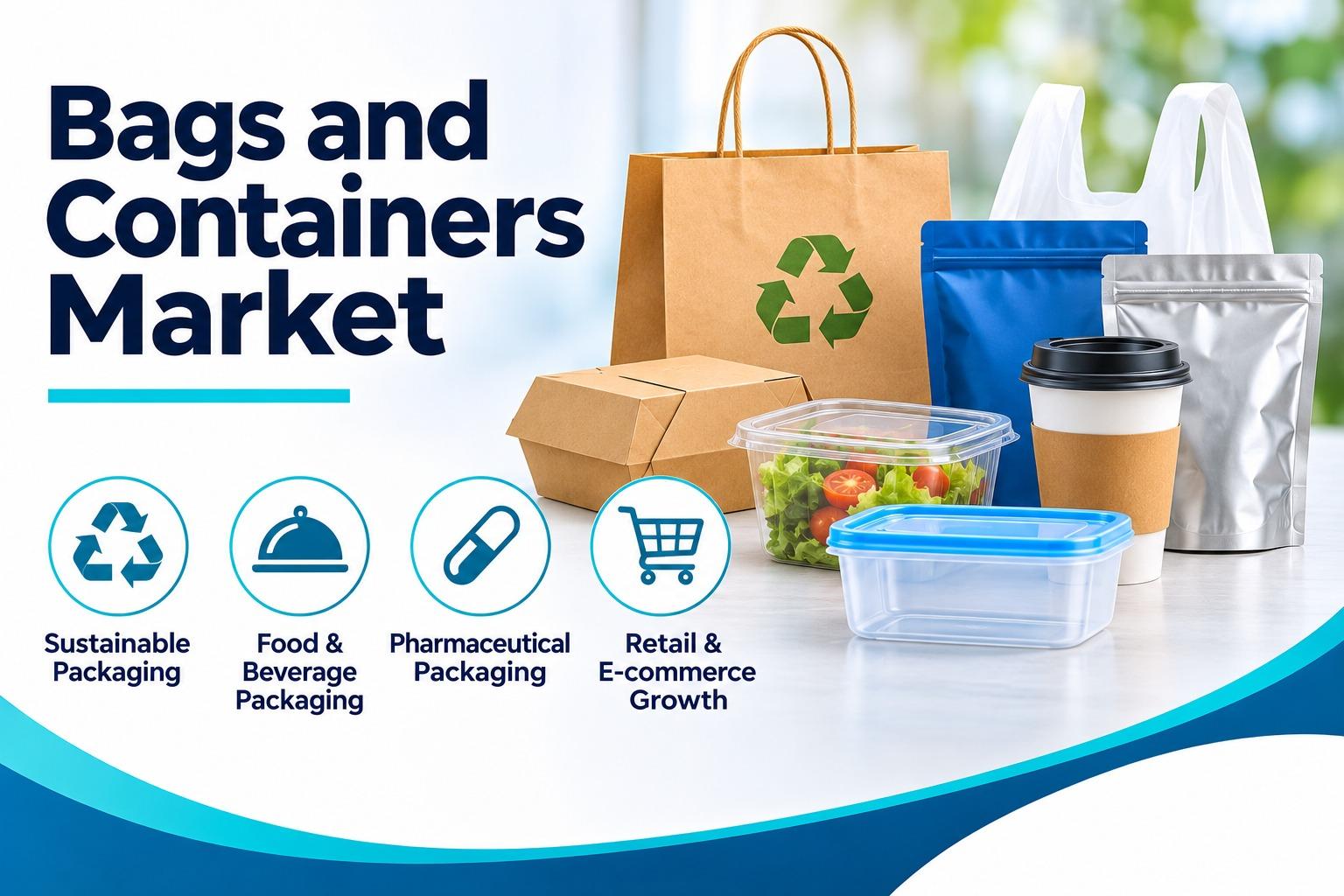

According to Straits Research, the global bags and containers market size was valued at USD 43.32 billion in 2025 and is projected to grow from USD 45.66 billion in 2026 to USD 69.54 billion by 2034, registering a CAGR of 5.4% during the forecast period (2026–2034). North America dominated the bags and containers market with a share of 36.2% in 2025.
Bags and containers are packaging products used to store, protect, transport, and distribute goods across food and beverage, retail, healthcare, industrial, agricultural, and consumer goods sectors. The market includes flexible packaging bags, reusable bags, storage containers, industrial containers, and specialized packaging solutions manufactured from plastics, paper, metal, glass, and other materials. These products help protect goods from contamination, moisture, physical damage, and handling-related risks. Growing e-commerce activity, food packaging requirements, industrial distribution, and demand for convenient storage solutions are supporting market growth.
Get Full Report: https://straitsresearch.com/report/bags-and-containers-market
Growth Drivers of the Bags and Containers Market
Increasing Demand for Food Packaging
The food and beverage industry relies on bags and containers to store, protect, and distribute products. Growing demand for packaged food, ready-to-eat meals, frozen products, and processed food is increasing the need for packaging solutions that support product safety and shelf-life management.
Expansion of E-Commerce and Retail
The growth of online shopping and organized retail is increasing demand for packaging used in product storage, shipping, and delivery. Bags and containers help protect goods during transportation and provide convenient packaging formats for different product categories.
Rising Demand for Convenient Packaging
Consumers are increasingly seeking packaging that is lightweight, portable, resealable, and easy to store. Flexible bags, reusable containers, and portion-controlled packaging formats are gaining importance across household and commercial applications.
Growth in Industrial and Agricultural Activities
Industrial manufacturers and agricultural businesses use bags and containers to store and transport raw materials, chemicals, fertilizers, grains, and other products. Expansion of manufacturing and agricultural supply chains is supporting demand for durable packaging solutions.
Increasing Focus on Product Protection
Packaging plays an important role in protecting goods from moisture, dust, contamination, and physical damage. Demand for reliable storage and transportation solutions is encouraging the adoption of specialized bags and containers across multiple industries.
Growing Adoption of Reusable Packaging
Environmental concerns and waste reduction initiatives are encouraging the use of reusable bags and containers. Businesses and consumers are increasingly considering durable packaging products that can be used repeatedly for shopping, storage, and transportation.
Applications of the Bags and Containers Market
Food and Beverage Packaging
Bags and containers are used to package grains, snacks, beverages, dairy products, frozen foods, processed foods, and other consumables. Packaging formats are designed to support product protection, storage, transportation, and consumer convenience.
Retail and E-Commerce
Retailers and online businesses use bags and containers for product packaging, shopping, shipping, and order fulfillment. Packaging solutions help protect merchandise and simplify product handling across distribution networks.
Healthcare and Pharmaceuticals
Healthcare organizations and pharmaceutical manufacturers use specialized bags and containers for medical supplies, pharmaceutical products, laboratory materials, and healthcare waste. Packaging requirements depend on product sensitivity, hygiene, and storage conditions.
Industrial Packaging
Industrial applications include packaging for chemicals, construction materials, raw materials, machinery components, and manufacturing supplies. Durable bags and containers help facilitate bulk storage and transportation.
Agriculture
Agricultural businesses use bags and containers to store and transport seeds, fertilizers, grains, animal feed, and harvested produce. Packaging helps protect agricultural products during handling and distribution.
Household and Personal Storage
Consumers use bags and containers for food storage, clothing organization, waste collection, travel, and general household management. Reusable and space-efficient designs are supporting demand in this application segment.
Emerging Trends in the Bags and Containers Market
Increasing Adoption of Sustainable Packaging Materials
Manufacturers are exploring recyclable plastics, paper-based materials, recycled content, and alternative packaging materials. These developments are intended to reduce material waste and support changing environmental requirements.
Growing Demand for Reusable Bags and Containers
Reusable shopping bags, storage containers, and transport packaging are gaining popularity as consumers and businesses seek alternatives to single-use products. Durable designs and improved material performance are supporting adoption.
Development of Lightweight Packaging Solutions
Packaging manufacturers are focusing on reducing material usage while maintaining strength, durability, and product protection. Lightweight bags and containers can help improve transportation efficiency and reduce packaging material requirements.
Increasing Use of Smart Packaging
Smart packaging technologies, including tracking labels, QR codes, and connected identification systems, are being explored to improve product traceability and supply chain visibility. These features are particularly relevant in logistics, retail, and specialized product distribution.
Expansion of Flexible Packaging Formats
Flexible bags and pouches are gaining adoption because they can be lightweight, space-efficient, and suitable for different product categories. Resealable and barrier-protective formats are supporting applications in food, personal care, and household products.
Advancements in Recyclable Container Design
Manufacturers are developing packaging formats that are easier to sort, collect, and recycle. Material simplification, improved labeling, and design changes are helping support packaging recovery and recycling initiatives.


