

SOC-as-a-Service Market Opportunities: AI-Driven Threat Intelligence Creates New Growth Potential

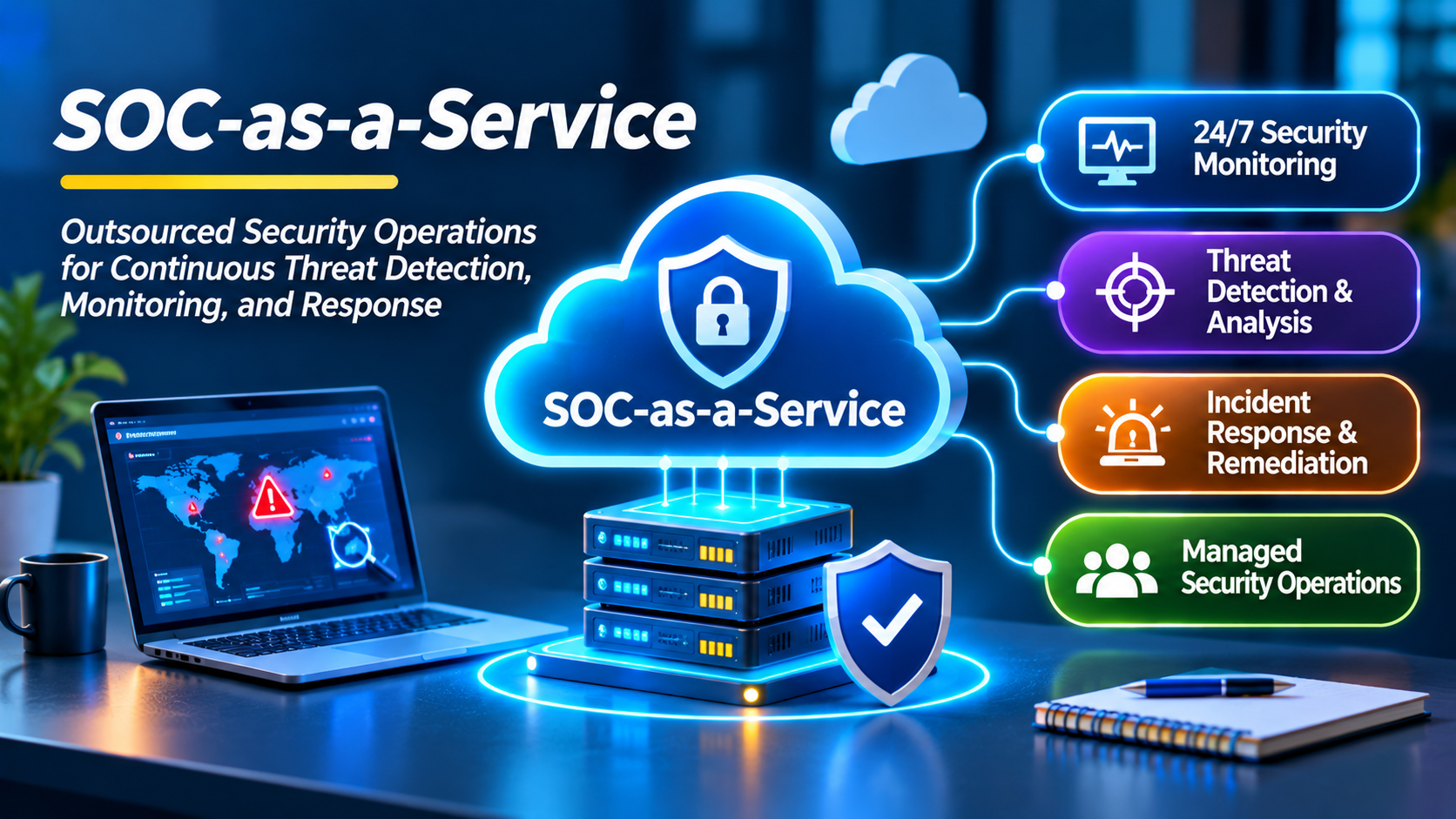
The growing frequency and complexity of cyberattacks are encouraging organizations to strengthen their cybersecurity infrastructure. However, maintaining an in-house Security Operations Center (SOC) requires specialized professionals, advanced monitoring technologies, and continuous operational investment. SOC-as-a-Service addresses these requirements by providing outsourced security monitoring, threat detection, analytics, and incident response through specialized providers. The expansion of cloud infrastructure, remote working, and digital business operations is further increasing demand for managed security services.
According to Straits Research, the SOC-as-a-Service market was valued at USD 6.44 billion in 2025 and is projected to increase from USD 7.06 billion in 2026 to USD 14.76 billion by 2034, registering a CAGR of 9.65% during the forecast period (2026–2034). North America dominated the market with a 38.5% share in 2025, supported by high cybersecurity spending, widespread cloud adoption, and demand for continuous threat monitoring.
AI-Powered Security Operations Strengthen Threat Detection
The growing sophistication of cyber threats is increasing the importance of continuous security monitoring and automated incident response. SOC-as-a-Service providers combine cybersecurity analysts, threat intelligence, analytics, and automated security tools to identify suspicious activities and investigate security incidents across enterprise networks. Artificial intelligence is further improving these capabilities by helping security teams prioritize alerts, accelerate threat investigations, and respond to emerging risks.
The industry is also moving toward more integrated managed detection and response capabilities. In March 2026, IBM introduced enhanced Managed Detection and Response services powered by watsonx AI, strengthening its managed security operations offering through advanced threat intelligence and automation. Such developments demonstrate the increasing role of AI-enabled services in enterprise cybersecurity.
Cloud Adoption and Remote Work Expand Outsourced Security Demand
The expansion of cloud applications, distributed networks, and remote working environments is increasing the number of endpoints accessing corporate systems. Bring-Your-Own-Device (BYOD) policies and hybrid work arrangements can expose organizations to additional security risks because employees connect through personal devices and networks outside traditional corporate infrastructure.
SOC-as-a-Service enables businesses to monitor endpoints, cloud environments, and network activity without maintaining extensive internal security teams. This model is particularly relevant for organizations seeking specialized cybersecurity expertise while controlling infrastructure and staffing expenses.
Market Segmentation: SaaS Leads Service Adoption
The SOC-as-a-Service market is segmented by service type and end-user industry. By service type, Software-as-a-Service (SaaS) accounted for a dominant 64% share in 2025. Cloud-based SaaS platforms allow organizations to access security monitoring, threat detection, analytics, and response capabilities without investing heavily in on-premises infrastructure. Platform-as-a-Service (PaaS) also contributes to the market by providing environments for developing and managing security-related applications and services.
By end-user industry, the market serves IT and telecom, BFSI, pharmaceutical, and manufacturing sectors. The IT and telecom segment is projected to register the fastest growth at a CAGR of 12.4% during 2026–2034, supported by expanding cloud services, connected devices, enterprise applications, and sensitive digital information. Financial institutions, pharmaceutical companies, and manufacturers also require continuous monitoring to protect customer records, financial information, intellectual property, and operational systems.
Regional Outlook: North America Leads While Europe Accelerates
North America accounted for a dominant 38.5% share of the SOC-as-a-Service market in 2025, reaching a market value of USD 2.48 billion. The region's established cybersecurity ecosystem, high frequency of cyberattacks, cloud adoption, and demand for 24/7 security monitoring are supporting its leadership. Enterprises are increasingly outsourcing security operations to access specialized expertise and reduce the cost of maintaining internal SOC infrastructure.
Europe is the fastest-growing regional market, with a projected CAGR of 13.4% during the forecast period. Stringent data protection requirements, rising cyber threats, and cloud migration are encouraging organizations to strengthen their security monitoring capabilities. Asia Pacific is also experiencing increasing demand as digital transformation, expanding cloud infrastructure, and limited in-house cybersecurity expertise create opportunities for managed security providers.
Competitive Landscape and Recent Industry Developments
The competitive landscape includes cybersecurity providers offering managed detection, threat intelligence, security monitoring, and incident response services. Key participants include AlienVault, BlackStratus, Cygilant, Thales, Proficio, Netmagic, ESDS Software Solution, Suma Soft, Alert Logic, Expel, Fortinet, Arctic Wolf Networks, and Binary Defense.
Industry developments highlight the growing integration of artificial intelligence and automation into managed security operations. In May 2026, Palo Alto Networks expanded its SOC-as-a-Service portfolio with AI-driven security operations capabilities for automated threat detection and incident response. In March 2026, IBM introduced enhanced MDR services powered by watsonx AI. These developments reflect the industry's focus on improving security monitoring efficiency and accelerating responses to cyber incidents.
Future Outlook
The SOC-as-a-Service market is positioned for continued growth as organizations manage increasingly distributed digital environments and sophisticated cyber threats. Cloud adoption, regulatory requirements, remote working, and the shortage of specialized cybersecurity professionals are expected to support demand for outsourced security operations. Providers integrating AI-powered analytics, automated threat detection, and continuous monitoring are likely to strengthen their role in enterprise cybersecurity strategies.
About Straits Research
Straits Research is a market intelligence and consulting organization providing industry analysis, market sizing, competitive intelligence, and strategic insights across multiple sectors. Its research supports businesses, investors, and decision-makers in understanding market developments, identifying growth opportunities, and making informed strategic decisions.


