

Cosmetic Preservatives Market Size, Growth Drivers, and Industry Trends 2031

The Cosmetic Preservatives Market is expanding as personal care brands, specialty chemical manufacturers, and contract formulators prioritize product safety, extended shelf life, and microbial stability across water-based and sensitive-skin cosmetics. Growth is supported by rising daily skincare adoption, expanding e-commerce beauty distribution, clean-label reformulation, and regulatory oversight on cosmetic ingredient safety.
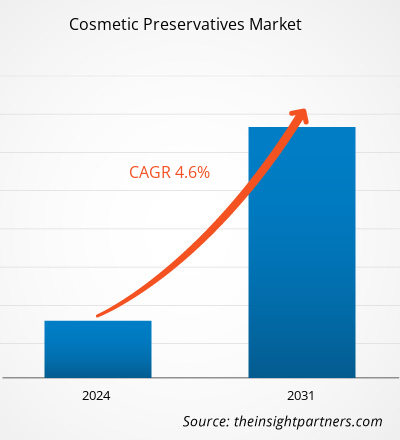
The cosmetic preservatives market size is projected to reach US$ 846.44 million by 2031 from US$ 591.75 million in 2023. The market is expected to register a CAGR of 4.6% during 2023–2031.
What is driving the market?
Rising consumer demand for clean-label, dermatologically safe personal care products, combined with expanding global skincare and hair care consumption, are the principal growth drivers. Cosmetic manufacturers are increasingly required to prevent bacterial, yeast, and mold contamination in water-rich formulations while eliminating controversial ingredients such as parabens and formaldehyde donors. Skin care brands, hair care producers, and color cosmetics companies are seeking preservative systems that protect product integrity during long-distance e-commerce shipping and multi-use consumer handling without triggering skin sensitization.
The transition is moving beyond single-ingredient synthetic antimicrobials toward multifunctional and gentle preservation systems. Suppliers are investing in organic acids, phenolic blends, bio-based fermentation ingredients, and preservative boosters that deliver moisturizing or antioxidant benefits alongside antimicrobial protection. Higher formulation costs, narrow pH stability windows for natural alternatives, and strict toxicological testing requirements remain important constraints.
Which region leads?
Asia Pacific leads the market, accounting for an estimated 35%–39% share in 2025, and is also the fastest-growing region with a projected CAGR of 5.8%–6.5%. Growth is supported by rising disposable incomes, expanding middle-class grooming habits, domestic cosmetics manufacturing, and surging e-commerce beauty sales. China, India, South Korea, and Japan present significant opportunities as high-volume skincare routines and local beauty brands scale rapidly.
Europe holds an estimated 27%–31% share, supported by mature personal care manufacturing and strict compliance standards under the EU Cosmetics Regulation. North America accounts for approximately 24%–28%, with demand driven by clean-beauty retail standards, premium skincare innovation, and heightened regulatory scrutiny over product safety and traceability.
Which segment leads?
Phenolic Compounds (led by phenoxyethanol-based systems) represent the leading product segment, accounting for an estimated 28% of market revenue in 2025. Their position is supported by broad-spectrum antimicrobial efficacy, compatibility across leave-on and rinse-off formulas, and well-established regulatory profiles. Organic Acids & Their Salts represent the fastest-growing chemical segment, forecast to grow at a CAGR of 6.5%–6.8% through 2031 as formulators adopt milder, nature-identical preservation blends.
By application, Skin Care leads with an estimated 38%–42% share in 2025, reflecting high water content in serums, moisturizers, cleansers, and sunscreens that require reliable microbial defense. Hair Care is identified as a high-growth application segment, with an estimated 6.0%–6.4% CAGR, driven by demand for scalp treatments, conditioners, and multifunctional shampoos.
Which companies are prominent?
The report identifies BASF SE, Ashland Global Holdings Inc., Clariant AG, Symrise AG, Dow Inc., Evonik Industries AG, Lonza Group (Arxada), LANXESS AG, Croda International Plc, and Salicylates and Chemicals Pvt. Ltd. as prominent market participants.
These companies compete across synthetic antimicrobials, organic acid blends, natural and bio-fermented preservatives, and multifunctional booster systems. Strategic differentiation increasingly depends on broad-spectrum efficacy at low usage levels, microbiome-friendly profiles, global regulatory approvals, and technical formulation support for brand owners. The list reflects the report's competitive landscape rather than a revenue-ranked market-share table.
What is changing in 2026?
The market is shifting from basic paraben-free marketing claims toward scientifically validated, microbiome-friendly, and green-chemistry preservation systems. Formulation specifications increasingly evaluate biodegradability, low sensitization potential, pH flexibility, and compatibility with cold-process or water-reduced manufacturing. Regulatory enforcement under frameworks such as the EU Cosmetics Regulation and the U.S. Modernization of Cosmetics Regulation Act (MoCRA) continues to tighten safety substantiation, adverse-event reporting, and ingredient transparency across global supply chains.
Manufacturers are accelerating single-molecule green antimicrobials, encapsulated slow-release preservatives, and synergistic hurdle-technology blends that pair mild organic acids with chelating agents and glycols. Procurement decisions are increasingly tied to clinical skin-tolerance data and global regulatory compliance rather than simple "preservative-free" labeling, creating demand for challenge testing, toxicological profiling, and co-development partnerships between chemical suppliers and cosmetic brands.
What are the major investment opportunities?
The strongest opportunities lie in bio-based and fermented preservatives, multifunctional antimicrobial boosters, encapsulation technologies, and regional technical application centers. Investment in green chemistry synthesis, upcycled botanical antimicrobials, and sustainable fermentation pathways can help ingredient suppliers meet brand decarbonization and clean-label targets. Long-term supply partnerships and custom blending capabilities can reduce reformulation bottlenecks for mid-sized and indie beauty brands.
Additional opportunities include mild preservation systems tailored for baby care, sensitive-skin therapeutics, waterless concentrates, and leave-on scalp treatments. Encapsulated and controlled-release delivery platforms offer high-margin potential by reducing skin irritation while extending shelf stability in complex emulsions and sunscreens.
Asia Pacific offers attractive expansion potential through fast-growing local personal care brands and expanding regional R&D hubs. Investors should prioritize solutions that balance broad-spectrum antimicrobial performance, cost-in-use competitiveness, skin mildness, and multi-region regulatory clearance.
Future Outlook
Looking ahead toward 2031, the Cosmetic Preservatives Market will become increasingly defined by precision formulation, bio-synthetic innovation, and stricter global safety harmonization. Traditional broad-spectrum synthetics will steadily cede share in leave-on prestige categories to biodegradable, bio-identical molecules and intelligent hurdle systems engineered to protect both product integrity and the skin microbiome. Suppliers that combine sustainable manufacturing footprints with turnkey regulatory and challenge-testing support will be best positioned to capture long-term value as global beauty consumption continues to expand.


