

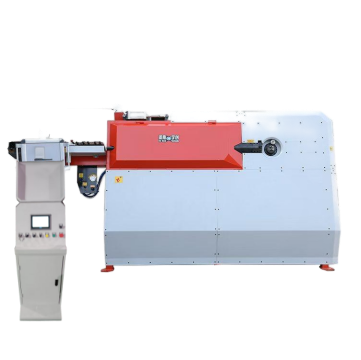
Precision in Every Bend: How CNC Rebar Processing Is Transforming Modern Construction

Reinforced concrete construction depends on accurately prepared steel reinforcement. From residential foundations to large commercial structures, reinforcing bars must be cut and shaped according to precise measurements before they reach the job site. Manual processing can become time-consuming when projects involve different bar dimensions, repeated shapes, and demanding production schedules. Modern technology offers a more controlled approach, and a rebar bender and cutter can help fabrication businesses manage these requirements through automated processing.
Why Accurate Rebar Preparation Matters
Reinforcing steel plays an important role in the strength and durability of concrete structures. However, its performance depends partly on correct preparation. Bars that are cut too short, bent incorrectly, or produced inconsistently may create difficulties during installation. Workers might need to make adjustments on-site, increasing labor requirements and potentially delaying other construction activities.
Accurate processing helps prevent these problems. When reinforcement components follow the required dimensions and shapes, construction teams can work with materials that are easier to position and assemble. Consistency is particularly important for projects involving large quantities of similar reinforcement components.
Understanding Combined Bending and Cutting Technology
Traditional reinforcement processing may involve separate equipment and multiple handling stages. Operators cut steel bars first and then transfer them to bending machinery. Although this approach can be suitable for smaller operations, repeated material movement may increase handling time and complicate production planning.
Combined CNC equipment brings bending and cutting functions into a more coordinated process. Computer numerical control allows operators to enter processing requirements and manage production according to programmed settings. Depending on the machine's capabilities and configuration, this approach can reduce repetitive manual operations and support more consistent results.
The main advantage is workflow coordination. Instead of treating cutting and bending as completely separate activities, fabrication businesses can organize these operations within a more streamlined production arrangement.
How CNC Automation Supports Fabrication Teams
Automation is valuable not simply because machines perform physical work, but because it helps standardize repetitive tasks. Once suitable processing parameters have been established, operators can use programmed instructions to produce components according to defined requirements.
This can support several aspects of daily production:
-
Repeatable measurements: Programmed settings help maintain consistency across batches.
-
Reduced manual handling: Coordinated processing can limit unnecessary movement between separate operations.
-
More organized production: Operators can plan different processing requirements around project specifications.
-
Improved workflow visibility: Digital controls can make it easier to manage production settings and repeat established tasks.
-
Better use of labor: Employees can focus more attention on supervision, material preparation, quality checks, and production coordination.
These benefits depend on proper setup, suitable material specifications, operator training, and regular maintenance.
Applications Across Different Construction Projects
Rebar processing requirements vary considerably between construction projects. Residential buildings may require reinforcement for foundations, columns, beams, and slabs. Commercial developments can involve larger quantities of steel components and more demanding schedules. Infrastructure projects may require specialized reinforcement shapes for bridges, drainage systems, retaining structures, and other concrete installations.
A flexible processing arrangement can help fabrication businesses respond to these changing requirements. Different projects may involve straight bars, repeated bends, and components prepared to specific engineering drawings. Having suitable equipment available can make it easier to organize production around these variations.
For steel fabrication workshops, the ability to handle multiple processing requirements is particularly useful when customer orders change frequently. Rather than relying entirely on separate manual procedures, businesses can develop a more structured production workflow.
Important Factors Before Choosing Equipment
Selecting industrial machinery requires more than comparing advertised production speeds. Buyers should evaluate whether the equipment matches their actual workload and material requirements.
Maximum processing diameter is one important consideration because reinforcement bars are supplied in different sizes. Buyers should also examine the types of steel materials supported, available bending angles, cutting capabilities, feeding arrangements, control functions, and expected production output.
Machine dimensions and workshop layout deserve attention as well. Equipment must fit comfortably within the available production space, with sufficient room for material loading, unloading, inspection, and routine servicing.
After-sales support is another important factor. Access to technical assistance, replacement components, operating instructions, and maintenance guidance can influence long-term equipment performance. Businesses should also consider whether employees can receive suitable training before the machine enters regular production.
Maintaining Consistent Production Quality
Automation does not eliminate the need for quality control. Operators still need to inspect processed reinforcement and confirm that dimensions, angles, and cutting lengths meet project specifications.
Regular maintenance is equally important. Moving components, feeding mechanisms, cutting assemblies, electrical systems, and control units should be checked according to the manufacturer's maintenance recommendations. Keeping the machine clean and addressing unusual noise, vibration, or processing irregularities early can help reduce unexpected interruptions.
Production teams should also maintain clear records of processing settings and inspection results. These records can help identify recurring problems and make future production runs easier to organize.
Building a More Efficient Rebar Processing Operation
Construction schedules continue to place pressure on steel fabrication businesses to deliver accurate reinforcement within limited timeframes. Equipment selection therefore has a direct connection to production planning, workforce organization, and the ability to handle customer requirements.
Combining automated bending and cutting can provide a practical foundation for improving repetitive reinforcement work. The right setup should match the materials being processed, the complexity of customer orders, and the workshop's expected production volume. Businesses exploring modern machinery can review the rebar bender and cutter to understand how integrated CNC processing may support their reinforcement fabrication requirements and contribute to a more organized, accurate, and dependable production workflow.


