


From Fizz to Finish: How Integrated Formulation and Manufacturing Support Effervescent Tablet Development
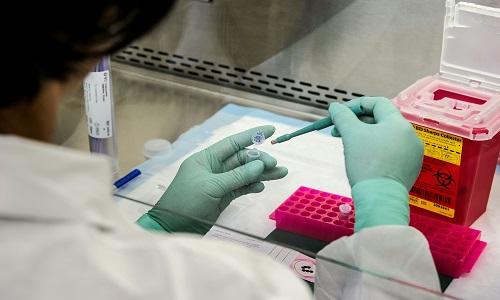
Drop an effervescent vitamin tablet into water, and it fizzes, disperses, and dissolves. Behind this simple experience lies a series of formulation and process decisions involving acid-to-base ratios, moisture control, granulation methods, lubricant selection, and packaging. Each can influence product performance and stability.
For manufacturers and product developers, an integrated development partner can help coordinate formulation screening, process optimization, testing, and packaging decisions. By connecting these activities, a one-stop solution for health care products can simplify project coordination and help identify technical risks earlier in effervescent tablet development.
The Problem With Piecemeal Approaches
Traditionally, launching a health product meant assembling a patchwork of suppliers. A formulator develops the recipe. A separate manufacturer handles production. Another vendor designs packaging. Each handoff introduces delay and quality risk. For effervescent tablets, this fragmentation is dangerous. These products are moisture-sensitive. Inadequate humidity control can trigger premature acid–base reactions, reduce effervescence, and compromise product stability, potentially resulting in batch rejection. When development, granulation, and tableting happen at different facilities, the margin for error shrinks. This is precisely what the one-stop solution for dietary supplement model eliminates.
Beyond the Buzzword: Defining True Integration
A genuine one-stop solution for nutraceutical products covers the full arc: formulation, sensory evaluation, quality assessment, production scale-up, packaging, and regulatory support. The critical distinction is manufacturing capacity. Many companies claim integration but outsource production, reintroducing the handoffs the model should remove. An integrated provider can coordinate formulation development, scale-up, manufacturing, and packaging under aligned quality procedures. Changes in equipment or production scale may still require process optimization and verification before commercial manufacture.
The Technical Complexity Behind the Fizz
Effervescent tablets contain acid and carbonate or bicarbonate components formulated to remain sufficiently stable under controlled dry conditions and react upon contact with water, releasing carbon dioxide. Keeping that reaction dormant during production is the hard part. Moisture is the enemy. A humid room or a wet granulation step can trigger premature activation. Formulation adds difficulty. The acid-to-base ratio affects effervescence and the final solution pH, while dissolution performance also depends on ingredient solubility, particle-size distribution, compression conditions, and excipient selection. Lubricant type and concentration can affect tablet ejection, wetting, and disintegration, while flavor and sweetener systems also contribute to sensory quality. Get these wrong, and the tablet crumbles, dissolves slowly, or leaves grit. These variables make effervescent tablet development an ideal benchmark for evaluating any provider's technical depth. Effervescent tablets can be a useful indicator of a provider's experience with moisture-sensitive formulations, although each dosage form presents its own development and manufacturing challenges.
From Granulation to Final Tablet
Several processing routes may be suitable for effervescent tablets, depending on the formulation and equipment. Dry granulation avoids the addition of water, while direct compression may be appropriate when the powder blend has suitable flowability, compressibility, and content uniformity. Separate granulation of acid and carbonate components may help reduce premature contact, but its suitability depends on the solvent system, humidity control, drying conditions, and residual moisture. Non-aqueous granulation may also be considered for selected formulations; however, no single method universally guarantees faster disintegration or better stability.
The selection of a suitable process should be guided by ingredient properties, target performance, and manufacturing requirements. Raw materials may be milled or sieved when necessary to achieve an appropriate particle-size distribution. After accurate weighing and blending under controlled humidity, formulation variables such as the acid-to-base ratio, lubricant type, and compression parameters can be optimized. Evaluation should include blend uniformity, tabletability, effervescence, disintegration or dissolution performance, and stability.
An experienced development partner can help select and optimize the appropriate process based on the active ingredients, desired product characteristics, and available manufacturing equipment.
One Partner, Every Dosage Form
Effervescent tablets are one piece of the puzzle. A comprehensive one-stop solution for nutraceutical products covers gummies, softgels, hard capsules, tablets, powders, and health drinks. Brands rarely want just one format. Launching a gummy line alongside an effervescent product multiplies supplier relationships under the fragmented model. A one-stop partner handles multiple formats through the same system, using shared quality standards and consistent sourcing. This breadth also covers OEM and ODM services, supporting enzymes, probiotics, vitamins, minerals, amino acids, herbs, and plant extracts.
The Real-World Impact
For brands, the barrier to entry has dropped. A nutritionist with a formulation idea no longer needs to build a supply chain. They can access formulation, effervescent tablet development, production, and packaging through one partner, shortening timelines and reducing capital needs. For consumers, faster iteration means more variety. Consistent quality controls, appropriate stability studies, and packaging evaluation can help improve batch-to-batch consistency and reduce quality-related risks. A tablet that fizzes correctly is not an accident. It is integrated development and manufacturing working under one quality system.
The Future of Integrated Development
Effervescent tablets illustrate why formulation, process development, quality assessment, and packaging should be considered together. Moisture control and appropriate process selection are essential to maintaining product stability and performance throughout development and manufacturing.
An integrated development partner can help coordinate these activities, evaluate formulation and process risks, and support scale-up based on relevant testing and stability data. For brands developing effervescent tablets or other dietary supplement formats, the key is to select a partner whose technical capabilities and manufacturing resources match the project's requirements.
The fizz may look simple, but reliable product performance depends on careful formulation design, controlled processing, and appropriate quality assessment.
Where to Start
For brands exploring this model, the question is how to evaluate partners. Look for manufacturing capacity, not just consulting. Ask how quality standards are maintained across dosage forms. Request examples of moisture-sensitive projects. The right partner can coordinate formulation, testing, scale-up, manufacturing, and packaging while identifying technical risks early and supporting a smoother transition to commercial production. That is what separates a true one-stop solution for dietary supplements from a marketing claim.


