

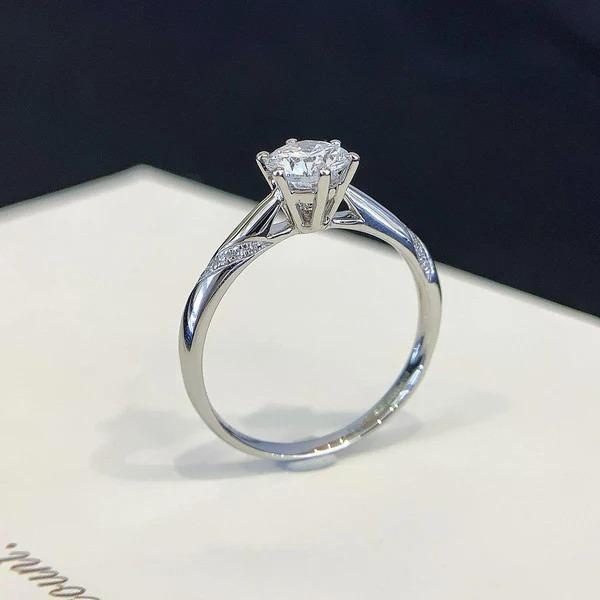

Buying an engagement ring is a personal decision. It represents a promise, a special memory, and the beginning of a new chapter together. When working with a budget of $1,000, it is natural to wonder whether you can find a ring that looks good, feels comfortable, and holds up to regular wear.
The answer depends on knowing what to look for. A ring's quality is not decided by its center diamond alone. The metal, setting, stone placement, finishing, and overall construction all play important roles. Understanding these details can help you make a better choice without spending more than you planned.
Look Beyond the Center Diamond
Many buyers begin their search by comparing diamond size and appearance. While these details matter, they should not be the only things you consider. A larger diamond does not automatically mean the entire ring is well made.
Pay attention to how the center stone looks from different angles. Check whether its surface appears clean, whether the shape is properly defined, and whether the stone has a balanced appearance.
Check Diamond Color and Clarity
Diamond color and clarity can affect how a stone looks. Color grades closer to the colorless range, such as D, E, and F, generally have less visible body color. However, the difference between nearby grades may be difficult to notice without professional equipment.
Clarity refers to natural internal characteristics and surface marks. A diamond does not always need the highest clarity grade to look attractive. What matters is whether inclusions are visible to the naked eye and affect the stone's appearance.
Consider the Diamond Shape
Round, oval, pear, emerald, and cushion shapes each have different visual characteristics. Some shapes create a larger face-up appearance than others at a similar weight.
Look at the proportions rather than focusing only on the listed size. A well-proportioned stone can look balanced and pleasing without requiring a higher budget.
Examine the Ring Setting Carefully
The setting is one of the most important parts of an engagement ring because it holds the center diamond in place. Even a beautiful stone can become a concern if its setting is poorly constructed.
Look closely at the prongs, basket, and connection between the center setting and the band.
Check the Prongs and Stone Security
Prongs should sit properly against the diamond without looking uneven or excessively thin. They should hold the stone securely while allowing enough light to enter.
A four-prong setting offers a clean appearance, while six-prong settings provide additional contact points around a round center stone. Bezel settings surround the stone with metal and offer another approach to stone protection.
There is no single setting that works for everyone. The right choice depends on the diamond shape, daily activities, and personal preferences.
Inspect the Band Connection
Look at where the center setting meets the band. The connection should appear smooth and properly finished. Uneven joints, rough edges, or visible gaps can be signs that the ring needs closer inspection.
A well-made setting should feel secure rather than loose or unfinished.
Choose Metal That Matches Your Daily Needs
The metal affects the ring's appearance, weight, maintenance, and long-term use. Gold and platinum are common choices, but each has different characteristics.
Yellow gold offers a warm color, while white gold provides a lighter metal appearance. Rose gold has a pinkish tone that some buyers prefer for its distinct look.
Understand Gold Purity
Gold is available in different purity levels, including 10K, 14K, and 18K.
-
10K gold: Contains 41.7% pure gold and offers a harder alloy.
-
14K gold: Contains 58.3% pure gold and balances gold content with durability.
-
18K gold: Contains 75% pure gold and has a richer gold content.
Higher gold purity does not automatically mean better everyday performance. Consider your lifestyle, preferred color, and maintenance expectations before deciding.
Pay Attention to Small Craftsmanship Details
Sometimes, the difference between a well-finished ring and an average one is visible in the smallest details.
Check the inside of the band. It should feel smooth against your finger without sharp edges. The outside should have an even finish, and decorative details should look consistent across the design.
If the ring includes side stones or small diamonds along the band, check whether they are positioned evenly. Missing stones, uneven spacing, and rough metal edges deserve attention.
Also, consider the ring's weight and proportions. A very thin band may not provide the support you want for everyday use, especially if the design has a larger center stone.
Ask for Certification and Clear Product Details
Documentation helps you understand what you are buying. If the ring includes a certified lab-grown diamond, ask for the grading report and verify the details.
An IGI certificate can provide information about the diamond's grading characteristics, including color, clarity, cut, and measurements.
However, remember that a diamond grading report does not certify the quality of the entire ring. The metal, setting, workmanship, and finishing should be assessed separately.
Before purchasing, check whether the seller provides information about metal purity, stone specifications, ring sizing, warranty coverage, and return policies. Clear product details make comparisons easier and help prevent unexpected surprises.
Compare the Complete Ring, Not Just Its Price
When comparing engagement rings under $1000, it is easy to focus on the biggest diamond or the lowest listed price. A better approach is to compare the complete product.
Look at the diamond's specifications, metal type, band thickness, setting construction, and finishing. Also, consider whether the seller offers resizing, repairs, and support after purchase.
For example, two rings may have similar center stones but very different settings. One may have a well-supported basket and properly finished band, while the other may have a thinner structure that requires more careful handling.
This is why comparing the full design gives you a clearer idea of value.
If you are ready to compare different styles and specifications, Browse engagement rings under $1000 to explore options that fit your budget and personal preferences. At Antiquecut, you can also explore designs with different diamond shapes, metal choices, and setting details.
Final Thoughts
Choosing an engagement ring within a $1,000 budget does not mean you should ignore quality. It means understanding which details deserve your attention. A good-looking diamond, secure setting, suitable metal, comfortable band, and careful finishing all contribute to the overall result.
Take your time, compare the complete designs, and ask questions whenever product details are unclear. The best ring is not necessarily the one with the largest center stone. It is the one that feels right, suits your daily needs, and carries the meaning you want it to hold.


