

Referencing and Editing Mistakes That Could Cost You Marks in Your Dissertation
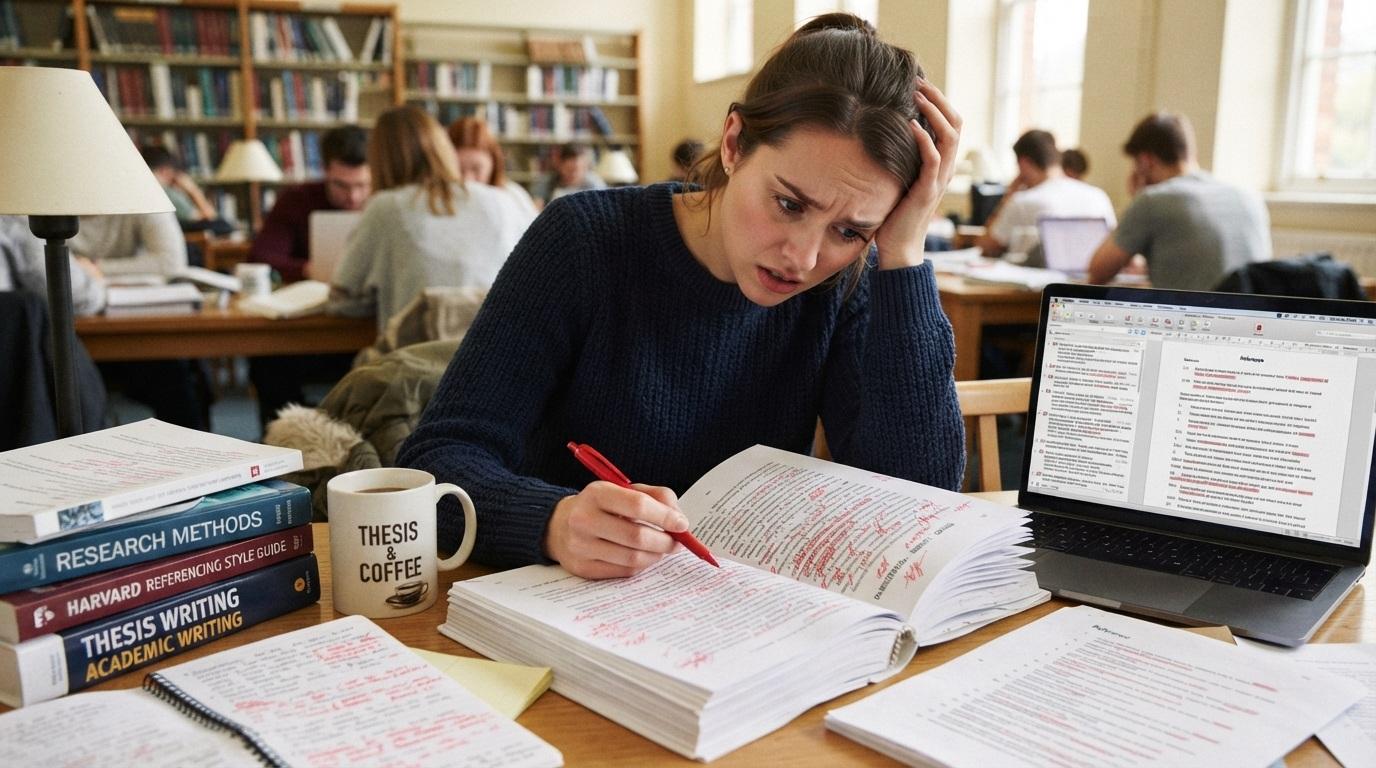
You've spent months researching, writing and rewriting. The dissertation is finally done, and the temptation is to upload it and walk away. But this is where many UK students lose marks they didn't need to lose. The argument may be sound, but sloppy referencing, inconsistent formatting and unpolished prose can undermine it.
That's why many students turn to professional dissertation editing services before submission. Even if you don't, knowing where the common pitfalls lie will help you catch problems early.
Why Small Mistakes Carry Big Consequences
Markers read dozens of dissertations in a short window. Errors that seem trivial to you, such as a missing page number or an inconsistent heading style, signal a lack of care. Over the length of a 10,000 to 15,000-word document, those signals add up.
Referencing errors are particularly risky because they touch on academic integrity. A citation that can't be traced, or a source credited incorrectly, can look like carelessness at best and poor scholarship at worst. Most UK universities run work through similarity-detection software, and unclear attribution can raise flags you'd rather avoid.
The Most Common Referencing Mistakes
Mixing referencing styles. Harvard, APA, OSCOLA, MLA and Vancouver each have their own rules. Many students blend them without noticing, perhaps using author-date citations in the text but a numbered format in the bibliography. Check your department handbook, confirm which style is required, and stick to it throughout.
Missing or mismatched quotes. Every in-text citation needs a matching entry in your reference list, and every reference list entry should be cited somewhere in the text. It's easy to delete a paragraph during editing and forget that its sources still sit in your bibliography.
Incorrect details. Wrong publication years, misspelled author names, missing DOIs and incomplete page ranges are all common. Reference management tools like Zotero or EndNote help, but they pull data from online databases that often contain errors. Always check the output yourself.
Over-reliance on secondary sources. Citing a theory through a textbook rather than the original author is sometimes unavoidable, but it should be flagged properly (“cited in...”). Doing this too often suggests you haven't engaged with the primary literature.
Weak paraphrasing. Swapping a few words in a sentence while keeping the original structure isn't paraphrasing. It's close copying, and it can still count as plagiarism even when you've included a citation.
Editing Mistakes That Undermine Your Argument
Referencing is only one piece of the picture. These editing issues also trip students up:
- Inconsistent formatting. Heading levels, font sizes, spacing and caption styles should be uniform across every chapter.
- Overlong sentences. Academic writing doesn’t need to be dense. If a sentence needs reading twice, split it.
- Switching between UK and US spelling. “Analyse” in one chapter and “analyze” in the next looks careless, especially for a UK audience.
- Tense shifts. Moving between past and present tense without reason confuses the reader, particularly in methodology and findings sections.
- Unclear signposting. Without strong topic sentences and transitions, even good ideas feel disconnected.
Practical Tips to Avoid These Problems
Build your reference list as you write. Adding sources at the end is where most errors creep in. Record full details the moment you read a source.
Create a style checklist. Note your spelling convention, heading format, citation style and any department-specific requirements, then check against it during your final read-through.
Leave time between writing and editing. A few days away from your draft helps you spot errors you’d otherwise read straight past.
Read it aloud. Awkward phrasing and clumsy sentences become obvious when you hear them.
Check citations in a separate pass. Don’t try to fix content, grammar and referencing at once. Dedicated passes are far more effective.
Get a fresh pair of eyes. After weeks of working on the same text, you stop seeing it. A friend, a peer or a professional can spot what you can’t.
When Dissertation Editing Services Make Sense
If you’re juggling deadlines, working in a second language, or simply want reassurance before you submit, professional dissertation editing services can make a real difference. A trained editor will tighten your prose, correct grammar, check consistency and ensure your referencing follows your required style, all while keeping your ideas and voice intact.
Just be clear about what you’re asking for. Editing improves clarity, flow and structure, while proofreading is the final polish for surface errors. Reputable providers will help you stay within your university’s academic integrity guidelines, since the work remains yours.
For a closer look at the referencing side of things, this guide on dissertation proofreading and the referencing mistakes students should avoid offers useful examples and practical advice worth reading before your final check.
Final Thoughts
A dissertation is often the largest piece of work you'll produce as an undergraduate or master's student. Your research deserves to be presented clearly and credibly. Careful referencing, consistent formatting and polished writing won't replace strong ideas, but they ensure those ideas get the attention they deserve.
Give yourself time, work methodically, and don't hesitate to seek support, whether that means a trusted peer or dissertation editing services. A little extra care in the final week can make a noticeable difference to the grade you receive.


