

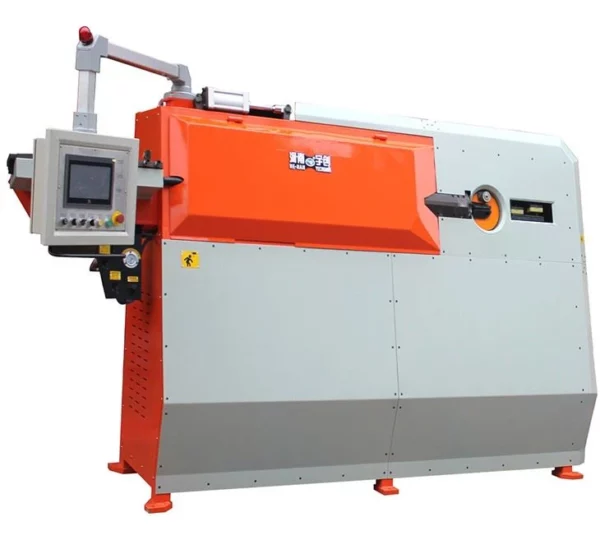
From Manual Complexity to Automated Accuracy: Advancing Modern Rebar Fabrication

Modern construction projects depend on reliable reinforcement systems to deliver strength, stability, and long-term structural performance. As infrastructure requirements become more demanding, contractors and steel processing businesses are looking for better ways to improve fabrication speed without compromising accuracy. Traditional manual bending methods can involve repetitive work, considerable labour, and variations in finished products. Adopting an automatic stirrup bender machine offers a practical way to modernise reinforcement processing and support more consistent production.
The Growing Importance of Automated Rebar Processing
Reinforcing steel plays an essential role in concrete construction. It helps structures withstand different loads and provides the strength needed for buildings, bridges, roads, and industrial facilities. Stirrup fabrication is particularly important because these components help hold longitudinal reinforcement bars in position and contribute to the structural integrity of concrete elements.
As construction schedules become tighter, producing stirrups manually may create operational challenges. Workers must measure, mark, bend, and inspect steel bars repeatedly. Even small variations in dimensions or bending angles can affect consistency across large production batches. Automation helps address these challenges by introducing a more controlled and repeatable fabrication process.
Improving Production Speed and Workflow
Production efficiency is one of the main reasons steel fabrication facilities consider automated equipment. Manual processing often requires several individual steps, and the overall output can depend heavily on operator experience and working conditions.
Automated bending technology can streamline multiple operations within a coordinated workflow. Once the required dimensions and bending instructions are configured, the equipment can process reinforcement bars according to the selected specifications. This reduces repetitive manual handling and helps operators manage larger production requirements more efficiently.
A more organised workflow also makes it easier for fabrication businesses to plan production schedules. Instead of relying entirely on labour-intensive bending activities, teams can allocate their time to material preparation, quality inspection, equipment supervision, and other important tasks.
Maintaining Consistency in Stirrup Dimensions
Accuracy is a major consideration in reinforcement fabrication. Stirrup dimensions must correspond with project drawings and engineering requirements. Inconsistent shapes or measurements can create difficulties during installation and may require additional adjustments at the construction site.
Automated systems support repeatability by following programmed bending instructions. This allows fabrication teams to produce multiple components with consistent dimensions, provided that the machine is configured correctly and the incoming material meets the required specifications.
Consistency is particularly valuable when contractors need large quantities of identical reinforcement components. Standardised production can simplify inventory management, reduce unnecessary corrections, and help maintain a predictable supply of fabricated steel products.
Reducing Dependence on Repetitive Manual Operations
Manual bending can place considerable physical demands on workers, especially when production involves heavy reinforcement bars and repeated bending activities. Long working periods may also increase fatigue, which can affect productivity and the quality of finished components.
Automation changes how workers participate in the production process. Rather than performing every bending operation manually, trained operators can supervise equipment, prepare materials, enter production settings, and inspect completed products.
This does not eliminate the need for skilled personnel. Operators still require appropriate training to understand machine functions, follow safety procedures, select suitable settings, and identify potential production issues. However, reducing repetitive tasks can help create a more organised working environment.
Supporting Different Construction Requirements
Construction projects rarely have identical reinforcement requirements. Residential buildings, commercial developments, industrial facilities, and infrastructure projects may all require different stirrup dimensions and bending configurations.
Modern automated fabrication equipment can provide flexibility through programmable production settings. Depending on the machine's specifications, operators may be able to configure different shapes, dimensions, and bending sequences for particular applications.
This flexibility can help steel processing businesses serve a broader range of customers. Before selecting equipment, however, buyers should evaluate the supported bar diameters, material compatibility, bending capacity, production speed, and available configuration options. Matching machine capabilities with actual production needs is essential for achieving practical results.
Choosing Equipment with Long-Term Value
Purchasing industrial machinery involves more than comparing initial prices. Businesses should consider how equipment will perform throughout its working life and whether it can support future production requirements.
Important evaluation factors include machine construction, control systems, operating convenience, maintenance requirements, spare parts availability, and technical support. Buyers should also examine the manufacturer's experience and request clear information about installation, training, warranty coverage, and after-sales assistance.
A suitable machine should fit the available factory space, production volume, workforce capabilities, and material requirements. Careful evaluation helps businesses avoid investing in equipment that is either unsuitable for their current operations or unable to accommodate expected growth.
Building a More Efficient Fabrication Environment
Successful automation requires more than installing advanced machinery. Businesses should also establish organised material storage, regular maintenance schedules, operator training, and consistent quality-control procedures.
Raw reinforcement bars should be inspected before processing to identify material defects or unsuitable dimensions. Machine settings should be checked before production begins, while completed stirrups should be measured and inspected according to project specifications. Regular cleaning and preventive maintenance can also help minimise unexpected interruptions.
Combining appropriate equipment with disciplined production management creates a stronger foundation for long-term efficiency. It enables fabrication businesses to improve consistency while making better use of their available resources.
Moving Towards Smarter Steel Fabrication
The construction industry continues to evolve, and reinforcement manufacturers must adapt to changing expectations around productivity, accuracy, and delivery schedules. Automated bending technology provides an opportunity to reduce repetitive work, improve production organisation, and maintain more consistent results across different construction applications.
For businesses planning to upgrade their reinforcement processing capabilities, exploring a reliable automatic stirrup bender machine can be a useful step towards a more efficient fabrication operation. By selecting equipment that matches their production requirements and combining it with proper training and quality control, manufacturers can strengthen their operational capabilities and prepare for the demands of modern construction.


