

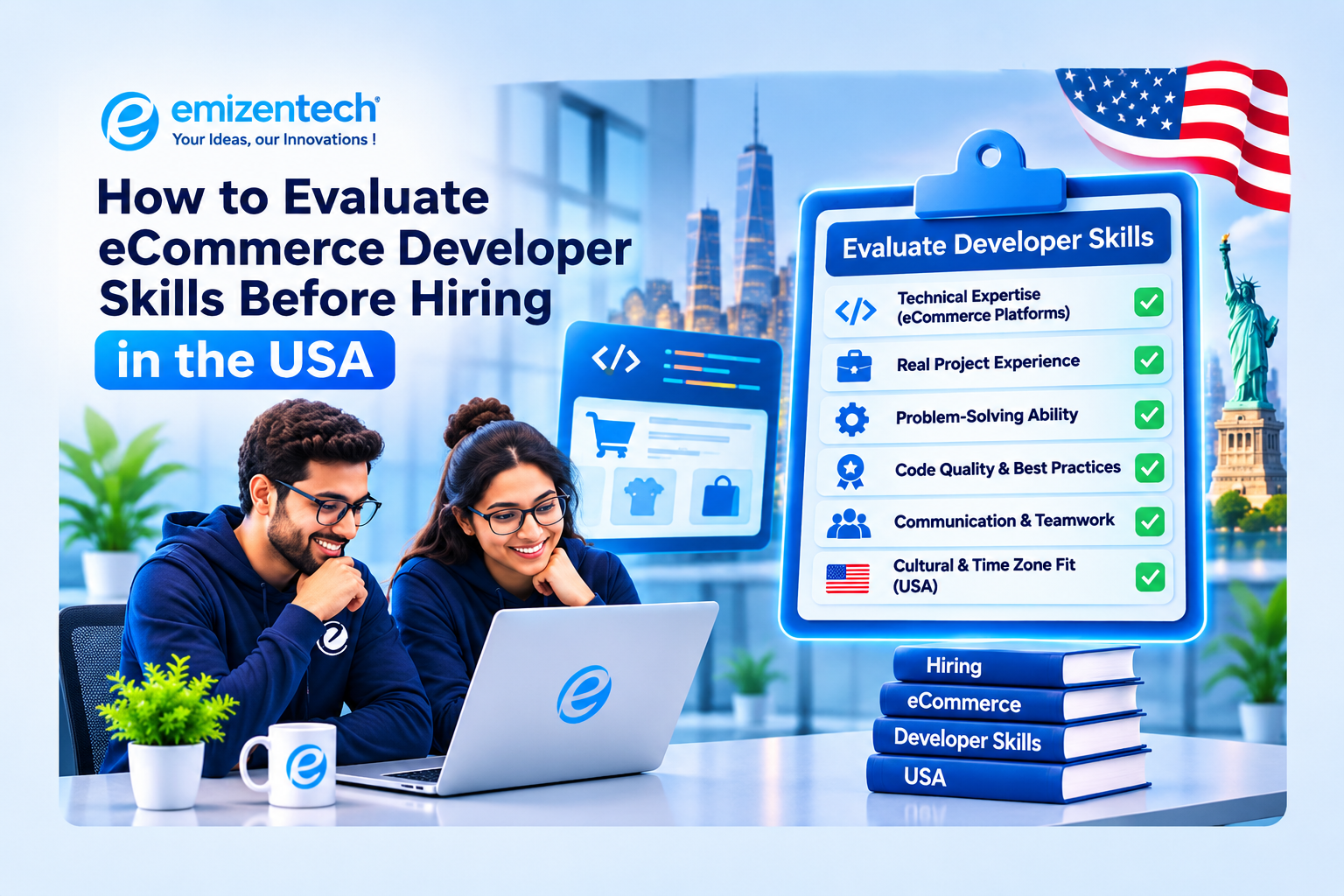

Hiring an eCommerce developer is a bit like hiring a contractor to renovate your shop while customers are still walking through the door. A great one keeps your store fast, secure and ready to sell. A weak one leaves slow pages, broken checkouts and an invoice that keeps growing.
The tricky part is that résumés and sales pitches all sound alike. This guide walks you through practical ways to test real skills before you sign anything. It covers portfolio checks, paid trial tasks, security knowledge and communication habits, with a few points that matter specifically for stores selling in the US.
Start With What Your Store Needs
Before you judge anyone’s skills, you need a clear picture of what you’re hiring for. A developer who is excellent at one job can be a poor fit for another. A few minutes of planning here makes every later step easier.
Write down your platform, catalog size, key integrations (payments, shipping, ERP, tax tools) and your goals for the next 12 months. A store with 200 products on Shopify needs very different skills from a multi-vendor marketplace on Adobe Commerce. Once that list exists, you can hire e-commerce developers against real requirements instead of a vague job title, and mismatches become obvious fast. Also decide whether you need a front-end specialist, a back-end engineer or someone who handles both ends of the build.
Check Platform and Technical Skills
Technical skill is the foundation, but it’s also the easiest thing to exaggerate. Ask for specifics and look for proof. Here is what to verify.
Start with the platform. Certifications like Shopify Partner status or Adobe Commerce credentials are a good sign, though not a guarantee. Then check depth in the areas that affect your store most: custom theme work, module or app development, REST and GraphQL APIs, payment gateways like Stripe or PayPal, and database handling. A developer who only knows plugins will struggle the moment you need something custom.
Review Their Portfolio and Live Stores
A portfolio tells you what someone has actually delivered. Screenshots can be polished and misleading, so go to the real thing. This is the quickest way to judge quality without writing a line of code.
Open the live stores they list. Load them on your phone, add a product to the cart and go through checkout. Run the homepage through Google PageSpeed Insights and note the Core Web Vitals. A store that loads slowly or breaks on mobile tells you more than any sales pitch.
Next, ask what the developer personally built versus what others on the project handled. Request two or three client references and call them. Ask about deadlines, communication and how problems were handled after launch.
How AI Shows Up in a Developer’s Skill Set
AI has changed how good developers work, and it should be part of your evaluation. The goal isn’t to find someone who uses it the most. It’s to find someone who uses it wisely. Here is what to look for.
Strong developers use AI coding assistants to speed up routine work like boilerplate code, test scripts and bug tracing. That saves hours you’d otherwise pay for. They also know how to add AI-driven features to a store, such as smart product recommendations, natural-language search and chatbots that handle order questions, and those features can lift conversions and cut support load.
The risk is blind trust. Code written with AI help can look clean while hiding security gaps or slow queries. Ask how the developer reviews and tests AI-assisted work. A solid answer mentions code review, automated tests and security scans. A weak answer sounds like “the tool handles it.” The best developers treat AI as a fast junior assistant and keep full responsibility for what ships.
Give a Small Paid Task
Interviews show how someone talks. A short practical task shows how they work. Two to five days is usually enough, and paying for it is both fair and professional.
Pick something real but contained, like fixing a checkout bug, building a custom product filter or speeding up one slow page. Watch how they ask questions, how clean their code is and how clearly they document the work. Check their commit messages and how they handle feedback. Most important, make sure they can explain every choice. Someone who can’t explain the code they delivered is a risk, because the next bug will land on you.
Assess Security, Performance and Compliance
Selling in the US comes with specific rules, and a good developer should know them without being reminded. This is where cheap mistakes turn into expensive ones. Ask direct questions and listen for confident, specific answers.
Look for working knowledge of these areas:
- PCI DSS: Safe handling of card data and secure checkout setups
- Privacy laws: CCPA and CPRA requirements if you sell to California shoppers
- Accessibility: WCAG standards, since ADA-related lawsuits against online stores keep rising
- Sales tax: Integrations with tools like Avalara or TaxJar, which matter once you cross economic nexus thresholds in several states
- Performance: Caching, CDN use and image optimization
Evaluate Communication and Working Style
Skill means little if you can’t work with the person. Poor communication causes missed deadlines and quiet scope creep more often than weak code does. Test this early, not after the contract is signed.
Notice how quickly they reply and whether their answers are clear. Ask how they report progress and which tools they use, such as Jira, Slack or Trello. If they’re in a different time zone, agree on overlap hours in advance. A developer who pushes back politely with a reason is more useful than one who agrees with everything and delivers late.
Ask Smart Interview Questions
The right questions separate real experience from rehearsed answers. Keep them practical and tied to your store. Here are five that work well:
- Tell me about a checkout problem you fixed and how you found the cause.
- How do you keep a store fast as the catalog grows?
- How would you migrate us from our current platform without losing SEO rankings?
- Where do you use AI tools in your workflow, and where do you avoid them?
- What do you do after launch to keep the store stable?
If you’re unsure what a strong answer sounds like, eCommerce consulting services can help you shape the requirements and review technical responses before you commit. An outside opinion is cheap compared with a bad hire.
Red Flags to Watch For
Some warning signs show up early. Spotting them saves weeks of frustration. Treat any of these as a reason to pause and dig deeper.
- Vague answers when you ask for specifics
- No live stores to show, or portfolio work they can’t explain
- Refusal to do a paid trial task
- Promises of very low prices with very fast delivery
- Little interest in security, testing or compliance
- Heavy reliance on AI output they can’t explain or defend
- Slow, unclear or defensive communication
One red flag isn’t always a dealbreaker, but two or three together usually are.
Conclusion
Evaluating eCommerce developer skills comes down to testing what matters: platform knowledge, real results in live stores, security awareness, honest communication and smart, careful use of AI. Define your needs first, check the work, run a small paid task and trust what you see over what you’re told. If you’d rather work with a proven partner like EmizenTech, you can apply the same checks and judge the fit on your own terms. Careful evaluation upfront costs a few days, and it protects months of work and revenue.
FAQs
1. What skills should an eCommerce developer have?
Look for strong knowledge of your platform, API and payment gateway experience, database skills, performance tuning and security basics. Awareness of PCI DSS, privacy rules and accessibility standards matters for US stores.
2. How can I test a developer’s skills before hiring?
Review live stores they’ve built, check references and assign a short paid task such as fixing a checkout bug or building a custom filter. Judge the code quality, communication and how well they explain their choices.
3. Does it matter if a developer uses AI tools?
Not at all, as long as they use them well. AI can speed up routine coding and testing, but the developer should review everything and be able to explain how it works.
4. How long should a trial task take?
Two to five days is usually enough to see real skill without wasting anyone’s time. Pay for the work, even if you decide not to continue.
5. What are the biggest red flags when hiring an eCommerce developer?
Vague answers, no live examples, refusal to do a trial task, ignoring security and compliance, and unclear communication are the main ones. Two or three together are a strong reason to look elsewhere.


