

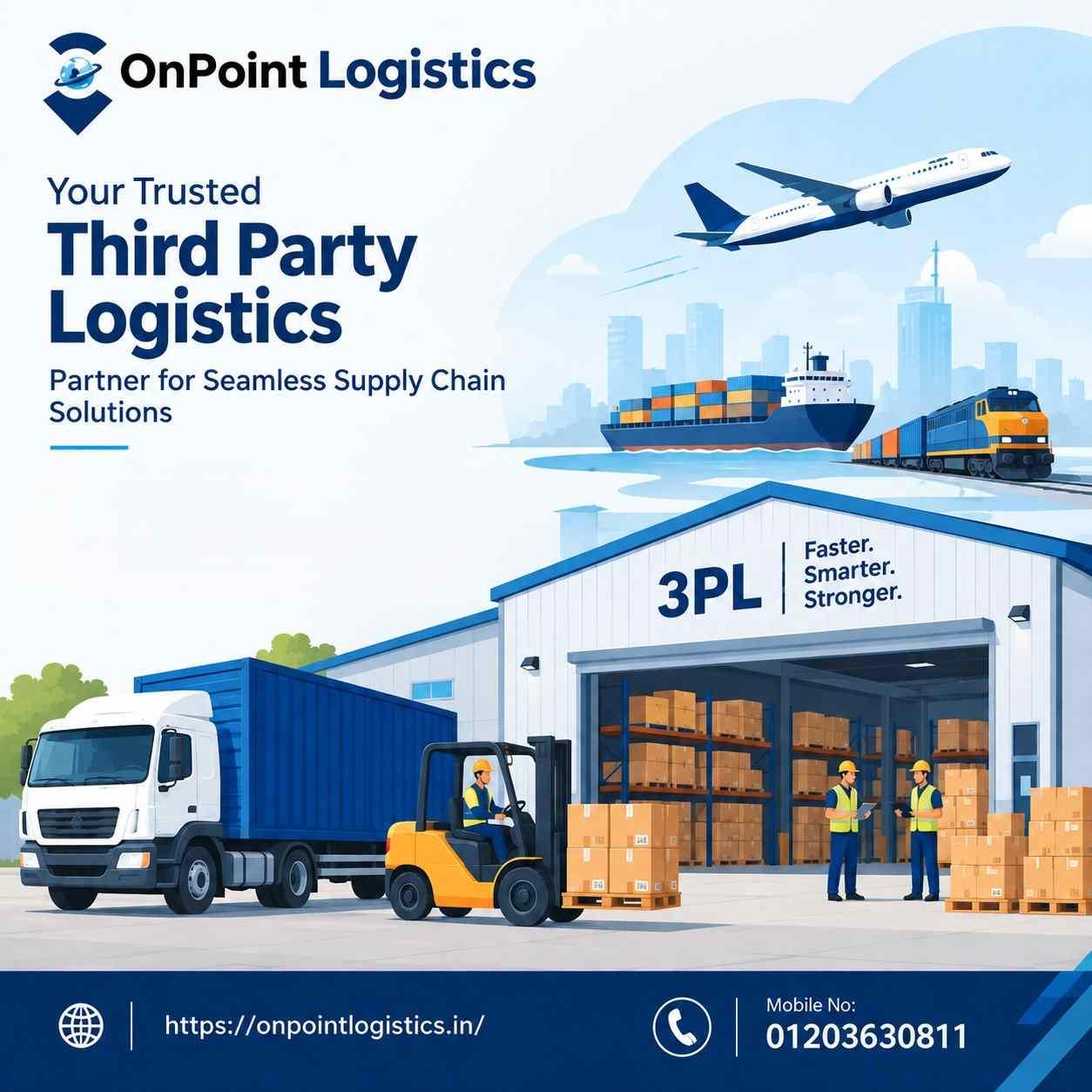
3PL Logistics Company in India: Turning Complex Supply Chains into Manageable Operations

A business can have reliable suppliers, steady customer demand, and a capable sales team, yet still struggle when orders move between factories, warehouses, transporters, and delivery locations. The difficulty often lies not in any single activity but in managing the connections between them. This is where choosing the right 3PL logistics company in India becomes an important operational decision.
As businesses expand into new markets, logistics responsibilities become harder to manage internally. A company that once handled dispatches from one warehouse may eventually deal with multiple storage locations, different transport requirements, regional distributors, and changing order volumes. Managing all these activities through separate vendors can create gaps in responsibility. Third-party logistics offers a way to bring selected operations under a more coordinated arrangement, but the value depends on how well the provider understands the business behind the shipments.
Why Third-Party Logistics Has Become a Business Decision, Not Just a Transport Choice
There was a time when outsourcing logistics mainly meant hiring someone to move goods from one location to another. That arrangement still exists, but the requirements of modern distribution are considerably broader. Businesses may need storage, order processing, packaging coordination, dispatch planning, freight movement, and information about what is happening at each stage.
Consider a manufacturer supplying products to distributors across several states. Its sales team may receive orders from different regions, while production follows its own schedule. The warehouse must prepare the correct stock, transport must be arranged, and delivery information needs to reach the relevant teams. If every activity is handled independently, even a small change in an order can create confusion.
A third-party logistics arrangement can help connect these activities. However, outsourcing does not automatically remove complexity. It changes who manages particular responsibilities. The business still needs clear service expectations, accurate product information, and an agreed process for handling exceptions.
This distinction matters. A logistics provider should not simply become another vendor that receives instructions. The relationship works better when both sides understand how their decisions affect the wider operation.
What a 3PL Logistics Company in India Actually Brings to the Operation
A 3PL provider can manage a combination of logistics activities depending on its infrastructure, service capabilities, and the agreement with the client. These may include warehousing, inventory handling, order fulfilment, transportation, distribution, and shipment coordination.
The important question is not how many services appear on a provider's website. It is whether those services connect in a way that solves the business's actual problem.
For example, a company selling electrical components may need different handling arrangements for bulky products, fragile items, and frequently ordered spare parts. If warehouse operations treat every product in exactly the same way, picking errors and handling issues can become more likely. A suitable logistics arrangement should account for product characteristics, storage requirements, order patterns, and dispatch priorities.
The same thinking applies to businesses supplying retailers. An order may contain several product lines, each with different stock availability. The warehouse needs to know whether partial dispatches are acceptable, whether orders must be shipped together, and how shortages should be communicated. These details may sound administrative, but they influence customer commitments.
In reality, a useful 3PL relationship is built around operational understanding. The provider must know what is being moved, why it is being moved, and what the client considers a successful delivery.
Inventory Management Logistics Services Need to Reflect How Stock Is Used
Inventory management is often discussed as a question of knowing how much stock is available. For logistics operations, that is only part of the requirement. Businesses also need to know where stock is located, whether it is ready for dispatch, and whether the available quantity can fulfil a particular order.
Imagine a distributor with the same product stored across two facilities. One location may have sufficient stock on paper, but some units could be reserved for existing orders or awaiting inspection. If the available quantity is not represented accurately, the sales team may promise stock that cannot actually be dispatched.
This is why inventory management logistics services should be assessed through the quality of stock records and the processes behind them. Receiving, put-away, stock movement, picking, returns, and adjustments all need consistent documentation. A digital system can support this work, but its information is only as reliable as the transactions entered by the people using it.
There is also a practical difference between inventory visibility and inventory control. Visibility tells a business what the system currently reports. Control involves having processes to investigate discrepancies, approve adjustments, and understand why recorded quantities do not match physical stock.
A 3PL partner should be able to explain how these situations are handled. If the answer is simply that the warehouse uses inventory software, ask what happens when the system and physical count disagree.
Affordable 3PL Logistics Solutions Should Be Evaluated Beyond the Monthly Bill
The cost of outsourcing is naturally important, particularly for businesses working with tight operating margins. But comparing providers only through a monthly service charge can produce misleading conclusions.
One proposal may include warehousing and routine handling, while another may separate receiving, packaging, storage, and dispatch charges. A lower headline figure may therefore represent a narrower service scope. Before comparing prices, businesses need to understand exactly what each quotation covers.
There is another consideration: how much internal work remains after outsourcing. If a provider requires the client's team to coordinate several vendors, manually reconcile shipment records, and repeatedly follow up on routine tasks, some of the expected operational benefit may disappear.
Affordable 3PL logistics solutions should therefore be judged by the responsibilities transferred, the service delivered, and the additional work the client still needs to perform. A slightly higher service fee may be reasonable if it replaces several disconnected activities and provides clearer accountability. Equally, a large bundled arrangement may be unnecessary for a business that only needs support with selected logistics functions.
The sensible approach is to identify the activities causing the greatest operational pressure and outsource those first. Not every business needs a complete logistics outsourcing model from the beginning.
Choosing a Third Party Logistics Service Provider That Fits Your Business
Selecting a third party logistics service provider requires more than checking its service list and asking for a quotation. The provider's operating model should fit the client's product range, distribution pattern, order complexity, and expected service levels.
A business handling a limited number of standard products may need a relatively straightforward warehousing and dispatch arrangement. Another company dealing with high product variety, returns, and multiple delivery channels may require more detailed coordination. These are different operational requirements, even if both businesses describe their need as warehousing and transportation.
The evaluation should include a discussion about how work is performed. Ask how inbound goods are recorded, how damaged or short-received stock is reported, how urgent orders are prioritised, and how delivery exceptions are escalated. These questions reveal more about operational readiness than a general presentation about capabilities.
It is also worth understanding the provider's reporting process. A business should know which records it will receive, how often performance information is shared, and who is responsible for resolving discrepancies. When responsibilities are unclear, issues can remain open because each party assumes the other is handling them.
Companies reviewing 3PL logistics services in India should also distinguish between a provider's own capabilities and services delivered through external partners. There is nothing inherently wrong with a provider using a wider transport network, but the arrangement and accountability should be explained before the contract is signed.
A Practical Way to Decide What Should Be Outsourced
The most effective outsourcing decisions usually begin with a review of the existing operation. Instead of asking whether the entire logistics function should be outsourced, identify where the business loses the most time, coordination effort, or operational control.
A useful assessment should consider:
-
Operational responsibility: Decide whether the requirement is limited to transportation, or also includes storage, order fulfilment, and inventory handling.
-
Product requirements: Identify special handling, packaging, storage, or documentation needs that could affect service delivery.
-
Order behaviour: Review the frequency of orders, typical quantities, seasonal changes, and the consequences of partial fulfilment.
-
Performance expectations: Agree on reporting, delivery commitments, escalation procedures, and responsibility for exceptions.
-
Commercial clarity: Compare the complete service scope, additional charges, contract conditions, and processes for changing requirements.
A pilot arrangement can be useful before moving a large part of the operation to an external provider. A limited product category, warehouse activity, or group of distribution routes gives both sides an opportunity to test the working relationship. It also helps reveal problems that may not appear during a presentation or contract discussion.
How Technology Is Changing 3PL Logistics Services in India in 2026
Technology is increasingly influencing how logistics providers coordinate warehouses, transportation, and customer information. Warehouse management systems, transport management tools, barcode-based processes, and digital proof of delivery can improve the quality of operational records.
But technology should solve a defined problem. A business does not necessarily need an elaborate dashboard if its main issue is inaccurate receiving records. Similarly, shipment tracking is useful, but it does not explain why a dispatch was delayed or who needs to act next.
The more meaningful development is the movement towards connected operational information. When order details, stock records, dispatch status, and delivery confirmation are easier to reconcile, businesses can make decisions with fewer information gaps.
In 2026, logistics providers will also need to respond to changing customer expectations around visibility and accountability. Businesses increasingly want to understand not only whether a shipment has moved, but also whether the wider fulfilment process is working as agreed.
For companies considering 3rd party logistics companies in India, this makes technology an important evaluation factor, but not the only one. A capable operating team, reliable processes, and clear responsibility remain essential. Software can support good logistics management; it cannot replace it.
Conclusion
Outsourcing logistics is not simply a way to transfer warehouse or transport activities to another company. It is a decision about how responsibilities, information, and operational risks will be managed as the business grows.
The right arrangement should reflect the products being handled, the complexity of orders, the level of control required, and the work the internal team wants to retain. Businesses should examine service scope carefully, question unclear charges, and test operational processes before making a wider commitment.
OnPoint Logistics can be considered by businesses reviewing their transportation, warehousing, and wider logistics requirements. Before selecting any provider, map the activities that need support and discuss how those responsibilities will be managed in practice. A clear operating arrangement is a much stronger starting point than choosing a provider based on a service list alone.
Frequently Asked Questions
1. What does a 3PL logistics company in India do?
Ans. A 3PL company manages selected logistics activities for other businesses, such as warehousing, inventory handling, order fulfilment, transportation, and distribution. The exact services depend on the provider's capabilities and the agreement with the client.
2. How do I choose the right third-party logistics provider?
Ans. Compare the provider's experience with similar products and order requirements, its operating processes, reporting methods, service coverage, and commercial terms. Ask how it handles stock discrepancies, delivery delays, and other exceptions before signing an agreement.
3. What is included in inventory management logistics services?
Ans. These services may include goods receiving, stock recording, storage allocation, inventory updates, picking, dispatch preparation, and stock reconciliation. The scope should clarify how damaged, missing, reserved, or returned goods are recorded.
4. Are affordable 3PL logistics solutions suitable for small businesses?
Ans. Yes. Smaller businesses can outsource specific activities, such as storage, fulfilment, or transportation, rather than committing to a complete logistics arrangement. The service scope should match actual order volumes and operational needs.
5. What is the difference between a 3PL company and a transport company?
Ans. A transport company primarily focuses on moving goods between locations. A 3PL provider may manage transportation along with other activities such as warehousing, inventory handling, order processing, and distribution coordination.


