

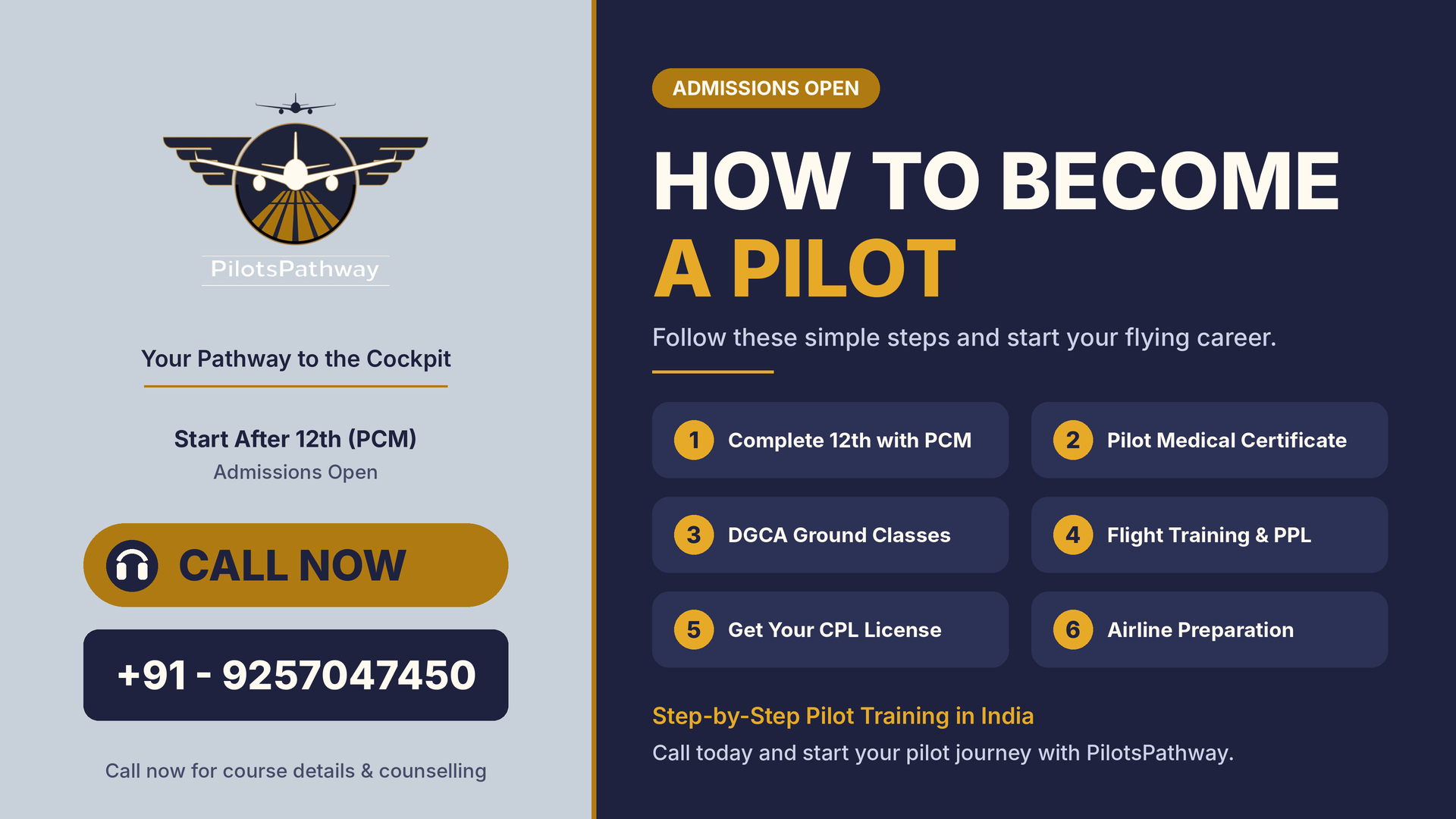
Becoming a pilot is a dream for many students who are interested in flying aircraft, exploring new destinations, and building a career in aviation. It is a profession that requires proper education, practical flying skills, medical fitness, and strong knowledge of aviation. If you want to work as a professional pilot, you need to understand the training process, eligibility requirements, examinations, and licences required to enter this field. With the right preparation and guidance, you can take the first step towards achieving your dream of becoming a pilot. Understanding How To Become A Pilot is important because the journey involves several stages, and each stage prepares you for the responsibilities of flying an aircraft safely.
In India, students can start preparing for a pilot career after completing their 12th standard. They need to choose the right training pathway, understand the requirements set by the Directorate General of Civil Aviation (DGCA), and complete the necessary ground and flying training. Students who want to become commercial pilots must also prepare for theoretical examinations and practical flying assessments. Pilots Pathway provides aviation courses and pilot training programmes designed to help students understand the different stages of their pilot training journey.
Understand the Different Types of Pilot Licences
Before starting your training, it is important to understand the different types of pilot licences available in aviation. Each licence has a different purpose and allows pilots to perform specific flying activities. A Private Pilot Licence (PPL) is generally suitable for individuals who want to fly aircraft for personal purposes rather than work as professional pilots. It provides basic flying knowledge and practical experience. On the other hand, a Commercial Pilot Licence (CPL) is required by individuals who want to pursue flying as a profession and work in commercial aviation.
Students who want to become airline pilots generally follow the commercial pilot training pathway. This includes completing the required academic qualifications, medical examinations, DGCA examinations, ground classes, and practical flying training. Understanding these licences before choosing a course can help students make better decisions about their aviation education and future career plans.
Check the Eligibility Requirements to Become a Pilot in India
The first important step is checking whether you meet the eligibility requirements for pilot training. Students who want to obtain a Commercial Pilot Licence in India generally need to complete Class 12 with Physics and Mathematics from a recognised board or an equivalent qualification. Students who have not studied these subjects in their regular schooling should check the accepted options for completing the required subjects before applying for commercial pilot training.
Medical fitness is another important requirement because pilots must be physically and medically fit to perform their duties. Candidates need to complete the medical examinations prescribed by the DGCA through the appropriate approved medical authorities. Good eyesight, general health, and the ability to meet aviation medical standards are important parts of this process. Candidates should check their medical eligibility early instead of waiting until they have already invested significant time and money in training. For a Commercial Pilot Licence, applicants must also meet the applicable minimum age requirement, which is generally 18 years at the time of application.
Complete Your 12th Education with the Required Subjects
Education is the foundation of a professional pilot career. Students who are planning to become commercial pilots should focus on Physics and Mathematics during their 11th and 12th standards. These subjects help students understand important concepts related to aircraft movement, speed, distance, pressure, weather, calculations, and navigation. A good understanding of these topics makes it easier to study aviation subjects during ground training.
Students should also improve their English communication skills because English is widely used in aviation communication, technical materials, and pilot training. Clear communication is important when speaking with air traffic controllers, instructors, and other flight crew members. Along with academic preparation, students should develop discipline, concentration, decision-making skills, and the ability to remain calm in challenging situations. These qualities are important for anyone planning to build a career in aviation.
Choose the Right Commercial Pilot Training Course
After checking your eligibility, the next step is selecting a suitable training programme. Students who want to fly professionally should understand the Commercial pilot course after 12th and its complete training structure. This course generally includes theoretical aviation subjects, practical flying experience, examinations, and the process of obtaining a Commercial Pilot Licence. Choosing the right training programme is important because the quality of education and practical experience can affect your learning and overall progress.
Before selecting an aviation institute, students should check the training facilities, course structure, instructor experience, flying arrangements, and the support available during DGCA examination preparation. They should also understand the total course expenses and what is included in the programme. It is important not to select an institute only because of attractive advertisements or promises. Always verify the relevant approvals, training arrangements, and actual course details before making an admission decision.
Complete DGCA Ground Training and Examinations
Ground training is an important part of becoming a commercial pilot. Before and during practical flying training, students need to study different aviation subjects that help them understand how aircraft operate and how pilots make decisions during flights. These subjects include Air Regulations, Air Navigation, Aviation Meteorology, Aircraft and Engines, and other applicable examination topics.
During ground classes, students learn about aviation rules, weather conditions, flight planning, aircraft instruments, navigation methods, and communication procedures. This knowledge helps them understand the technical and practical responsibilities of a pilot. Students must prepare properly for the examinations conducted under the applicable DGCA requirements. Regular study, practice questions, revision, and guidance from experienced instructors can make examination preparation more organised.
Pilots Pathway offers CPL Ground Training and DGCA ground classes to help students develop their theoretical knowledge and prepare for the academic requirements of pilot training. A proper understanding of aviation subjects can also help students feel more confident when they begin their practical flying lessons.
Complete CPL Training in India
Practical flying experience is one of the most important stages of becoming a professional pilot. CPL training in India allows students to develop the flying skills required to operate aircraft under the supervision of qualified flight instructors at an appropriately approved flying training organisation. During this stage, students learn how to control an aircraft, understand cockpit instruments, follow flight procedures, communicate with air traffic control, and respond to different flying situations.
Practical training includes several important activities, such as take-offs, landings, navigation exercises, solo flying, cross-country flying, instrument flying, and night flying, according to the applicable training syllabus and licensing requirements. Each activity helps students improve their understanding of aircraft operations and develop the confidence required for safe flying. Students also maintain their flying records in the prescribed logbooks, which provide evidence of their practical experience.
Flying training requires patience and regular practice. Students should listen carefully to their instructors, follow safety instructions, and work on improving their performance after every lesson. The purpose of practical training is not simply to complete the required flying hours but also to develop the knowledge, judgement, and skills needed to operate an aircraft responsibly.
Understand the Role of Flight Simulator Training
Flight simulators are useful training tools that help students understand cockpit operations and practise different flying procedures in a controlled environment. A simulator can provide experience with aircraft instruments, flight controls, navigation procedures, and different operating situations without requiring an actual aircraft for every practice session.
Simulator training can help students become familiar with cockpit layouts and understand how pilots manage different flight conditions. It also allows learners to practise certain procedures repeatedly and improve their coordination. However, simulator sessions do not replace all the practical flying experience required for a pilot licence. Students must complete the applicable real-aircraft training and meet the relevant DGCA requirements.
Apply for Your Commercial Pilot Licence
After completing the required education, medical examinations, theoretical examinations, practical flying experience, and other applicable assessments, candidates can proceed with the Commercial Pilot Licence application process. The DGCA checks whether applicants have fulfilled the required conditions for licence issuance. Candidates must provide the necessary documents, examination records, medical fitness certificates, flying experience records, and other information as required by the current regulations.
A Commercial Pilot Licence is an important achievement because it allows a qualified pilot to pursue professional flying opportunities within the privileges and limitations of the licence. However, obtaining a CPL does not automatically guarantee an airline job. Airlines have their own recruitment standards, selection procedures, medical requirements, and additional training expectations. Candidates should continue improving their knowledge and skills even after receiving their licence.
Explore Career Opportunities After Becoming a Pilot
After obtaining the required qualifications and licence, pilots can explore different career opportunities in the aviation industry. Commercial aviation is one of the popular career paths, where qualified pilots can apply for suitable positions with airlines after meeting their recruitment requirements. Other opportunities may include charter operations, certain specialised aviation operations, and flying instruction after obtaining the necessary additional qualifications and experience.
Airline recruitment may involve written assessments, aptitude tests, technical interviews, simulator assessments, and medical evaluations. Candidates may also need to complete an aircraft type rating and other training required by the airline or operator. Therefore, students should understand that becoming a successful professional pilot requires continuous learning and preparation even after completing their initial training.
How Pilots Pathway Helps Students Start Their Pilot Training
Choosing the right aviation education is an important decision for students who want to build a future in flying. Pilots Pathway provides aviation training courses that help students understand the different stages of pilot education and prepare for their professional goals. Its course offerings include Private Pilot Licence (PPL), CPL Ground Training, CPL Flight Training, Flight Simulator Training, Airline Preparation, Cadet Pilot Course, Foundation Course, and DGCA ground classes.
Students can explore the available courses according to their educational background, career plans, and training requirements. Proper guidance during the initial stages can help candidates understand the eligibility process, theoretical subjects, practical flying requirements, and the steps involved in obtaining a pilot licence. Before joining any programme, students should discuss the course structure, training facilities, applicable fees, and the requirements they need to fulfil.
Conclusion
Becoming a pilot requires proper planning, education, medical fitness, theoretical knowledge, and practical flying experience. Students should begin by completing their 12th standard with the required subjects, checking their medical eligibility, and understanding the DGCA licensing process. After that, they need to complete ground training, pass the required examinations, gain practical flying experience, and fulfil the conditions for obtaining a Commercial Pilot Licence.
If you are researching How To Become A Pilot, remember that every stage of training plays an important role in preparing you for a professional aviation career. Students interested in How to become a commercial pilot in India should focus on choosing the right training pathway and developing strong aviation knowledge and flying skills. With proper preparation and consistent effort, you can work towards your goal of becoming a qualified pilot. Pilots Pathway provides different aviation courses to support students as they begin their journey towards a career in the aviation industry.


