

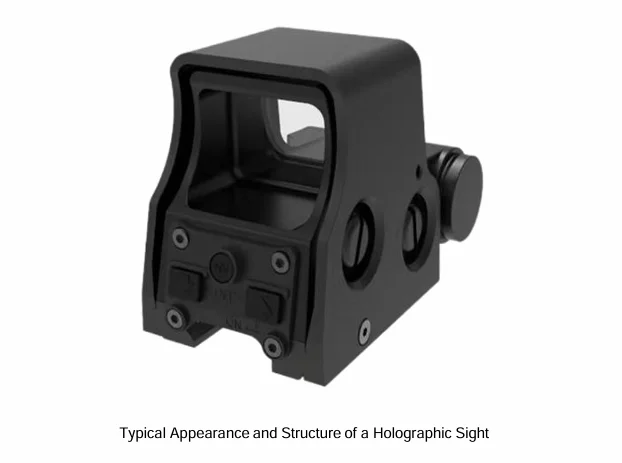
Understanding Holographic Sight Technology Through the Science of Modern Optical Engineering

Modern optical engineering has introduced innovative ways to capture, process, and reproduce visual information. Holography is one of the most interesting developments because it uses light interference and diffraction to preserve information about light waves. The term Holographic sight is associated with a specialized optical device, but the underlying holographic principles also provide valuable insight into modern imaging and visualization technology.
Understanding these principles helps explain how optical components interact with light and how holographic methods contribute to developments in scientific research, digital imaging, and advanced display systems.
What Is Holography?
Holography is an optical technique used to record and reconstruct information about light waves. Unlike conventional photography, which primarily captures light intensity, holography can preserve information about both the amplitude and phase of light.
This additional information allows a holographic recording to reproduce visual characteristics associated with depth. The process generally involves a coherent light source, an object beam, and a reference beam.
When the light beams interact, they create an interference pattern that can be recorded on a suitable medium. Under appropriate illumination, this pattern can reconstruct a representation of the original light wavefront.
Understanding the Optical Principles
Three important principles help explain holographic technology.
Light interference: Interference occurs when light waves overlap. Depending on their relative phases, they can reinforce or reduce each other, creating a pattern that contains optical information.
Diffraction: Diffraction describes how light waves spread or change direction when they encounter an opening, edge, or structured optical surface. It is essential to reconstructing holographic images.
Coherent illumination: Coherent light maintains a predictable phase relationship, making it suitable for producing stable interference patterns.
These principles work together to make holographic recording and reconstruction possible.
The Role of Precision Optical Components
Holographic systems depend on carefully designed optical components to manage light accurately. Lenses, mirrors, beam splitters, filters, and specialized optical surfaces may all contribute to the performance of an imaging arrangement.
Lens quality influences how light is focused, while reflective components help control its direction. Optical coatings can also improve transmission or reflection according to the requirements of a particular system.
Manufacturing precision is important because surface imperfections and alignment errors can affect image quality. Engineers therefore consider material properties, surface finish, optical geometry, and assembly accuracy when developing specialized components.
Applications of Holographic Imaging
Holographic principles have applications in several scientific and industrial fields.
Scientific research: Holography helps researchers study wavefronts, optical interference, and the behavior of light.
Industrial measurement: Digital holography can be used to examine surface changes, deformation, and vibration in materials.
Medical research: Holographic techniques are being investigated for microscopy and specialized biological imaging applications.
Digital visualization: Holographic display research explores ways to create more realistic visual representations with depth information.
Education: Holographic demonstrations can help students understand complex concepts involving light, interference, and diffraction.
Holographic Imaging and Modern Display Development
Advanced display technology is continuously exploring new ways to present visual information. Traditional screens create images on flat surfaces, while holographic display systems aim to reconstruct more complete information about light fields.
Developing practical systems requires improvements in display resolution, brightness, viewing angles, processing power, and optical integration.
Researchers are investigating spatial light modulators, computational imaging, and advanced optical materials to overcome these challenges. These developments may contribute to future visualization systems used in education, entertainment, research, and professional applications.
Challenges in Optical Engineering
Despite significant progress, holographic technology still faces technical limitations. Accurate optical alignment, environmental stability, recording resolution, and computational requirements can influence the quality of reconstructed images.
Temperature changes and mechanical vibrations may also affect sensitive optical arrangements. Manufacturers and researchers must therefore consider environmental conditions, component stability, and quality-control procedures during system development.
Continuous improvements in optical materials and manufacturing methods are helping address these challenges.
The Future of Holographic Technology
The future of holography will depend on collaboration between optical engineers, researchers, and technology manufacturers. Advances in micro-optics, photonic materials, digital processing, and precision manufacturing are creating new opportunities for optical innovation.
Understanding the science behind technologies such as a Holographic sight also provides a broader perspective on how optical principles are applied in specialized devices and how holographic research contributes to developments in imaging and visualization.
Conclusion
Holography is an important area of optical science that combines interference, diffraction, and coherent illumination to record and reconstruct light information. Its principles support research in imaging, measurement, visualization, and advanced display development. As optical engineering continues to progress, improvements in precision components and computational technology will create further opportunities for innovative imaging solutions.


