

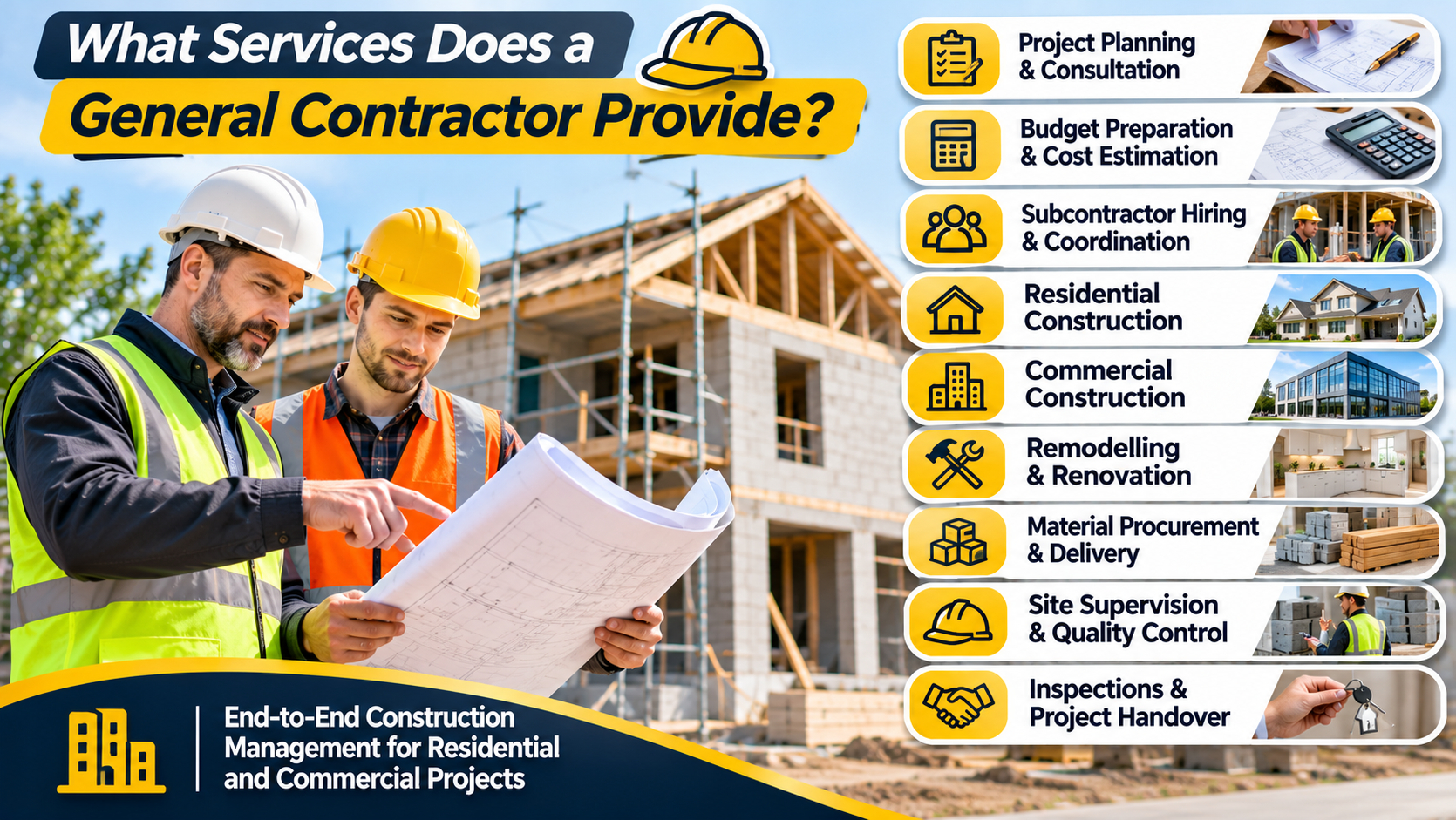

Planning a construction project involves more than hiring workers and purchasing building materials. Property owners also need to organise specialist trades, manage costs, arrange deliveries, monitor progress and ensure the work follows the agreed plans. This is where a general contractor becomes valuable.
A general contractor coordinates the different people, materials and activities involved in a construction project. Whether you are building a new home, renovating an existing property or developing a commercial space, the right professional can help keep the work organised from the initial planning stage through to completion.
What Is a General Contractor?
A general contractor is a construction professional or business responsible for coordinating and overseeing a building project. They work with property owners, architects, engineers, subcontractors and suppliers to organise the work required to complete the project.
Instead of managing every trade independently, property owners can use a general contractor as their main point of contact throughout the construction process.
Depending on the agreement and project requirements, general contracting responsibilities may include:
-
Reviewing construction drawings and project specifications.
-
Preparing cost estimates and construction schedules.
-
Hiring and coordinating specialist subcontractors.
-
Arranging materials, equipment and deliveries.
-
Organising site preparation and construction activities.
-
Monitoring workmanship, quality and progress.
-
Managing approved changes to the original plans.
-
Coordinating inspections and final project handover.
The exact services depend on the contractor's experience, the project scope and the responsibilities defined in the written agreement.
1. Construction Planning and Project Consultation
Proper planning helps establish how a construction project will progress before work begins. A general contractor can review the proposed work, discuss the property owner's requirements and identify the resources needed to complete the project.
This stage may involve reviewing architectural drawings, assessing the existing property and determining which specialist trades will be required.
Typical construction planning services include:
-
Reviewing drawings and building specifications.
-
Discussing the property's intended use and requirements.
-
Identifying labour, materials and equipment needs.
-
Preparing an initial construction estimate.
-
Establishing a project schedule.
-
Identifying potential construction challenges.
For example, a kitchen renovation may involve plumbing alterations, electrical installations, cabinetry, flooring and finishing work. These activities need to happen in a suitable sequence. A contractor helps organise the different stages so that one trade can complete its work before the next begins.
2. Budget Preparation and Cost Estimation
Understanding the expected costs is an important part of preparing for construction. A general contractor can help property owners estimate the expenses associated with labour, materials, equipment and specialist services.
Depending on the project, a construction estimate may include:
-
Building materials and estimated quantities.
-
Labour requirements and costs.
-
Subcontractor fees.
-
Equipment and machinery expenses.
-
Site preparation and waste removal.
-
Material and finishing allowances.
-
Potential additional costs identified during planning.
A detailed written estimate should explain what the proposed price covers and identify any exclusions. Property owners should also understand how unexpected conditions, material price changes and additional work could affect the budget.
For instance, removing an existing wall during a renovation might reveal damaged framing or outdated wiring. Correcting these problems could involve additional work that was not included in the original estimate.
Clear cost documentation helps both parties understand the financial arrangements before construction begins.
3. Subcontractor Hiring and Coordination
Many construction projects require several specialist trades. A general contractor may hire or coordinate these professionals and organise their work according to the project schedule.
Depending on the type of construction, subcontractors may include:
-
Electricians and plumbers.
-
Carpenters and roofers.
-
Painters and flooring installers.
-
Concrete specialists.
-
Heating and cooling technicians.
-
Drywall and insulation installers.
The contractor coordinates when each professional needs to work on the property and manages the transitions between construction stages.
For example, plumbing and electrical rough-in work generally needs to be completed before walls are closed with drywall. Flooring and other finishing installations may also need to follow earlier construction activities to prevent damage.
Effective subcontractor coordination helps reduce scheduling conflicts and keeps different parts of the project working towards the same plan.
4. Residential Construction Services
Residential construction covers the building, extension and improvement of homes and other residential properties. A general contractor can coordinate the work involved in these projects, depending on the services included in the contract.
Common residential construction services include:
New Home Construction
Building a new home involves several stages, including site preparation, foundations, structural framing, roofing, plumbing, electrical installations and interior finishes.
A general contractor organises the construction sequence and coordinates the trades responsible for completing the approved building plans.
Home Additions and Extensions
Property owners may need additional space for a bedroom, bathroom, home office or larger living area. A contractor can coordinate the structural work and the connections between the new extension and the existing property.
Structural Improvements
Some projects involve changes to walls, framing, foundations or other structural elements. These alterations may require input from an architect or structural engineer before construction can proceed.
Interior Improvements
General contractors may also coordinate interior work involving drywall, flooring, ceilings, doors, cabinetry and other building components.
The available services depend on the contractor's experience and the requirements of the individual project.
5. Commercial Construction Services
Commercial construction involves developing or improving buildings and spaces used for business, retail, office, industrial and other commercial purposes.
These projects may have different requirements from residential construction because of building size, occupancy needs, specialist systems and business operations.
A general contractor may coordinate services such as:
-
Office construction and interior build-outs.
-
Retail store development.
-
Commercial property renovations.
-
Interior partitions and layout changes.
-
Flooring, ceilings and wall installations.
-
Mechanical, electrical and plumbing work.
-
Exterior improvements and building upgrades.
For example, converting an empty commercial unit into an office may require more than installing partitions and furniture. The work could involve lighting, electrical layouts, heating and cooling systems, accessibility provisions, fire protection and interior finishes.
A construction contractor coordinates the relevant trades and activities to deliver the work according to the approved specifications.
6. Remodelling and Renovation Work
A remodelling contractor manages improvements that change the appearance, layout or functionality of an existing property.
Renovation projects can be more complicated than they initially appear because contractors must work around existing structures and building systems. Opening walls or removing old fixtures may also reveal problems that were not visible during the initial assessment.
Common remodelling services include:
-
Kitchen renovations.
-
Bathroom remodelling.
-
Basement finishing.
-
Room layout changes.
-
Flooring and wall replacements.
-
Interior upgrades.
-
Home extensions.
-
Commercial interior renovations.
Consider a bathroom renovation involving new plumbing fixtures, wall tiles, flooring, lighting and ventilation. Each task needs to be organised carefully because later installations often depend on earlier work being completed correctly.
A remodelling contractor coordinates these activities and helps address unexpected conditions discovered during the project.
7. Building Material Procurement and Delivery Coordination
Construction work depends on having the right materials available at the right time. Delayed deliveries, incorrect quantities or unsuitable product specifications can interrupt the construction schedule.
A general contractor may coordinate the purchasing, delivery and storage of materials required for the project.
These materials may include:
-
Concrete and masonry products.
-
Timber and structural framing materials.
-
Roofing components.
-
Insulation and drywall.
-
Flooring and tiles.
-
Windows and doors.
-
Plumbing fixtures.
-
Electrical components.
-
Paints and finishing products.
The contractor may communicate with suppliers to confirm material specifications, quantities and expected delivery dates.
For example, if windows arrive after the building reaches the installation stage, exterior finishing work may be delayed. Planning material orders in advance can help reduce this type of disruption.
Property owners should confirm whether purchasing materials is included in the construction agreement and who is responsible for approving product selections and price changes.
8. Construction Site Preparation and Supervision
Before construction begins, the work area may need to be prepared for the planned activities. The requirements depend on the property and the nature of the project.
Site preparation may involve:
-
Clearing and organising the work area.
-
Arranging temporary site facilities.
-
Planning equipment access and deliveries.
-
Organising material storage.
-
Coordinating waste removal.
-
Establishing site access arrangements.
-
Organising appropriate site protection measures.
Once construction starts, the general contractor monitors scheduled activities, communicates with subcontractors and identifies issues that could affect progress.
Site supervision also helps check that the work follows the approved drawings, specifications and applicable safety requirements.
9. Permits, Inspections and Building Code Coordination
Certain construction and renovation projects require permits, inspections or approvals before specific work can begin or continue.
Requirements depend on the property's location, project type and proposed changes. A general contractor may help identify relevant requirements and coordinate the documents or inspections included in the agreement.
This assistance may involve:
-
Reviewing applicable permit requirements.
-
Coordinating drawings and project documents.
-
Communicating with relevant professionals.
-
Scheduling required inspections.
-
Responding to inspection comments.
-
Coordinating corrective work where necessary.
If you are planning a project in Schaumburg, check the official Village of Schaumburg website for current building permit information and local requirements.
Before work begins, confirm who will submit permit applications, pay associated fees and arrange inspections. These responsibilities should be clearly explained in the construction agreement.
10. Construction Quality Checks and Project Handover
Quality checks help establish whether completed work matches the agreed project specifications. Rather than waiting until the end, a general contractor may monitor workmanship and installation quality throughout different construction stages.
Depending on the project, checks may cover:
-
Material specifications.
-
Installation quality and workmanship.
-
Alignment and finishing.
-
Coordination between building systems.
-
Completion of agreed tasks.
-
Outstanding corrections.
Before handover, the contractor and property owner can review the completed work and identify any remaining items that need attention.
The handover process may include a final walkthrough, relevant project documentation, operating information for installed equipment and arrangements for completing outstanding work.
A clear handover gives the property owner a better understanding of what has been completed and which responsibilities remain.
General Contractor Services: Residential vs Commercial Construction
Although residential and commercial projects both require planning, supervision and trade coordination, their requirements can differ.
|
Service Area |
Residential Construction |
Commercial Construction |
|
Project types |
New homes, extensions and home renovations |
Offices, retail units and commercial buildings |
|
Planning |
Household requirements and living spaces |
Business operations and building use |
|
Trade coordination |
Plumbing, electrical, roofing and finishing trades |
Specialist building systems and commercial trades |
|
Materials |
Residential building products and finishes |
Materials selected for commercial specifications |
|
Inspections |
Applicable residential building requirements |
Applicable commercial building requirements |
|
Completion |
Preparation for residential occupancy |
Preparation for business or commercial use |
When choosing a contractor, look for experience that matches the type of property and work involved.
What Is the Difference Between a General Contractor and a Subcontractor?
A general contractor and a subcontractor perform different roles within a construction project.
A general contractor typically manages the overall project and coordinates the different trades. A subcontractor provides a specific specialist service under an arrangement with the general contractor or another contracting party.
For example, during a home extension:
-
The general contractor coordinates the overall construction project.
-
An electrician handles electrical installations.
-
A plumber completes plumbing work.
-
A roofer installs or modifies the roof.
-
A flooring specialist installs the selected flooring.
The general contractor brings these separate activities together so they follow the agreed construction plan.
The precise contractual relationships can vary, so property owners should review their agreement to understand who is responsible for each part of the work.
How to Choose a Construction Company in Schaumburg, IL
Choosing a construction company in Schaumburg, IL involves more than comparing prices. You should consider the company's relevant experience, project management approach, documentation and ability to handle your specific requirements.
Here are six factors to consider before making a decision.
1. Check Relevant Project Experience
Ask whether the contractor has completed projects similar to yours. Experience with residential renovations, for example, does not automatically mean the company has the same expertise in commercial construction.
Review relevant project examples and ask about the work the contractor was responsible for completing.
2. Verify Licensing, Registration and Insurance
Check the credentials and insurance appropriate to the work and location. Ask for relevant documentation and verify applicable requirements with the relevant authorities.
3. Request a Detailed Written Estimate
A useful estimate should explain the proposed work, material allowances, expected costs and exclusions. Compare the scope of work rather than choosing a contractor based only on the lowest price.
4. Understand the Project Schedule
Ask how the contractor plans to organise construction activities and coordinate subcontractors. The proposed schedule should identify important stages, expected milestones and possible factors that could affect completion.
5. Review the Written Agreement
Before signing, check payment terms, project responsibilities, material selections, change-order procedures and arrangements for outstanding work.
6. Assess Communication Practices
Construction projects involve decisions throughout the process. Choose a contractor who explains progress, discusses unexpected issues and provides a clear way to communicate.
These checks can help you compare construction companies and select a contractor whose experience and working approach match your project.
When Should You Hire a General Contractor?
Hiring a general contractor can be useful when a project involves multiple trades, several construction stages or significant coordination.
You may benefit from general contracting services when:
-
Building a new home.
-
Planning a property extension.
-
Renovating several rooms.
-
Completing a commercial interior fit-out.
-
Making structural changes.
-
Coordinating plumbing, electrical and finishing work.
-
Managing a project involving several subcontractors.
For a smaller job involving one clearly defined specialist task, hiring an individual trade professional may be more appropriate.
Your decision should depend on the project's complexity, the number of trades involved and the level of coordination required.
Frequently Asked Questions
1. What are the main services provided by a general contractor?
A general contractor typically provides construction planning, cost estimation, subcontractor coordination, material procurement, site supervision, schedule management, quality checks and project handover. The exact services depend on the agreed project scope.
2. Does a general contractor handle residential and commercial construction?
Some general contractors manage both residential and commercial projects. However, their experience and services vary, so confirm that the contractor has relevant experience with your type of construction.
3. Can a general contractor manage a complete home renovation?
Yes. A general contractor can coordinate a complete home renovation involving several trades, such as plumbing, electrical work, flooring, drywall and painting. Confirm which services are included in the written agreement.
4. Does a general contractor hire subcontractors?
Many general contractors hire or coordinate subcontractors for specialist work. These professionals may include electricians, plumbers, roofers, carpenters and flooring installers.
5. Is a construction company the same as a general contractor?
Not necessarily. A construction company is a business that provides construction-related services, while a general contractor is responsible for coordinating a construction project. Some construction companies offer general contracting services, but their service ranges can differ.
6. What should I ask a construction contractor before hiring them?
Ask about relevant experience, insurance, applicable licensing or registration requirements, written estimates, subcontractor arrangements, project schedules, payment terms and procedures for handling changes. Also clarify who will manage permits and inspections.
7. How do I find a construction company in Schaumburg?
Start by identifying companies that work in the Schaumburg area and handle your type of project. Compare their experience, documentation, estimates, communication practices and contract terms before making a decision.
Final Thoughts
A general contractor provides more than basic construction labour coordination. Their services can include project planning, budgeting, subcontractor management, material procurement, site supervision, inspection coordination and final handover.
Whether you are planning residential construction, commercial construction or renovation work, understanding these responsibilities helps you identify the professional support your project requires.
When comparing a construction company in Schaumburg, IL, focus on relevant experience, a clearly defined project scope, transparent cost estimates and written responsibilities. Taking time to assess these details can help you establish a more organised working relationship before construction begins.


