

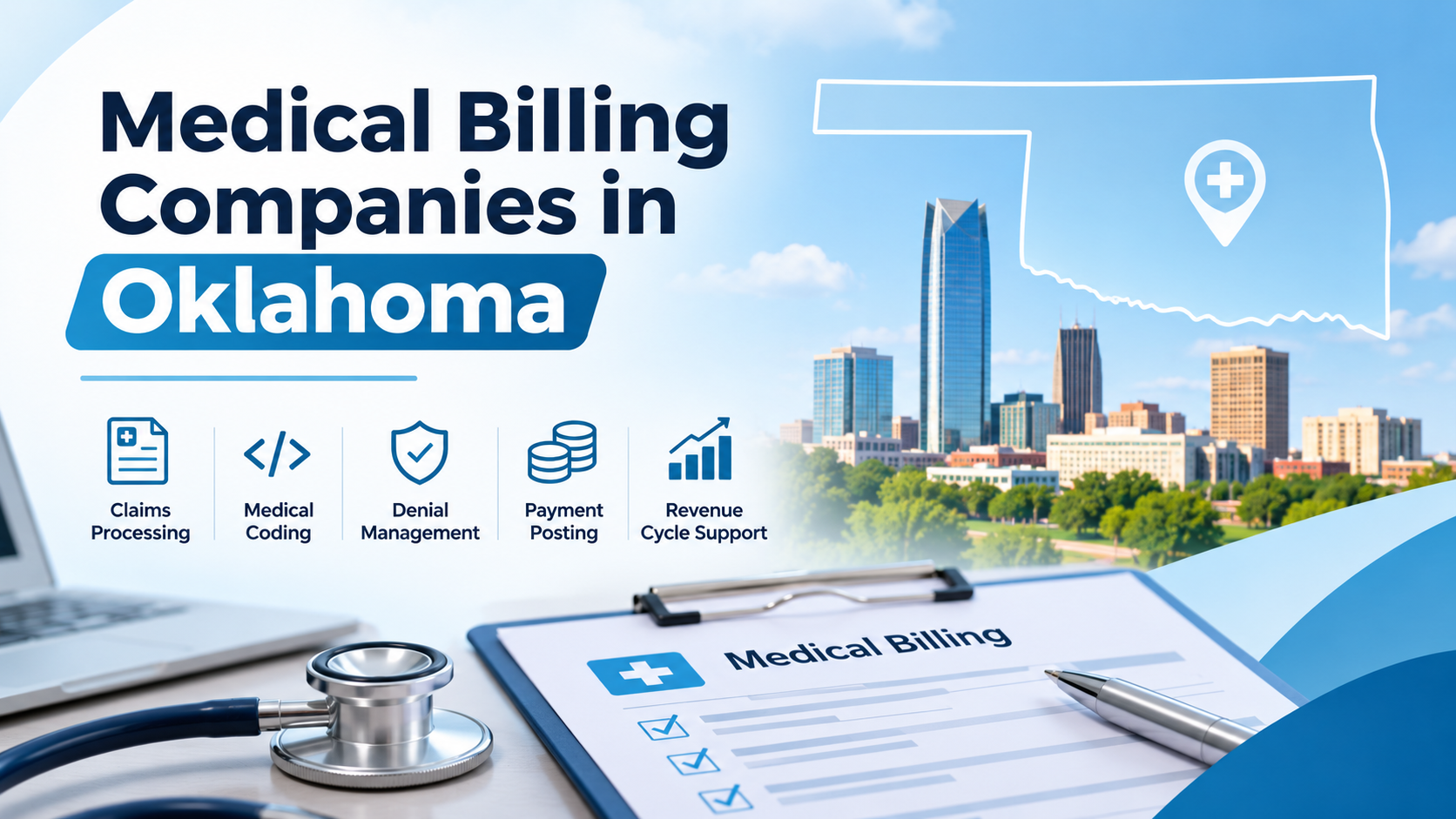
Medical Billing Companies in Oklahoma: Understanding Claims, Denials and Healthcare Reimbursements

Healthcare practices across Oklahoma handle insurance claims, patient payments and reimbursement requirements every day. From primary care clinics in Oklahoma City to specialty practices in Tulsa and Norman, accurate medical billing is essential for maintaining organized financial operations.
Understanding how medical billing companies in Oklahoma manage claims can help healthcare providers identify common billing errors, prevent reimbursement delays and improve revenue cycle efficiency.
How Does Medical Billing Work in Oklahoma?
Medical billing begins with patient registration and insurance eligibility verification. After a healthcare service is provided, the clinical documentation is reviewed and appropriate diagnosis and procedure codes are assigned.
Claims are then submitted to Medicare, SoonerCare (Oklahoma's Medicaid program) or commercial insurance companies.
The billing process typically involves:
-
Insurance Verification: Confirming patient eligibility, benefits and coverage requirements.
-
Medical Coding: Assigning accurate CPT, ICD-10-CM and HCPCS codes.
-
Claims Submission: Preparing and transmitting claims to insurance payers.
-
Denial Management: Investigating denied claims and determining appropriate corrections.
-
Payment Posting: Recording insurance reimbursements and patient balances.
-
Accounts Receivable: Tracking unpaid claims and following up on outstanding payments.
Each stage requires accurate information to prevent unnecessary processing errors.
Understanding SoonerCare and Medicare Billing Requirements
Oklahoma's Medicaid program, SoonerCare, operates under the Oklahoma Health Care Authority (OHCA).
Healthcare providers can use the SoonerCare Provider Portal and applicable electronic data interchange systems to manage claim submissions. Billing requirements depend on the service, provider type and applicable coverage policies.
For Original Medicare, Oklahoma belongs to Jurisdiction H, administered by Novitas Solutions.
Healthcare practices must follow relevant Medicare documentation, coding and reimbursement guidelines when submitting claims.
Why Do Medical Claims Get Denied in Oklahoma?
Common reasons for claim denials include incorrect coding, inactive insurance coverage, missing prior authorizations and insufficient medical necessity documentation.
For example, a family medicine practice in Tulsa may submit a claim with an incorrect modifier or unsupported diagnosis code.
The insurer may deny payment, requiring the billing team to review the documentation and determine whether a corrected claim or appeal is appropriate.
Regular reviews help identify recurring errors before they affect additional claims.
How Can Oklahoma Healthcare Practices Improve Billing Accuracy?
Improving billing accuracy requires consistent insurance verification, documentation reviews and monitoring of outstanding payments.
Many medical billing companies in Oklahoma assist healthcare providers with claims processing, denial analysis and accounts receivable management.
Practices managing billing internally can follow similar procedures by reviewing payer requirements, tracking denials and training administrative staff.
Monitoring financial reports also helps identify delayed reimbursements and opportunities to improve claim workflows.
Final Thoughts
Effective medical billing helps Oklahoma healthcare practices maintain accurate financial records and reduce avoidable reimbursement delays.
Whether managed internally or outsourced, understanding SoonerCare requirements, Medicare policies and common billing errors supports better revenue cycle management and more consistent financial operations.


