

Centrifugal Fire Pumps Are Supporting Safer Commercial Buildings Across France

Fire pumps are an essential part of water-based fire-protection systems across France, particularly where the available water supply cannot provide the pressure required by automatic sprinklers. Offices, shopping centres, hotels, industrial facilities, and residential properties can rely on these systems to maintain dependable water delivery during emergencies. Regulatory requirements, high-rise construction, and the modernisation of existing buildings are increasing attention to reliable pumping equipment and properly designed suppression systems.
According to Vyansa Intelligence, France’s fire pump sector was valued at USD 85 million in 2025 and is projected to reach USD 120 million by 2032, representing a 5.05% CAGR during 2026–2032. The France fire pump market analysis identifies regulatory compliance, centrifugal pump adoption, commercial building applications, smart monitoring, and retrofitting as important influences on the sector.
Centrifugal Pumps Remain Central to Fire Protection
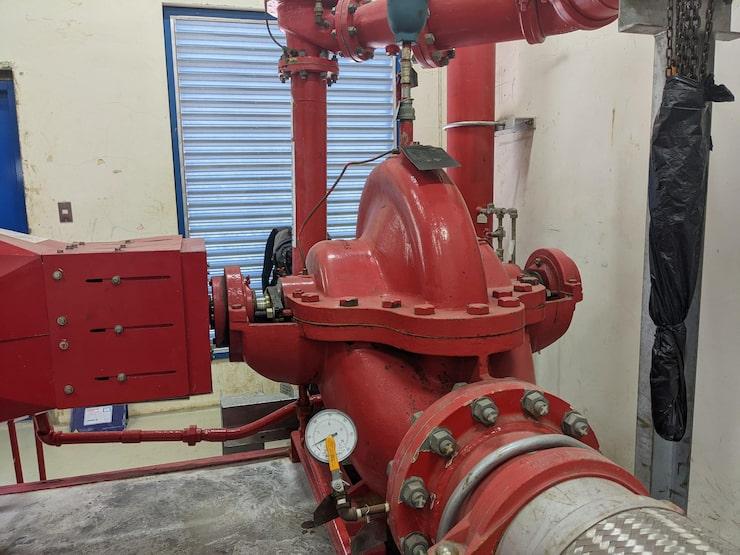
Centrifugal pumps are the dominant pump type in France, supported by their ability to deliver high flow rates while maintaining stable pressure under varying operating conditions. Their relatively low maintenance requirements also make them suitable for fixed fire-protection installations where dependable operation is essential.
The latest market analysis shows that centrifugal technology is used extensively across residential, commercial, and industrial applications. Positive-displacement pumps remain relevant for specialised situations requiring particular pressure-control characteristics, but their greater complexity limits broader adoption.
French Regulations Reinforce Automatic Sprinkler Protection
France's official fire-safety regulations provide direct context for these pumping systems. Légifrance Article MS 25 states that automatic sprinkler systems may be required in all or part of establishments open to the public and that installed sprinkler systems must comply with approved French standards and be implemented by appropriately qualified specialist companies.
This requirement fits naturally with the France fire pump industry report because pumps used to supply sprinkler systems must work as part of a properly engineered fire-protection installation. Reliable water delivery depends on coordinated pumps, water sources, piping, valves, controls, and sprinklers rather than any individual component.
Commercial Properties Lead Fire Pump Applications
Commercial buildings represent the leading end-use segment in the supplied research. Offices, shopping centres, and hospitality properties require dependable fire-protection infrastructure, particularly where building dimensions or water-supply conditions create demanding hydraulic requirements.
Urban development can reinforce these requirements. Taller and more complex properties may need carefully engineered systems to ensure sufficient water pressure reaches sprinkler installations throughout the protected building.
Pump Performance Requires Hydraulic Verification
French fire-safety regulations go beyond simply requiring sprinkler protection. Légifrance provisions concerning automatic extinguishing installations specify that, downstream of each pump or booster, permanently installed equipment must enable flow and pressure measurement. Test piping at hydraulically unfavourable points also allows water availability and flow to be verified.
These detailed market insights demonstrate why testing is fundamental to fire-pump reliability. A pump may appear mechanically operational but still need hydraulic verification to establish whether the complete system can deliver the required pressure and flow during an emergency.
Retrofitting Older Buildings Creates New Requirements
Existing buildings represent an important opportunity for fire-pump suppliers. The source report identifies retrofitting of older properties without contemporary suppression infrastructure as an area where higher-performance centrifugal pumps and modern monitoring systems can be introduced.
Retrofits can require more careful engineering than new installations because designers need to work around existing pipework, structural constraints, electrical systems, and available water supplies. Modernisation may consequently involve controllers, monitoring technology, and hydraulic reassessment alongside pump replacement.
Smart Monitoring Improves Equipment Visibility
Digital monitoring is becoming increasingly relevant to fire-pump operation in France. The supplied fire pump industry report identifies real-time diagnostics, remote alerts, smart controllers, and predictive maintenance as emerging approaches for improving equipment visibility.
These capabilities can help facility managers detect abnormal operating conditions earlier and organise maintenance more effectively. However, digital monitoring complements rather than replaces physical testing because emergency equipment still needs to demonstrate actual mechanical and hydraulic performance.
High-Rise Buildings Create Demanding Water Requirements
High-rise construction introduces particular challenges because fire water needs to reach protected areas at different elevations. Pump systems must therefore provide sufficient pressure while operating within the hydraulic requirements of the complete sprinkler or fire-water installation.
French regulations also recognise the importance of hydraulic performance in certain high-rise fire-protection arrangements. Provisions covering high-rise buildings specify pressure and flow considerations where automatic extinguishing systems are supplied from charged fire-fighting risers.
Broader industry analysis therefore needs to consider building height, water supply, required flow, pipe configuration, and suppression-system design when evaluating pump requirements.
Maintenance Costs Remain an Operational Challenge
High-performance fire pumps require investment beyond their initial purchase. Installation, routine maintenance, testing, replacement components, and specialist servicing contribute to lifecycle costs. The supplied research identifies these expenses as a particular challenge for smaller organisations and public institutions.
Supply-chain delays for specialised components can create additional difficulties. When replacement parts are unavailable, maintenance schedules and project completion can be affected, increasing the importance of dependable servicing and procurement arrangements.
Intelligent Controls Are Extending Pump Capabilities
Modern fire pumps are increasingly being considered alongside connected building-management technologies. Smart controllers can provide operational information while predictive maintenance tools can help identify developing performance issues before they cause equipment downtime.
For a fire pump market research report, this development is significant because competition increasingly involves more than mechanical pump performance. Controls, diagnostics, servicing capabilities, and system integration can contribute to the overall value of a fire-pump installation.
Reliable Water Delivery Remains the Essential Requirement
France’s fire-pump landscape is closely connected with centrifugal technology, commercial buildings, sprinkler requirements, high-rise construction, retrofitting, and smarter equipment monitoring. These developments are expanding expectations around how fire pumps are designed, tested, maintained, and integrated with complete suppression systems.
Technology can improve visibility and maintenance planning, but hydraulic reliability remains fundamental. Fire pumps must ultimately provide the required water pressure and flow when sprinkler systems activate, making appropriate equipment selection, testing, qualified installation, and lifecycle maintenance essential to effective fire protection.


