

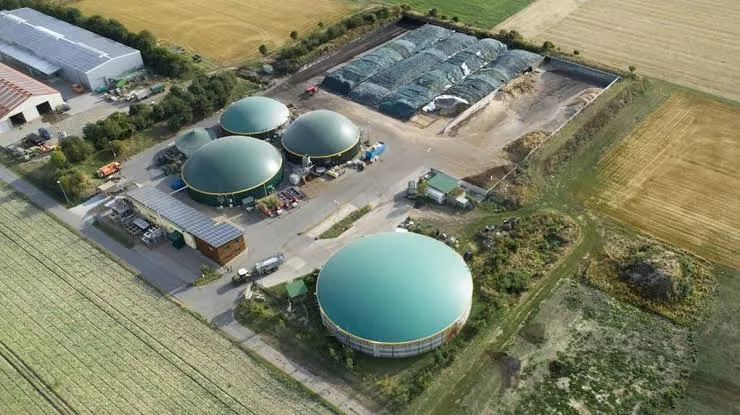

India’s transition toward cleaner energy sources are creating new opportunities for renewable fuel technologies that can address both energy security and waste management challenges. Among these solutions, compressed biogas (CBG) has emerged as a practical alternative by converting agricultural residues, municipal waste, industrial by-products, and animal manure into a usable gaseous fuel. As industries and policymakers continue prioritizing sustainable energy systems, CBG is becoming an increasingly important component of India's circular economy.
The India Compressed Biogas (CBG) Market is gaining momentum as policy support, infrastructure development, and technological improvements encourage wider adoption across transportation and industrial applications. According to the latest renewable gas industry analysis, the market was valued at around USD 319 million in 2025 and is projected to reach nearly USD 2,419 million by 2032, expanding at an estimated CAGR of about 33.56% during 2026–2032.
Beyond market expansion, the increasing use of CBG reflects India's broader objective of reducing dependence on fossil fuels while improving resource efficiency. Government initiatives encouraging waste-to-energy projects, combined with investments from public and private stakeholders, are helping create an ecosystem where organic waste is transformed into commercially valuable fuel and bio-fertilizers.
Government Policies Continue to Shape Market Expansion
Policy support remains one of the strongest foundations for India's CBG ecosystem. Initiatives such as the Sustainable Alternative Towards Affordable Transportation (SATAT) programme have encouraged the establishment of commercial-scale production facilities by creating long-term demand for renewable gaseous fuels. These efforts are complemented by the GOBARdhan initiative, which promotes scientific management of organic waste while supporting clean energy production.
The introduction of Compressed Biogas Blending Obligation (CBO) requirements further strengthens market confidence. The phased increase in mandatory CBG blending within city gas distribution networks creates predictable demand for producers while encouraging investments in new production facilities, distribution infrastructure, and feedstock collection systems.
Multi-Feedstock Technology Improves Commercial Viability
One of the most significant developments in the sector is the growing adoption of multi-feedstock anaerobic digestion systems. Instead of relying on a single raw material source, modern CBG plants process combinations of agricultural residues, food-processing waste, municipal organic waste, sewage sludge, and cattle dung. This diversified approach reduces seasonal supply disruptions and improves plant utilization throughout the year.
Multi-feedstock operations also improve project economics by ensuring stable gas production while creating additional revenue streams through the production of organic fertilizers. The approach aligns well with India's objectives of minimizing landfill waste, improving agricultural sustainability, and enhancing renewable fuel availability for commercial users.
Municipal Waste Becomes a Valuable Energy Resource
Urbanization continues to generate increasing volumes of municipal solid waste, creating both environmental concerns and opportunities for renewable energy production. Instead of treating organic waste solely as a disposal challenge, municipalities are increasingly integrating waste management with energy generation through CBG facilities.
Municipal solid waste offers a relatively consistent feedstock supply compared with seasonal agricultural residues. Improved waste segregation practices and better collection systems further enhance the quality of feedstock available for anaerobic digestion, making municipal waste-based CBG plants increasingly attractive from both operational and financial perspectives.
Transportation Sector Leads Fuel Adoption
The transportation industry continues to represent one of the largest applications for compressed biogas. Since CBG possesses properties similar to compressed natural gas (CNG), it can be integrated into existing vehicle infrastructure with minimal modifications. This compatibility significantly lowers adoption barriers while supporting India's objective of reducing transportation emissions.
Commercial fleet operators, public transportation agencies, and logistics companies are increasingly evaluating renewable gaseous fuels as part of broader sustainability initiatives. As fueling infrastructure expands across the country, CBG is expected to play a larger role in supporting cleaner mobility without requiring entirely new vehicle technologies.
Investment and Innovation Support Long-Term Growth
The industry's outlook is further strengthened by rising investments in commercial-scale production facilities, advanced purification technologies, and integrated waste-processing systems. Public-sector energy companies, private developers, and engineering firms are actively expanding production capacity while exploring innovative plant designs capable of processing diverse biomass resources efficiently.
Advancements in gas upgrading technologies, digital monitoring systems, and feedstock optimization are improving operational efficiency across new facilities. These technological improvements not only increase gas yields but also reduce operating costs, enhancing the long-term competitiveness of compressed biogas within India's broader renewable energy portfolio.
Outlook for India's Renewable Gas Ecosystem
India's growing emphasis on sustainable development, resource recovery, and cleaner transportation continues to create favorable conditions for the expansion of compressed biogas. Strong policy frameworks, diversified feedstock availability, technological innovation, and increasing commercial adoption collectively position the sector for sustained development throughout the coming years.
As waste management, renewable energy generation, and circular economy strategies become increasingly interconnected, compressed biogas is expected to remain an important contributor to India's low-carbon transition. Continued collaboration among policymakers, technology providers, municipalities, and energy companies will play a central role in realizing the full potential of this evolving renewable fuel ecosystem.


