English
 Arabic
 Français
 Spanish
 Portuguese
 Deutsch
 Turkish
 Dutch
Dutch
 Italiano
 Russian
 Romaian
 Portuguese (Brazil)
 Greek
Greek
 Réunionnais
 India
India
Smart Highways Market - Global Industry Analysis, Size, Share, Growth and Forecast 2030
Technologies |
2023-04-04 04:58:57
 Entreprises locales
 Runsound music
 La silver économie
 Affiliation Matrice 3x9
 Récompenses
 Babarun (BBRN)
 Calculez vos calories
 Collab Influenceurs
 Événementiels
 Procaly
 Affiliation
 Prêts Immobiliers
Entreprises locales
Runsound music
La silver économie
Affiliation Matrice 3x9
Récompenses
Babarun (BBRN)
Calculez vos calories
Collab Influenceurs
Événementiels
Procaly
Affiliation
Prêts Immobiliers
TOON ALLES
Prêts Immobiliers
Entreprises locales
Runsound music
La silver économie
Affiliation Matrice 3x9
Récompenses
Babarun (BBRN)
Calculez vos calories
Collab Influenceurs
Événementiels
Procaly
Affiliation
Prêts Immobiliers
TOON ALLES

Upgrade to Pro

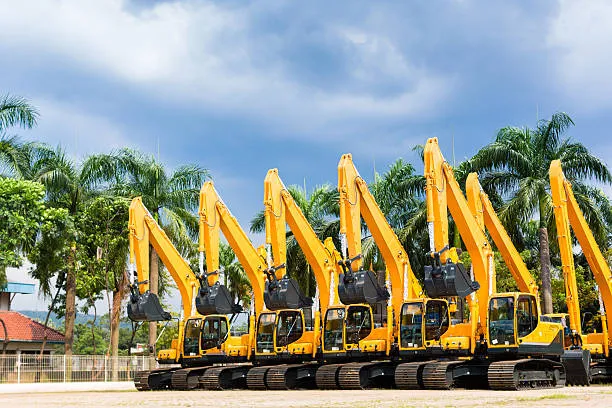
India’s construction sector is undergoing a remarkable transformation as large-scale infrastructure development accelerates across the country. Government-backed initiatives in highways, urban development, railways, airports, and industrial corridors have created sustained demand for specialized construction machinery. Instead of purchasing expensive equipment outright, many contractors are increasingly turning to rental solutions to improve operational flexibility, reduce capital expenditure, and complete projects within tighter timelines.
The India Construction Equipment Rental Market reflects this shift toward flexible equipment access. According to a study published by MarkNtel Advisors, the market is valued at around USD 4.67 billion in 2025 and is projected to reach nearly USD 8.98 billion by 2032, expanding at a CAGR of approximately 9.79% during 2026–2032. The growing adoption of construction equipment leasing solutions highlights how businesses are prioritizing cost efficiency and project scalability over asset ownership.
Large infrastructure programs continue to strengthen this transition. For example, the National Highways Authority of India delivered 5,614 kilometers of national highways in 2025, creating continuous demand for earthmoving equipment, pavers, cranes, and material handling machines. Rental providers enable contractors to deploy specialized machinery quickly without bearing the long-term financial commitments associated with ownership, making project execution more agile.
India's infrastructure ambitions require extensive use of heavy machinery across multiple project sites simultaneously. Road construction, metro rail systems, renewable energy projects, industrial parks, and logistics hubs all depend on advanced construction equipment to meet strict completion schedules. Since many projects operate within fixed budgets, renting machinery offers contractors the flexibility to match equipment availability with project phases while minimizing idle assets.
Rental services also help companies manage seasonal demand fluctuations. Contractors can scale fleets up or down based on project requirements without investing in machinery that may remain unused after project completion. This flexibility has become increasingly valuable as project portfolios diversify across different regions.
Owning heavy construction equipment requires significant upfront investment along with ongoing maintenance, storage, insurance, and depreciation costs. Rental models eliminate many of these financial burdens, allowing construction firms to allocate capital toward workforce expansion, technology adoption, or additional project opportunities.
Smaller contractors especially benefit from rental services because they gain access to modern machinery without requiring substantial financing. The availability of newer equipment also helps improve productivity, fuel efficiency, and operational safety across construction sites. Industry analysts increasingly recognize rental adoption as an important strategy for improving resource utilization across large infrastructure programs.
Digital technologies are transforming how rental companies manage their fleets and serve customers. GPS tracking, telematics, predictive maintenance systems, and online booking platforms improve fleet utilization while reducing equipment downtime. Contractors can now monitor machine performance, schedule maintenance proactively, and optimize equipment deployment across multiple sites.
Many rental providers are also adopting digital platforms that simplify equipment selection, documentation, payment processing, and delivery scheduling. These improvements enhance customer experience while allowing rental businesses to operate more efficiently in a highly competitive environment.
Project deadlines continue to become more demanding, making equipment availability a critical success factor. Rental companies maintain diverse fleets that can be deployed rapidly whenever project requirements change. This reduces delays caused by procurement cycles and enables contractors to respond quickly to evolving construction needs.
Access to specialized machinery also supports projects requiring temporary or highly specific equipment. Instead of purchasing machines for limited-duration work, contractors can rent exactly what is needed, improving cost efficiency while maintaining high operational performance.
India's ongoing investment in transportation networks, smart cities, industrial infrastructure, and renewable energy facilities is expected to sustain demand for flexible equipment solutions throughout the coming years. As construction activity expands into emerging regions, rental providers are likely to strengthen their geographic presence while investing in modern fleets and digital capabilities.
The continued emphasis on efficient capital utilization, improved productivity, and faster project delivery positions equipment rental as an increasingly important component of India's evolving construction ecosystem. Businesses seeking operational flexibility are expected to continue favoring rental models that balance financial efficiency with access to advanced machinery.
As infrastructure development remains a national priority, equipment rental services are expected to play a significant role in supporting contractors across projects of varying sizes. Their ability to provide immediate access to reliable machinery while reducing ownership costs makes rental solutions an essential contributor to India's long-term construction growth. According to the MarkNtel Advisors study, this evolving landscape reflects the industry's increasing preference for flexible asset management strategies as infrastructure investment continues to expand.