English
 Arabic
 Français
 Spanish
 Portuguese
 Deutsch
 Turkish
 Dutch
Dutch
 Italiano
 Russian
 Romaian
 Portuguese (Brazil)
 Greek
Greek
 Réunionnais
 India
India
"2023 sera une année d'enfer" - Martin Armstrong met en garde contre les troubles civils liés à l'inflation
Banque |
2022-07-25 07:45:24
 Entreprises locales
 Runsound music
 La silver économie
 Affiliation Matrice 3x9
 Récompenses
 Babarun (BBRN)
 Calculez vos calories
 Collab Influenceurs
 Événementiels
 Procaly
 Affiliation
 Prêts Immobiliers
Entreprises locales
Runsound music
La silver économie
Affiliation Matrice 3x9
Récompenses
Babarun (BBRN)
Calculez vos calories
Collab Influenceurs
Événementiels
Procaly
Affiliation
Prêts Immobiliers
Mostra tutti i risultati
Prêts Immobiliers
Entreprises locales
Runsound music
La silver économie
Affiliation Matrice 3x9
Récompenses
Babarun (BBRN)
Calculez vos calories
Collab Influenceurs
Événementiels
Procaly
Affiliation
Prêts Immobiliers
Mostra tutti i risultati

Passa a Pro
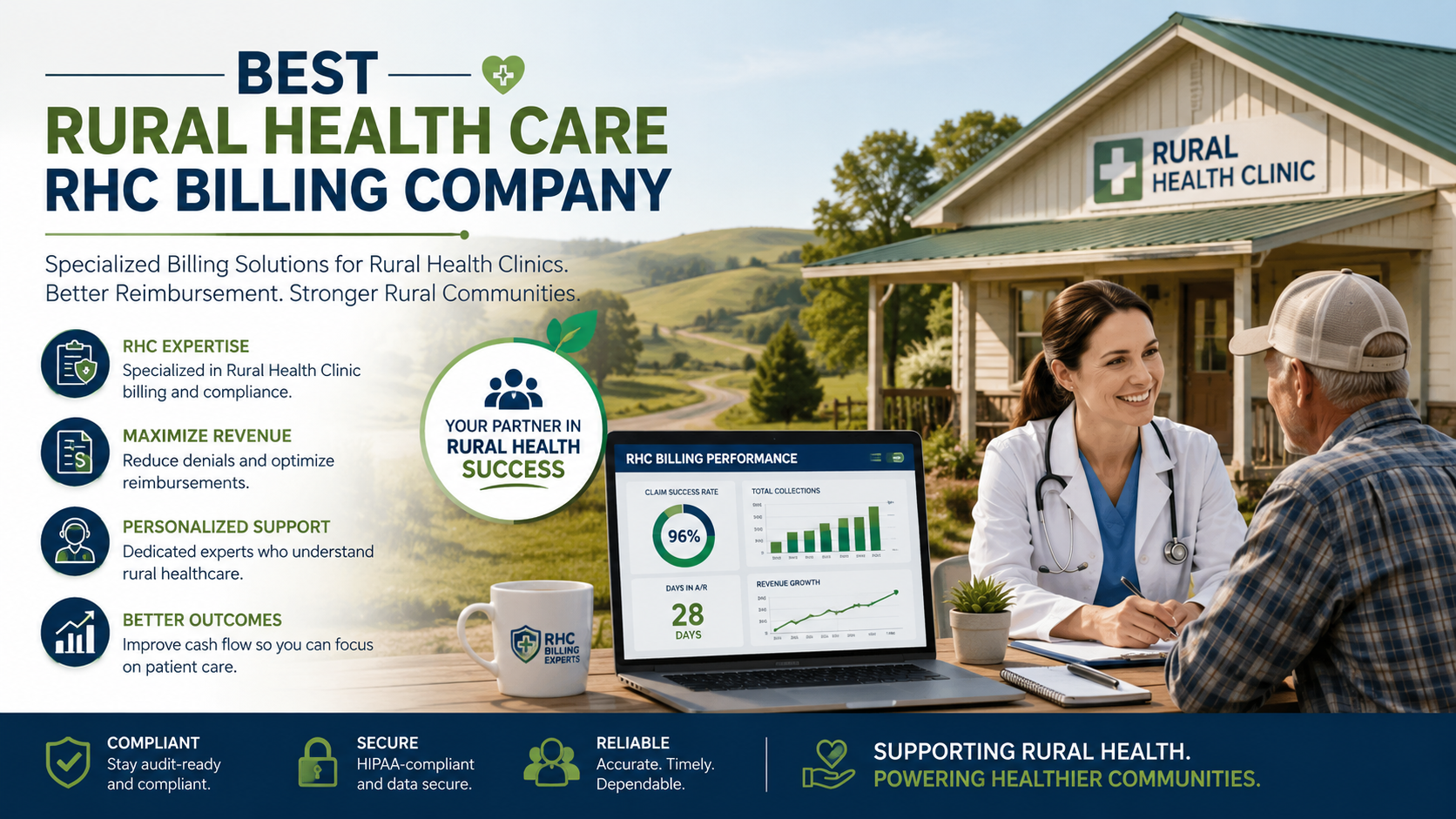
Rural healthcare systems play a critical role in ensuring that patients in underserved communities receive timely and quality medical services. However, running a Rural Health Clinic (RHC) comes with its own financial and administrative challenges. From complex reimbursement structures to strict compliance requirements, managing billing in an RHC setting is far from simple.
This is where a rural health care RHC billing company becomes essential. These specialized billing partners understand the unique regulations, coding guidelines, and payer requirements associated with Rural Health Clinics. Their role is not just about submitting claims—it is about optimizing revenue cycles, reducing claim denials, and ensuring financial stability for rural healthcare providers.
In this blog, we will explore how RHC billing works, why it is complex, and how outsourcing to a professional billing company can significantly improve operational efficiency and revenue outcomes for rural clinics.
RHC billing is different from standard physician or hospital billing. It follows specific federal and payer guidelines designed to support healthcare access in rural areas. However, these rules often create complexity for clinic administrators and healthcare providers.
One of the biggest challenges is the cost-based reimbursement system. Unlike typical fee-for-service models, RHCs are reimbursed based on allowable costs, which requires detailed documentation of expenses, staff time, and operational overheads. Any error in cost reporting can directly affect reimbursement rates.
Another major challenge is compliance with CMS regulations. Rural Health Clinics must follow strict guidelines set by the Centers for Medicare & Medicaid Services (CMS). These include requirements for staffing, location eligibility, service types, and billing structures. Even minor compliance mistakes can lead to claim denials or audits.
In addition, RHCs often deal with limited administrative resources. Many rural clinics operate with small teams, meaning billing staff are frequently overworked and may lack specialized training in complex RHC coding rules.
Claim denials, delayed reimbursements, and underpayments are common issues when billing is handled without specialized expertise. This is why many clinics are turning toward a dedicated rural health care RHC billing company to handle their revenue cycle more efficiently.
A professional billing company specializing in RHC services plays a crucial role in managing end-to-end revenue cycle operations. Their responsibilities go beyond basic claim submission.
Proper coding is the foundation of successful RHC billing. Billing companies ensure that all services are coded accurately using appropriate CPT and ICD-10 codes. They also ensure claims are submitted with correct modifiers and documentation, reducing the risk of rejection.
A rural health care RHC billing company handles the complete revenue cycle—from patient registration to final payment collection. This includes charge capture, claim submission, payment posting, denial management, and follow-ups with payers.
By streamlining each step, they help clinics maintain consistent cash flow and reduce revenue leakage.
Denied claims can significantly impact a clinic’s financial health. Billing companies analyze denial patterns, identify root causes, and correct errors before resubmitting claims. This proactive approach helps improve first-pass claim acceptance rates.
RHC billing is heavily regulated. Billing companies stay updated with CMS changes, payer policy updates, and coding revisions. This ensures that clinics remain compliant and avoid penalties or audit risks.
Since RHC reimbursement is cost-based, accurate cost reporting is essential. Billing companies assist in tracking operational expenses and preparing reports that support fair reimbursement from Medicare and Medicaid programs.
Outsourcing to a rural health care RHC billing company offers multiple advantages for healthcare providers, especially those in rural and underserved regions.
One of the primary benefits is improved financial performance. Expert billing teams reduce claim errors, speed up reimbursement cycles, and ensure that clinics receive the maximum allowable payments under RHC guidelines.
Healthcare providers can focus more on patient care instead of spending time on billing complexities. Outsourcing removes the need for in-house billing staff training and reduces administrative workload.
Experienced billing professionals understand payer requirements and submission rules. As a result, claims are submitted correctly the first time, significantly reducing denial rates.
RHC billing requires deep knowledge of federal guidelines and cost-based reimbursement structures. Outsourced billing companies bring specialized expertise that most in-house teams may lack.
As rural clinics grow, billing needs also increase. A professional billing partner provides scalable solutions that can adapt to changing volumes without compromising accuracy or efficiency.
Compliance errors in RHC billing can lead to financial penalties or audits. Outsourcing ensures that billing practices are always aligned with the latest regulations, reducing risk exposure.
Many rural clinics attempt to manage billing internally, but they often face several operational limitations.
Staff shortages are a common issue. Smaller clinics cannot always afford dedicated billing specialists, leading to multitasking and errors in claim processing.
Training is another challenge. RHC billing guidelines frequently change, and keeping in-house staff updated requires continuous education and resources.
Technology limitations also play a role. Many rural facilities do not have advanced billing software or automated systems, making manual errors more likely.
These challenges collectively result in delayed payments, lost revenue opportunities, and increased administrative stress. Partnering with a rural health care RHC billing company helps eliminate these bottlenecks and ensures smooth financial operations.
The future of RHC billing is evolving with advancements in healthcare technology and policy reforms. Automation, artificial intelligence, and cloud-based billing systems are increasingly being integrated into revenue cycle management processes.
Telehealth services are also expanding in rural areas, adding new billing complexities and opportunities. RHC billing companies are adapting to these changes by offering integrated solutions that support both traditional and digital healthcare services.
In the coming years, clinics that adopt professional billing support will be better positioned to handle regulatory changes, optimize reimbursements, and maintain financial sustainability.
RHC billing is a cost-based reimbursement system designed for clinics serving rural and underserved areas. It follows specific CMS guidelines to ensure fair compensation for healthcare services.
Hiring a specialized billing company helps reduce claim denials, improve reimbursement rates, ensure compliance, and reduce administrative workload.
Yes, RHC billing is more complex because it follows a cost-based reimbursement model instead of a standard fee-for-service model.
Outsourcing improves accuracy in coding, speeds up claim processing, reduces denials, and ensures better cash flow management.
Yes, small clinics benefit significantly as outsourcing eliminates the need for in-house billing staff and reduces operational costs.
Managing billing for Rural Health Clinics requires specialized knowledge, precision, and constant attention to regulatory updates. The complexity of cost-based reimbursement, compliance requirements, and claim management makes it challenging for clinics to handle billing internally without errors.
A professional rural health care RHC billing company plays a vital role in simplifying these processes. By improving claim accuracy, reducing denials, and ensuring compliance, these companies help rural clinics maintain financial stability and focus on what matters most—patient care.
For clinics aiming to improve efficiency and revenue performance, partnering with expert Medical Billing Services can be a game-changer in today’s evolving healthcare landscape.