English
 Arabic
 Français
 Spanish
 Portuguese
 Deutsch
 Turkish
 Dutch
Dutch
 Italiano
 Russian
 Romaian
 Portuguese (Brazil)
 Greek
Greek
 Réunionnais
 India
India
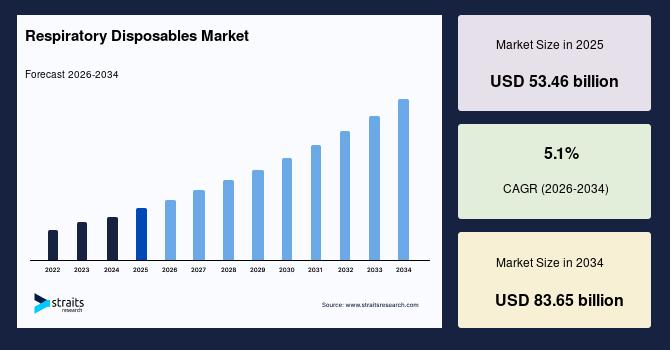
Respiratory Disposables Market Industry Statistics and Forecast Report, 2034
Autres |
2026-06-11 12:41:33
 Entreprises locales
 Runsound music
 La silver économie
 Affiliation Matrice 3x9
 Récompenses
 Babarun (BBRN)
 Calculez vos calories
 Collab Influenceurs
 Événementiels
 Procaly
 Affiliation
 Prêts Immobiliers

Every founder begins with a moment that feels larger than the calendar. An idea appears. A market gap becomes visible. A workflow looks broken. A customer pain point refuses to leave the mind. Suddenly, the future product feels obvious.
Then comes the difficult part.
Turning that conviction into software without losing money, time, focus, or market relevance.
This is where many founders face their first serious decision. Should they build the complete product they imagine, or should they start with a sharper, smaller, testable version that can prove whether the idea deserves more investment?
The smartest answer is usually MVP software development.
Not because founders should think small. Not because ambition needs to be diluted. Not because a minimum viable product is a cheaper substitute for a serious platform. MVP software development is the smartest first step because it gives founders something more valuable than a full feature set. It gives them evidence.
And in the early days of a company, evidence is oxygen.
A startup idea often begins with a strong assumption. The founder believes a problem exists. The audience seems clear. The solution feels compelling. The business model looks workable. The market appears ready.
Some of those assumptions may be correct. Some may be half-right. Some may collapse the moment users touch the product.
That is not a failure of intelligence. It is the nature of building something new.
MVP software development helps founders separate belief from proof. Instead of investing months into a full product based on internal confidence, the founder releases a focused version that real users can test. Their behavior becomes the first serious signal.
Do they sign up? Do they complete the main workflow? Do they understand the value without a long explanation? Do they return? Do they ask for improvements? Do they show willingness to pay?
These questions are more useful than applause. A founder does not need polite encouragement. A founder needs market truth early enough to act on it.
A raw idea can be inspiring, but it is difficult to evaluate. People interpret it differently. Investors imagine one version. Developers imagine another. Designers see a different experience. Customers may understand only part of the promise.
An MVP forces clarity.
It turns the abstract into something visible, usable, and measurable. The founder can stop explaining the product only through decks and calls. Instead, the product begins speaking for itself.
This changes the quality of every conversation. Customer interviews become more grounded. Investor discussions become more credible. Internal planning becomes more practical. Technical decisions become less speculative. Marketing messages become easier to test because the product has an actual user experience behind it.
For founders, this is a major advantage. Early-stage companies suffer when everyone is aligned around a vision but not around the same execution reality. MVP development creates that shared reference point.
It does not answer every question, but it makes the right questions easier to ask.
Many founders are tempted to build the full product from day one. The reasoning is understandable. They want the market to see the real vision. They worry that a smaller version will feel incomplete. They believe users will judge the company by what is missing.
But this fear often leads to overbuilding.
A founder adds more features to avoid criticism. More modules to satisfy future customers. More integrations to impress enterprise buyers. More dashboards because competitors have them. More automation because the pitch sounds stronger with it.
Soon, the startup is not building a first product. It is building a complex system without enough evidence that the market needs it in that form.
MVP software development protects founders from this trap. It asks a stricter question: what must exist for users to experience the core value?
Everything else can wait.
That discipline is not a compromise. It is strategic focus. The founder is not abandoning the larger vision. The founder is testing the path toward it.
Feature decisions can become emotional very quickly. Founders often have a personal attachment to certain product ideas. Early prospects may request custom functions. Advisors may recommend features based on other markets. Competitors may influence the roadmap. Team members may argue for what looks impressive rather than what proves value.
An MVP creates a better decision framework.
Features are judged by their role in validation. Does this feature help test the core problem? Does it help users reach value faster? Does it reduce adoption friction? Does it support a measurable business outcome? Does it prove something important about demand, usage, or willingness to pay?
If the answer is no, the feature may not belong in the first release.
This approach gives founders something they badly need: the power to say no with confidence. Saying no is not easy when the company is young and every opportunity feels important. But a startup that cannot prioritize will struggle to learn.
The MVP keeps the first version honest.
A weak MVP is built around the question, “Can we launch something?”
A strong MVP is built around the question, “What do we need to learn?”
That difference changes the entire development process.
For a SaaS founder, the main learning goal may be whether teams will adopt the workflow. For a healthcare founder, it may be whether patients or clinicians trust the digital experience. For a fintech founder, it may be whether users feel confident enough to complete a transaction. For an edtech founder, it may be whether learners stay engaged after the first session. For a logistics founder, it may be whether real-time visibility improves operational decisions.
Each MVP should be shaped around a specific learning agenda.
This prevents the product from becoming a generic early version. It becomes a business experiment with structure. The founder knows what needs to be tested, what data must be collected, and what signals will influence the next move.
That is why MVP development is not just software execution. It is startup intelligence gathering.
Speed matters in startup building. Markets move. Funding windows shift. Competitors appear. Customer attention is limited. A founder who waits too long may lose momentum.
But speed without discipline can create expensive damage.
A rushed product may produce technical debt, poor user experience, unstable architecture, weak security, unclear analytics, and unreliable feedback. The team may launch quickly, only to spend the next several months repairing what should have been handled properly in the first place.
MVP software development offers a better balance. It helps founders move quickly while still respecting product fundamentals. The first version can be lean, but it should still be usable, secure, testable, and technically responsible.
This distinction matters. An MVP is not an excuse for careless delivery. It is a focused product that prioritizes the most important functionality while maintaining enough quality for real users to trust it.
Founders should not confuse minimum with messy.
A founder may start with a narrow MVP, but the larger ambition often includes scale. More users. More data. More integrations. More markets. More automation. More product depth.
That future does not require overbuilding the first version, but it does require thoughtful architecture.
The right MVP foundation should support iteration. It should allow new features to be added without constant rebuilding. It should protect data properly. It should make integrations manageable. It should avoid shortcuts that turn early traction into a technical crisis.
This is especially important for products in SaaS, healthcare, fintech, logistics, real estate, education technology, AI, IoT, and enterprise automation. These products often need reliability from the beginning because users are trusting them with workflows, records, decisions, transactions, or operations.
A founder does not need the entire future platform on day one. But the first version should not block the future platform either.
That is the architecture challenge MVP development must solve.
Startup budgets are rarely comfortable. Every dollar has competing demands: product development, marketing, sales, legal, hiring, infrastructure, tools, operations, and customer support.
A full product build can consume budget before the startup has enough market proof. That is one of the quietest dangers in early-stage execution. The founder may run out of flexibility just when the market begins offering useful feedback.
MVP software development helps preserve strategic optionality. By focusing on the essential version first, founders can allocate capital more intelligently. They can test demand, collect feedback, refine positioning, and decide whether to continue, pivot, pause, or expand.
This does not mean the cheapest development option is the best one. Cheap software can become expensive when it breaks, confuses users, or requires rebuilding. The point is not to spend as little as possible. The point is to spend on what creates learning and reduces risk.
A well-built MVP makes the budget work harder.
Founders often need to persuade investors, partners, or internal stakeholders. Passion helps, but evidence carries more weight.
An MVP can support that evidence. It shows that the founder can move from concept to execution. It demonstrates early user interaction. It reveals whether the product solves a real problem. It may show traction, retention, engagement, paid pilots, or customer feedback. It gives the founder something tangible to discuss beyond projections.
This matters because investors hear confident stories constantly. What separates stronger founders is not only the boldness of the vision, but the discipline of validation.
An MVP signals maturity. It tells investors that the founder is not merely building what they imagine. They are testing what the market proves.
That shift can make fundraising conversations more grounded and more credible.
Marketing an unvalidated product can become a costly guessing game. The team may not know which pain point matters most, which audience responds best, which message converts, or which feature users find most valuable.
An MVP changes that.
Once users interact with the product, marketing becomes more informed. The founder can learn what users say after trying it. The team can identify the strongest use cases. Landing page copy can become more specific. Sales conversations can focus on real objections. Paid campaigns can target sharper segments.
This is a major advantage because early marketing should not simply generate traffic. It should help uncover demand patterns.
When product and marketing learn together, the startup becomes smarter faster. The MVP gives marketers something real to position and gives founders a clearer understanding of how the market describes the value.
AI is becoming increasingly useful in MVP development, but founders should approach it with discipline. AI can support market research, user journey analysis, prototype exploration, test case generation, development assistance, analytics review, and feedback classification.
For founders, this can reduce uncertainty. AI-supported workflows can help detect patterns earlier, speed up repetitive tasks, and improve product decisions after launch.
However, AI should not be added just to make the product sound advanced. If AI improves the core outcome, reduces friction, supports personalization, automates a painful task, or reveals useful insight, it may belong in the MVP. If it only adds complexity, it should wait.
The smartest founders treat AI as a product and process advantage, not a decorative label.
Launch day feels important, but the days after launch are more revealing.
This is when users expose the truth. They show where onboarding fails. They reveal what they value. They ignore features the team expected them to love. They request improvements that make the roadmap clearer. They uncover bugs. They challenge pricing. They demonstrate whether the product can become part of their routine.
Founders should pay close attention here.
An MVP is not complete when the product goes live. It is complete only when the team has learned enough to make a better next decision. That could mean improving the same product, narrowing the audience, changing the workflow, adjusting the pricing model, adding a missing integration, or rethinking the proposition entirely.
Post-launch iteration is where the MVP earns its strategic value.
Founders often feel pressure to act decisively. That pressure is real. But early decisiveness should not mean locking the company into an untested direction.
MVP software development gives founders momentum without closing too many doors. It allows the startup to enter the market, learn from users, protect budget, improve investor confidence, refine marketing, and strengthen the product before scaling.
That is why it is the smartest first step.
It does not weaken the founder’s ambition. It gives that ambition a cleaner path. It helps the founder avoid building a beautiful product that nobody needs, a complex product that the team cannot maintain, or a promising product that reaches the market too late to adapt.
The MVP gives the startup a chance to be wrong early, right sooner, and smarter with every iteration.
The first step in product building should not be the most expensive version of the dream. It should be the most intelligent version of the test.
MVP software development helps founders validate demand, focus features, control budgets, reduce technical and market risk, improve user experience, support investor conversations, and build a roadmap from real evidence.
A founder does not need every feature to begin. A founder needs the right first version, placed in front of the right users, measured with the right signals, and improved with the right discipline.
That is how promising ideas become stronger products.
For founders ready to move from vision to validation, working with an experienced MVP software development company can turn the first build into a smarter foundation for long-term growth.
MVP software development helps founders test their product idea with real users before investing in full-scale development. It reduces assumptions, controls cost, and provides evidence for future product decisions.
Founders should include only the features required to deliver the core value proposition, support the primary user journey, and collect meaningful feedback from early users.
An MVP gives investors tangible proof that the founder can execute. It can demonstrate user interest, early traction, product usability, technical feasibility, and the potential for market demand.
No. MVP development is useful for SaaS, healthcare, fintech, logistics, real estate, edtech, AI, IoT, enterprise automation, and many other digital product categories.
In many cases, yes. A prototype helps founders test workflows, design logic, and user experience before investing in full development. It can reduce costly changes later.
After launch, founders should analyze user behavior, collect feedback, fix issues, refine features, validate pricing, improve onboarding, and use market evidence to shape the next development phase.