English
 Arabic
 Français
 Spanish
 Portuguese
 Deutsch
 Turkish
 Dutch
Dutch
 Italiano
 Russian
 Romaian
 Portuguese (Brazil)
 Greek
Greek
 Réunionnais
 India
India
Extending Links in JavaScript (or CSS): A Developer’s Guide to Enhancing SEO and Usability
Pandémie |
2026-01-16 09:05:30
 Entreprises locales
 Runsound music
 La silver économie
 Affiliation Matrice 3x9
 Récompenses
 Babarun (BBRN)
 Calculez vos calories
 Collab Influenceurs
 Événementiels
 Procaly
 Affiliation
 Prêts Immobiliers

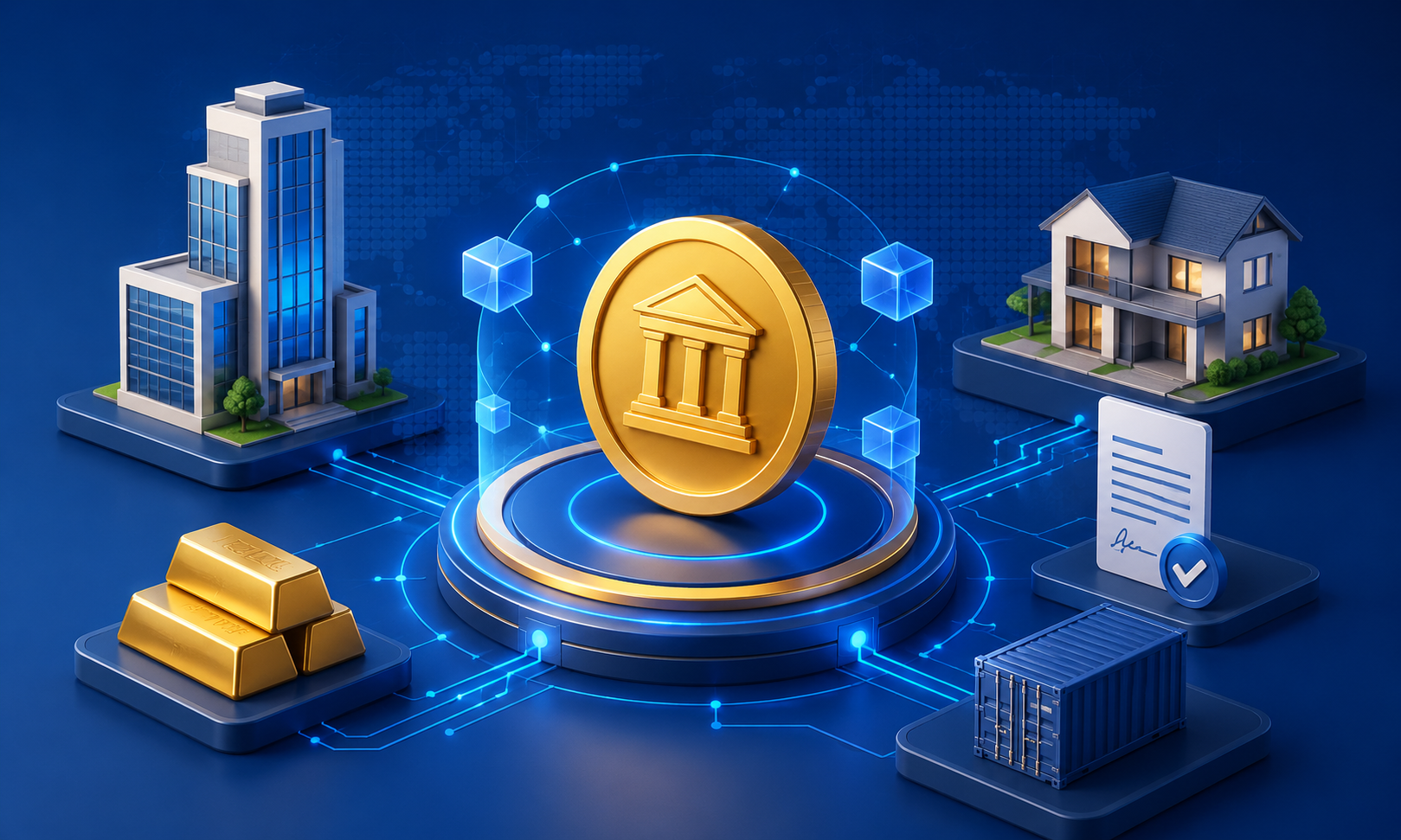
Blockchain adoption has entered a different phase in 2026. Previous discussions mainly focused on cryptocurrencies and speculative digital assets. Today, businesses are paying closer attention to real-world value connected to blockchain networks. This movement has increased demand for RWA Tokenization across finance, real estate, commodities, art, private equity, and institutional investment sectors.
Companies are no longer viewing tokenization as an experimental concept. Instead, many organizations are evaluating how physical assets and traditional financial products can operate through blockchain-based ecosystems. As regulations become more defined in several countries, enterprises are beginning to allocate larger budgets toward tokenized infrastructure and digital asset operations.
The rise of Real World Asset Tokenization has introduced fresh opportunities for asset ownership, liquidity access, fractional investment models, and automated transaction systems. Because of this shift, blockchain businesses must closely follow the latest market movements and technical developments connected to RWA Tokenization development.
This article discusses major trends influencing the industry and why businesses involved in blockchain services should monitor these developments carefully.
One of the biggest developments in recent years is the increasing involvement of financial institutions in tokenized asset ecosystems. Banks, investment firms, hedge funds, and asset management companies are gradually testing blockchain-based asset operations.
Institutional firms are showing interest in tokenized treasury products, debt instruments, real estate funds, and commodity-backed digital assets. This participation is changing how blockchain businesses approach product development and compliance structures.
Several factors are contributing to this movement:
For blockchain companies, this trend means that enterprise-grade architecture is becoming more important than speculative token launches.
Businesses entering the RWA tokenization development services sector now require:
The growing presence of institutions will continue influencing rwa tokenization platform development strategies throughout 2026 and beyond.
Among all sectors connected to Real World Asset Tokenization Services, real estate remains one of the most active industries. Property tokenization models are receiving attention from investors looking for smaller entry points into premium properties.
Real estate tokenization allows property ownership to be divided into smaller digital units. This structure attracts investors who previously lacked access to expensive commercial or residential assets.
Businesses are increasingly interested in:
As competition rises, every RWA Tokenization Company is focusing on real estate-specific infrastructure.
Office buildings, retail spaces, and warehouses are being digitized for shared ownership participation.
Hotels and vacation properties are becoming part of blockchain-based investment ecosystems.
Agricultural land and undeveloped properties are entering tokenized marketplaces.
Investors receive periodic revenue distributions through automated blockchain mechanisms.
This trend indicates that real estate-focused RWA token development will remain a major business category over the coming years.
Government bonds and treasury products are entering blockchain environments at a rapid pace. Financial institutions are recognizing the operational advantages of tokenized treasury systems.
Tokenized treasury products are receiving attention because they provide:
Blockchain companies involved in RWA Tokenization Services are now working on treasury-related infrastructure for institutional clients.
This movement is influencing multiple development priorities:
Businesses planning to become a recognized rwa tokenization development company must monitor treasury tokenization activity closely since institutional demand is continuously increasing.
Artificial intelligence is gradually becoming part of tokenized asset ecosystems. AI tools are assisting businesses with asset valuation, fraud detection, investor analytics, and compliance monitoring.
The combination of blockchain and AI is creating operational efficiencies in asset marketplaces.
AI models analyze market conditions and historical pricing data for asset evaluation.
Automated systems identify suspicious transaction activity and abnormal wallet behavior.
Platforms use behavioral analytics to suggest investment categories.
AI-assisted monitoring systems help identify regulatory violations and reporting issues.
For companies offering rwa tokenization development services, AI integration is becoming an important competitive factor.
Previous tokenization projects mainly relied on a single blockchain network. In 2026, businesses are increasingly adopting multi-chain structures.
Different blockchains provide different benefits:
Because of this, businesses involved in RWA Tokenization are creating systems that operate across several blockchain ecosystems instead of depending on a single network.
This trend is significantly influencing rwa tokenization platform development planning.
Regulatory attention toward digital assets is increasing worldwide. Governments are actively drafting policies connected to tokenized securities, digital ownership, taxation, and investor protection.
As a result, compliance is no longer treated as an optional component.
Every serious RWA Tokenization Company is prioritizing legal compatibility during platform development.
Platforms verify investor identity before participation.
Anti-money laundering systems track suspicious financial activities.
Certain tokenized assets are limited to approved geographic regions.
Regulatory transaction records are generated automatically.
Blockchain businesses that ignore compliance requirements may face operational restrictions in the future.
This trend is making regulated infrastructure one of the most discussed topics in Real World Asset Tokenization projects
Commodities are becoming a major category within tokenized asset ecosystems. Gold, silver, oil reserves, agricultural products, and industrial materials are being digitized through blockchain systems.
Commodity-backed tokens attract investors looking for alternatives beyond cryptocurrencies.
Businesses entering the RWA token development sector are increasingly targeting commodity markets because of global investor demand.
Commodity tokenization platforms often require:
These operational layers are becoming standard requirements in modern RWA Tokenization Services.
One challenge in traditional asset ownership is limited liquidity. Tokenization introduces opportunities for secondary trading environments where investors can buy and sell fractional ownership positions.
Secondary markets are becoming one of the fastest-growing areas in rwa tokenization platform development.
Small ownership percentages become tradeable among investors.
Blockchain transactions reduce settlement delays.
Digital asset exchanges operate beyond traditional market hours.
Cross-border participation becomes easier through digital marketplaces.
Blockchain companies are increasingly working on exchange integrations and marketplace infrastructure to support these systems.
Stablecoins are playing an important role in asset-backed blockchain ecosystems. Many tokenized asset platforms now use stablecoins for settlement, revenue distribution, and transaction execution.
Stablecoin integration reduces volatility concerns during transactions.
For businesses offering RWA tokenization development services, stablecoin compatibility has become a regular requirement.
Fractional ownership continues attracting retail investors who previously lacked access to high-value assets.
This trend is changing investment participation models across multiple industries.
Investors can own smaller portions of commercial and residential properties.
Expensive artworks become accessible to a wider audience.
Energy plants and public infrastructure projects are divided into investment units.
High-value collectibles and luxury goods are entering digital ownership markets.
Fractional investment systems are expected to remain a major discussion area within Real World Asset Tokenization Services during the coming years.
Security concerns remain one of the biggest challenges in blockchain systems. As tokenized asset values increase, businesses are allocating larger budgets toward security testing and smart contract auditing.
Professional auditing has become an expected requirement for institutional participation.
Any rwa tokenization development company targeting enterprise clients must treat security reviews as a continuous operational process.
Private equity investments have traditionally been available only to high-net-worth investors and institutional firms. Tokenization is changing participation structures by introducing fractional ownership opportunities.
Tokenized private equity systems are attracting startups, venture firms, and alternative investment platforms.
This category is becoming an important growth segment within RWA Tokenization.
Blockchain infrastructure removes several geographic barriers connected to traditional investments. Investors from different regions can participate in tokenized ecosystems without depending entirely on local banking systems.
This global participation model is encouraging blockchain businesses to create international investment frameworks.
Platforms support multiple fiat and digital currencies.
Businesses adjust operations according to jurisdiction requirements.
Global asset storage partnerships are becoming more common.
Platforms are designed for participation from multiple countries.
Cross-border investment capability remains one of the most commercially attractive aspects of Real World Asset Tokenization.
Carbon credits and sustainability-linked assets are gradually becoming part of blockchain ecosystems. Businesses connected to environmental finance are evaluating blockchain-based tracking and ownership systems.
Environmental finance may become an important category for RWA token development during the next several years.
Blockchain firms are increasingly partnering with legal firms, financial institutions, custodians, and compliance providers to create full-service tokenization ecosystems.
These partnerships help businesses address operational requirements beyond blockchain development alone.
Businesses offering RWA Tokenization Services are increasingly operating through partnership-based ecosystems instead of isolated development models.
The tokenization sector is moving far beyond experimental blockchain projects. Asset-backed digital ecosystems are attracting institutions, businesses, retail investors, and government attention simultaneously.
Several developments are expected to continue influencing the market:
For blockchain businesses, understanding these market movements is becoming increasingly important for long-term commercial positioning.
Companies entering this sector must pay attention to legal structures, infrastructure security, cross-chain functionality, asset verification systems, and investor management operations.
The market surrounding RWA Tokenization is likely to continue expanding as businesses seek more efficient methods for managing ownership records, investment participation, and digital financial infrastructure.
The tokenized asset market is entering a period where enterprise participation, regulated investment products, and institutional adoption are influencing development priorities across the blockchain industry. Businesses involved in Real World Asset Tokenization must closely monitor changing regulations, investor behavior, asset digitization models, security practices, and interoperability frameworks to remain competitive in the years ahead. From real estate and commodities to treasury products and private equity systems, the opportunities connected to RWA Tokenization development continue expanding across global markets. Blockchain App Factory provides Real World Asset Tokenization Services for businesses looking to establish secure and efficient tokenized asset ecosystems.