English
 Arabic
 Français
 Spanish
 Portuguese
 Deutsch
 Turkish
 Dutch
Dutch
 Italiano
 Russian
 Romaian
 Portuguese (Brazil)
 Greek
Greek
 Réunionnais
 India
India
Score Big with Karim Benzema's FUT Birthday Card in FC 24
Jeux |
2024-03-16 03:55:12
 Entreprises locales
 Runsound music
 La silver économie
 Affiliation Matrice 3x9
 Récompenses
 Babarun (BBRN)
 Calculez vos calories
 Collab Influenceurs
 Événementiels
 Procaly
 Affiliation
 Prêts Immobiliers
Entreprises locales
Runsound music
La silver économie
Affiliation Matrice 3x9
Récompenses
Babarun (BBRN)
Calculez vos calories
Collab Influenceurs
Événementiels
Procaly
Affiliation
Prêts Immobiliers
Alle anzeigen
Prêts Immobiliers
Entreprises locales
Runsound music
La silver économie
Affiliation Matrice 3x9
Récompenses
Babarun (BBRN)
Calculez vos calories
Collab Influenceurs
Événementiels
Procaly
Affiliation
Prêts Immobiliers
Alle anzeigen

Upgrade auf Pro

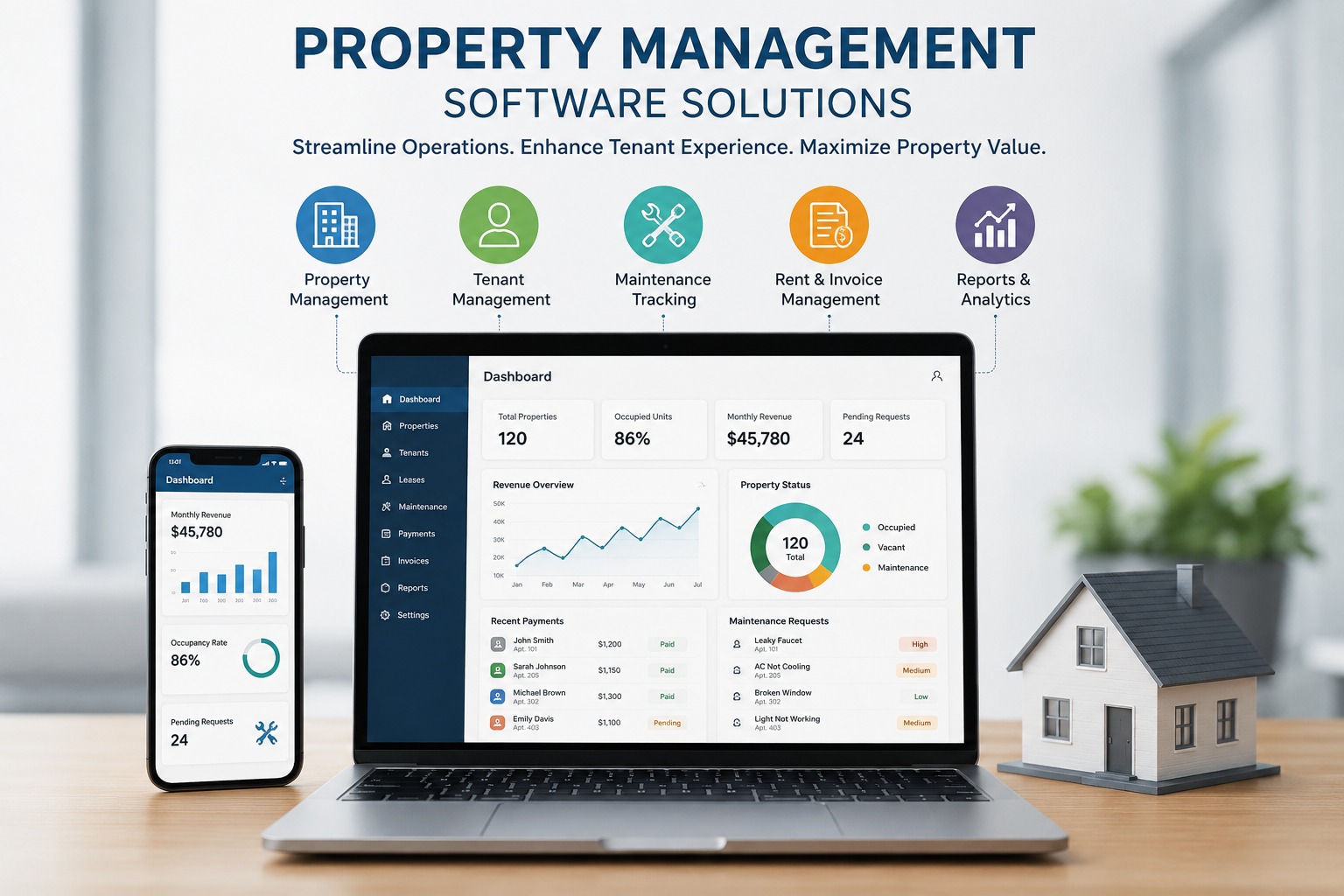
Property owners, real estate firms, and housing operators increasingly rely on digital tools to streamline leasing, maintenance, and financial oversight. Modern platforms reduce administrative burden, improve response times, and centralize critical information across portfolios of any size. As organizations evaluate new platforms, understanding the technical, operational, and financial aspects becomes essential. This guide explains the core considerations, capabilities, and planning decisions involved in property management software development, helping stakeholders make informed choices about building solutions that support sustainable and efficient property operations.
The global real estate technology market continues to expand as landlords and property managers adopt software to automate rent collection, lease administration, and maintenance coordination. Industry research indicates that digital adoption in property operations is growing at a double-digit rate, driven by rising tenant expectations and the need for accurate reporting. Organizations using integrated management systems often report faster lease processing, fewer missed payments, and improved occupancy rates. These trends show that specialized software is no longer optional for firms managing multiple units, locations, or stakeholders.
A robust platform combines multiple functions into a single operational environment. These modules reduce fragmented workflows and improve visibility across the portfolio.
Property and unit listings with availability status
Lease creation, renewals, and document storage
Automated rent invoicing and payment tracking
Security deposit records and refund calculations
Maintenance ticket submission and assignment
Owner statements and portfolio performance reports
Communication logs for tenants, vendors, and staff
Role-based permissions and audit trails
These capabilities create a reliable foundation for property management software development by bringing operational, financial, and contractual data into one secure system.
Tenant experience has become a central requirement for successful property operations. Self-service portals allow residents to pay rent, download lease documents, report maintenance issues, and monitor request progress without contacting the management office.
Well-designed portals typically include:
Secure login with two-factor authentication
Online payment processing and receipts
Maintenance requests with photo attachments
Renewal notices and digital signatures
Community announcements and notifications
Organizations pursuing tenant management software development often prioritize mobile-first interfaces because residents increasingly expect services to be accessible from smartphones. Responsive design and intuitive navigation directly influence adoption and satisfaction.
Property operations involve recurring transactions, tax records, vendor invoices, and owner distributions. Manual bookkeeping introduces errors that can affect cash flow and regulatory compliance. Financial automation reduces these risks by synchronizing property events with accounting functions.
Essential financial capabilities include rent schedules, late fee rules, recurring expenses, bank reconciliation, and budget tracking. Dashboards can present net operating income, delinquency rates, and maintenance costs by property or portfolio.
When planning software architecture, developers should ensure compatibility with accounting standards, regional tax requirements, and export formats used by finance teams. Data integrity controls, approval workflows, and immutable audit logs are critical for maintaining trustworthy records.
Maintenance management is one of the most operationally intensive aspects of property administration. Delayed repairs can lead to tenant dissatisfaction, higher costs, and asset deterioration. Software helps by organizing work orders from submission through completion.
A typical workflow includes:
Tenant submits a maintenance request
System categorizes urgency and property location
Manager assigns the task to an internal technician or vendor
Vendor updates status and uploads invoices
Tenant confirms resolution
Costs are posted to financial records
Automation improves accountability and creates a historical record of repairs. This information helps managers identify recurring issues, forecast capital expenditures, and evaluate vendor performance.
No platform operates in isolation. Effective solutions connect with payment gateways, digital signature tools, accounting systems, messaging services, and IoT devices such as smart locks and utility meters.
Key architectural considerations include:
REST or GraphQL APIs for external connectivity
Webhooks for real-time event notifications
Multi-tenant database design
Encryption for data in transit and at rest
Backup and disaster recovery procedures
Monitoring and centralized logging
Cloud-native deployment supports elasticity as property portfolios grow. Containerized services and modular components also simplify updates, testing, and future expansion.
Building a dependable platform requires structured planning and disciplined execution. Teams typically move through several phases to reduce uncertainty and align technical outcomes with business goals.
Discovery and Requirements
Stakeholders define user roles, workflows, compliance needs, and reporting expectations. Wireframes and process maps clarify priorities.
UX and Interface Design
Designers create dashboards, mobile views, and navigation systems optimized for managers, tenants, owners, and vendors.
Backend and Frontend Engineering
Developers implement business logic, APIs, databases, and user interfaces.
Testing and Quality Assurance
Teams conduct functional, performance, security, and usability testing.
Deployment and Monitoring
The system is released to production and observed for performance, stability, and user feedback.
Each phase contributes to successful property management software development by ensuring operational requirements are translated into maintainable technology.
Estimating property management software development cost requires examining feature scope, technical complexity, and deployment requirements. Basic systems with listings, leases, and payment tracking require significantly less investment than enterprise platforms with owner portals, advanced analytics, and extensive integrations.
Primary cost drivers include:
Number and complexity of modules
Web and mobile application requirements
Third-party service integrations
Security and compliance obligations
Data migration from legacy systems
Reporting and business intelligence features
Ongoing maintenance and infrastructure
A focused minimum viable product helps organizations validate requirements before committing to broader functionality. Iterative releases also reduce the risk of overbuilding features that users may not need.
Property platforms store personally identifiable information, financial records, lease agreements, and payment data. This concentration of sensitive information makes security a fundamental design requirement rather than an optional enhancement.
Recommended safeguards include:
Multi-factor authentication
Role-based access control
Encryption of stored and transmitted data
Secure password hashing
Session timeout and anomaly detection
Routine vulnerability scanning
Penetration testing before major releases
Compliance obligations may vary depending on geography and payment processing methods. Development teams should document data retention rules and incident response procedures to support governance and audit readiness.
Advanced reporting transforms raw operational data into actionable insight. Occupancy trends, delinquency patterns, maintenance costs, and lease renewal forecasts help managers respond proactively.
Artificial intelligence can further improve efficiency by:
Categorizing maintenance requests automatically
Predicting late payment risk
Recommending rental price adjustments
Detecting anomalies in expense patterns
Summarizing tenant communications
These capabilities should be introduced carefully, with transparent logic and human oversight. Reliable data quality remains the prerequisite for meaningful predictions and recommendations.
Property software has evolved into a strategic operational tool that unifies leasing, accounting, maintenance, communication, and reporting. Organizations evaluating custom solutions should focus on user workflows, data security, integration requirements, and phased implementation. A well-structured platform reduces administrative complexity, supports informed decision-making, and creates a better experience for residents, owners, and staff. Careful planning and disciplined execution ensure the resulting system remains adaptable as portfolios expand and operational expectations continue to change.