Upgrade to Pro


  • ## Introduction

    In recent years, the Raspberry Pi has solidified its position as a cornerstone of the DIY electronics community. With its versatility and affordability, this single-board computer has inspired countless hobbyists and professionals alike. Central to the latest Raspberry Pi developments is the RP2040 microcontroller, a powerful yet cost-effective chip that has garnered significant attention. As the RP2040 becomes widely available, third-party manufacturers have begun producing th...
    ## Introduction In recent years, the Raspberry Pi has solidified its position as a cornerstone of the DIY electronics community. With its versatility and affordability, this single-board computer has inspired countless hobbyists and professionals alike. Central to the latest Raspberry Pi developments is the RP2040 microcontroller, a powerful yet cost-effective chip that has garnered significant attention. As the RP2040 becomes widely available, third-party manufacturers have begun producing th...
    Looking at a Real Fake Raspberry Pi RP2040 Board
    ## Introduction In recent years, the Raspberry Pi has solidified its position as a cornerstone of the DIY electronics community. With its versatility and affordability, this single-board computer has inspired countless hobbyists and professionals alike. Central to the latest Raspberry Pi developments is the RP2040 microcontroller, a powerful yet cost-effective chip that has garnered...
    ·273 Views ·0 previzualizare
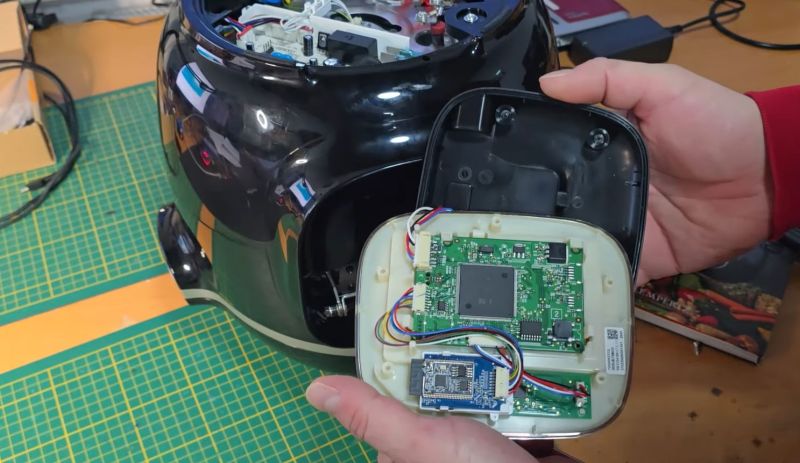
  • What if your smart cooking pot could serve up a side of nostalgia, like playing Doom while you sauté vegetables? In an intriguing article, we learn how tech enthusiasts are taking advantage of modern kitchen gadgets like the Krups Cook4Me, which boasts touch screens and powerful microcontrollers, and transforming them into gaming devices. This unexpected blend of culinary skills and tech-savvy creativity is a testament to the endless possibilities of our smart appliances. Personally, I love the idea of multitasking in the kitchen, but I never imagined my cooking pot could double as a gaming console! Isn’t it fascinating how innovation knows no bounds?

    Read more about this quirky hack here: https://hackaday.com/2026/01/13/hacking-the-krups-cook4me-smart-cooking-pot-for-doom/

    #SmartHome #KitchenHacks #TechInnovation #Doom #CookingFun
    What if your smart cooking pot could serve up a side of nostalgia, like playing Doom while you sauté vegetables? 🤔 In an intriguing article, we learn how tech enthusiasts are taking advantage of modern kitchen gadgets like the Krups Cook4Me, which boasts touch screens and powerful microcontrollers, and transforming them into gaming devices. This unexpected blend of culinary skills and tech-savvy creativity is a testament to the endless possibilities of our smart appliances. Personally, I love the idea of multitasking in the kitchen, but I never imagined my cooking pot could double as a gaming console! Isn’t it fascinating how innovation knows no bounds? Read more about this quirky hack here: https://hackaday.com/2026/01/13/hacking-the-krups-cook4me-smart-cooking-pot-for-doom/ #SmartHome #KitchenHacks #TechInnovation #Doom #CookingFun
    HACKADAY.COM
    Hacking the Krups Cook4Me Smart Cooking Pot for Doom
    With more and more kitchen utilities gaining touch screens and capable microcontrollers it’d be inconceivable that they do not get put to other uses as well. To this end [Aaron …read more
    ·390 Views ·0 previzualizare
  • Intelligent Motor Controlling Modules Market, valued at a robust USD 794 million in 2024, is on a trajectory of steady expansion, projected to reach USD 1102 million by 2032. This growth, representing a compound annual growth rate (CAGR) of 4.9%, is detailed in a comprehensive new report published by Semiconductor Insight. The study highlights the critical role these advanced electronic systems play in optimizing motor performance, enhancing energy efficiency, and enabling predictive maintenance across a wide spectrum of industrial and consumer applications.
    Intelligent motor controlling modules, which integrate microcontrollers, sensors, and sophisticated algorithms, are becoming indispensable for minimizing energy waste and maximizing operational uptime. Their ability to provide precise control over motor speed, torque, and direction makes them a cornerstone of modern automation and smart manufacturing initiatives, fundamentally transforming how motors are utilized in everything from factory assembly lines to household appliances.
    Industrial Automation and Energy Efficiency Mandates: The Primary Growth Engines
    The report identifies the relentless global push for industrial automation and stringent energy efficiency regulations as the paramount drivers for intelligent motor control module adoption. With industrial motors consuming over 45% of global electricity, according to the International Energy Agency (IEA), the demand for solutions that can demonstrably reduce this consumption is immense. These modules can improve motor efficiency by up to 30%, offering a compelling return on investment that is accelerating their deployment.
    Read Full Report: https://semiconductorinsight.com/report/intelligent-motor-controlling-modules-market/
    #IntelligentMotorControlMarket,
    #MotorControlModulesMarket,
    #SmartMotorControllers,
    #IndustrialAutomationMarket,
    #MotorControlGrowth,
    #AutomationTechnologyTrends,
    #MotorControlIndustry,
    #MotorControlForecast
    Intelligent Motor Controlling Modules Market, valued at a robust USD 794 million in 2024, is on a trajectory of steady expansion, projected to reach USD 1102 million by 2032. This growth, representing a compound annual growth rate (CAGR) of 4.9%, is detailed in a comprehensive new report published by Semiconductor Insight. The study highlights the critical role these advanced electronic systems play in optimizing motor performance, enhancing energy efficiency, and enabling predictive maintenance across a wide spectrum of industrial and consumer applications. Intelligent motor controlling modules, which integrate microcontrollers, sensors, and sophisticated algorithms, are becoming indispensable for minimizing energy waste and maximizing operational uptime. Their ability to provide precise control over motor speed, torque, and direction makes them a cornerstone of modern automation and smart manufacturing initiatives, fundamentally transforming how motors are utilized in everything from factory assembly lines to household appliances. Industrial Automation and Energy Efficiency Mandates: The Primary Growth Engines The report identifies the relentless global push for industrial automation and stringent energy efficiency regulations as the paramount drivers for intelligent motor control module adoption. With industrial motors consuming over 45% of global electricity, according to the International Energy Agency (IEA), the demand for solutions that can demonstrably reduce this consumption is immense. These modules can improve motor efficiency by up to 30%, offering a compelling return on investment that is accelerating their deployment. Read Full Report: https://semiconductorinsight.com/report/intelligent-motor-controlling-modules-market/ #IntelligentMotorControlMarket, #MotorControlModulesMarket, #SmartMotorControllers, #IndustrialAutomationMarket, #MotorControlGrowth, #AutomationTechnologyTrends, #MotorControlIndustry, #MotorControlForecast
    SEMICONDUCTORINSIGHT.COM
    Intelligent Motor Controlling Modules Market, Trends, Business Strategies 2025-2032
    Intelligent Motor Controlling Modules Market was valued at 794 million in 2024 and is projected to reach USD 1102 million by 2032, at a CAGR of 4.9%
    ·2K Views ·0 previzualizare
  • ATtiny85, I2C display, driving large screens, microcontroller projects, pixel display, embedded systems, graphics programming, DIY electronics

    ## Introduction

    In the realm of embedded systems and microcontroller projects, the ATtiny85 is often overshadowed by its more powerful counterparts. With only 512 bytes of SRAM, it may seem impractical for handling larger display outputs, particularly when driving a 1024×600 pixel screen. However, creative engineers and hobbyists have demonstrated that ...
    ATtiny85, I2C display, driving large screens, microcontroller projects, pixel display, embedded systems, graphics programming, DIY electronics ## Introduction In the realm of embedded systems and microcontroller projects, the ATtiny85 is often overshadowed by its more powerful counterparts. With only 512 bytes of SRAM, it may seem impractical for handling larger display outputs, particularly when driving a 1024×600 pixel screen. However, creative engineers and hobbyists have demonstrated that ...
    Drive 1024×600 Pixels via I2C with an ATtiny85: A Comprehensive Guide
    ATtiny85, I2C display, driving large screens, microcontroller projects, pixel display, embedded systems, graphics programming, DIY electronics ## Introduction In the realm of embedded systems and microcontroller projects, the ATtiny85 is often overshadowed by its more powerful counterparts. With only 512 bytes of SRAM, it may seem impractical for handling larger display outputs, particularly...
    ·568 Views ·0 previzualizare
  • Educational Robots Market to Reach USD 4.13 Billion by 2032
    Educational Robots Market, valued at a robust USD 1.42 billion in 2024, is on a trajectory of remarkable growth, projected to surge to USD 4.13 billion by 2032. This expansion, representing a compound annual growth rate (CAGR) of 16.9%, is detailed in a comprehensive new report from Intel Market Research. The study underscores the critical role these interactive learning tools play in modern education, fostering STEM (Science, Technology, Engineering, and Mathematics) skills, computational thinking, and problem-solving abilities from an early age. Educational robots, designed as programmable, interactive tools for learning, are becoming indispensable in classrooms and home-learning environments. They transform abstract concepts in coding, engineering, and mathematics into tangible, hands-on experiences, making them a cornerstone of contemporary, technology-driven education. Their versatility allows for applications ranging from simple sequencing tasks for young children to complex programming challenges for university students, catering to a wide spectrum of learning objectives.
    Global STEM Educational Push: The Primary Growth Engine
    The report identifies the global, concerted push for enhancing STEM education as the paramount driver for educational robot demand. Governments and educational institutions worldwide are revising curricula to include coding and robotics, recognizing the need to equip students with skills for a digital future. This strategic shift is creating unprecedented demand for educational technology tools. "The integration of robotics into national education standards is no longer an outlier but a central pillar of modern pedagogical strategy," the report states. This movement is supported by data indicating that students engaged with robotics show improved engagement and a deeper understanding of complex scientific principles. The demand is particularly acute as industries across the globe report a growing skills gap in technology and engineering fields, placing pressure on educational systems to adapt and innovate their teaching methodologies.
    Furthermore, the increasing accessibility and declining costs of core robotic components, such as sensors and microcontrollers, are making these tools available to a broader range of schools and consumers. The report highlights that while initial adoption is high in private and well-funded public institutions, the trend is rapidly moving towards public education systems in emerging economies. This broad-based adoption, fueled by policy mandates and parental demand for future-proof skills, ensures the market's dynamism is not a fleeting trend but a fundamental restructuring of educational resources.
    Read Full Report: https://semiconductorinsight.com/report/educational-robots-market/
    Market Segmentation: Kit-Based Robots and K-12 Applications Dominate
    The report provides a detailed segmentation analysis, offering a clear view of the market structure and key growth segments.
    Segment Analysis:
    By Type
    • Humanoid Robots
    • Non-Humanoid Robots
    By Application
    • Primary Education
    • Secondary Education
    • Higher Education
    • Vocational Training
    By Component
    • Hardware
    • Software
    • Services
    Download FREE Sample Report:
    Educational Robots Market - View in Detailed Research Report
    Competitive Landscape: Key Players and Strategic Focus
    The report profiles key industry players, including:
    • Lego Education
    • Robotis Co., Ltd.
    • Sphero, Inc.
    • UBTECH Robotics Corp.
    • SoftBank Robotics Group Corp.
    • Fischertechnik GmbH
    • Pitsco Education
    • EdTech, Inc.
    • Modular Robotics
    • Parallax Inc.
    These companies are focusing on product innovation, such as integrating AI for personalized learning experiences and IoT for collaborative robot projects, and forming strategic partnerships with educational content providers and school districts to expand their market reach.
    Emerging Opportunities in AI and Personalized Learning
    Beyond traditional curriculum support, the report outlines significant emerging opportunities. The integration of Artificial Intelligence (AI) is creating a new frontier for adaptive learning, where robots can tailor challenges and instructions to a student's individual progress and learning style. This personalization enhances engagement and improves learning outcomes. Furthermore, the rise of remote and hybrid learning models presents a substantial growth avenue, with robots serving as a physical, interactive element that can be programmed and controlled from home. The convergence of robotics with other EdTech platforms is another major trend, allowing for a seamless ecosystem where robot activities are integrated with digital lesson plans and assessment tools, providing educators with valuable data on student comprehension and skill development.
    Report Scope and Availability
    The market research report offers a comprehensive analysis of the global and regional Educational Robots markets from 2025–2032. It provides detailed segmentation, market size forecasts, competitive intelligence, technology trends, and an evaluation of key market dynamics, including drivers, restraints, and opportunities.
    For a detailed analysis of market drivers, restraints, opportunities, and the competitive strategies of key players, access the complete report.
    Get Full Report Here: Educational Robots Market, Global Business Strategies 2025-2032 - View in Detailed Research Report
    Download Sample Report: https://semiconductorinsight.com/download-sample-report/?product_id=127189
    About Intel Market Research
    Intel Market Research is a leading provider of market intelligence and strategic consulting for the global technology and education industries. Our in-depth reports and analysis offer actionable insights to help businesses navigate complex market dynamics, identify growth opportunities, and make informed decisions. We are committed to delivering high-quality, data-driven research to our clients worldwide.
    Website: https://semiconductorinsight.com/
    International: +91 8087 99 2013
    LinkedIn: Follow Us

    #EducationalRobotsMarket,
    #EducationalRobotsGrowth,
    #EducationalRobotsIndustry,
    #EducationalRobotsTrends,
    #EducationalRobotsForecast
    Educational Robots Market to Reach USD 4.13 Billion by 2032 Educational Robots Market, valued at a robust USD 1.42 billion in 2024, is on a trajectory of remarkable growth, projected to surge to USD 4.13 billion by 2032. This expansion, representing a compound annual growth rate (CAGR) of 16.9%, is detailed in a comprehensive new report from Intel Market Research. The study underscores the critical role these interactive learning tools play in modern education, fostering STEM (Science, Technology, Engineering, and Mathematics) skills, computational thinking, and problem-solving abilities from an early age. Educational robots, designed as programmable, interactive tools for learning, are becoming indispensable in classrooms and home-learning environments. They transform abstract concepts in coding, engineering, and mathematics into tangible, hands-on experiences, making them a cornerstone of contemporary, technology-driven education. Their versatility allows for applications ranging from simple sequencing tasks for young children to complex programming challenges for university students, catering to a wide spectrum of learning objectives. Global STEM Educational Push: The Primary Growth Engine The report identifies the global, concerted push for enhancing STEM education as the paramount driver for educational robot demand. Governments and educational institutions worldwide are revising curricula to include coding and robotics, recognizing the need to equip students with skills for a digital future. This strategic shift is creating unprecedented demand for educational technology tools. "The integration of robotics into national education standards is no longer an outlier but a central pillar of modern pedagogical strategy," the report states. This movement is supported by data indicating that students engaged with robotics show improved engagement and a deeper understanding of complex scientific principles. The demand is particularly acute as industries across the globe report a growing skills gap in technology and engineering fields, placing pressure on educational systems to adapt and innovate their teaching methodologies. Furthermore, the increasing accessibility and declining costs of core robotic components, such as sensors and microcontrollers, are making these tools available to a broader range of schools and consumers. The report highlights that while initial adoption is high in private and well-funded public institutions, the trend is rapidly moving towards public education systems in emerging economies. This broad-based adoption, fueled by policy mandates and parental demand for future-proof skills, ensures the market's dynamism is not a fleeting trend but a fundamental restructuring of educational resources. Read Full Report: https://semiconductorinsight.com/report/educational-robots-market/ Market Segmentation: Kit-Based Robots and K-12 Applications Dominate The report provides a detailed segmentation analysis, offering a clear view of the market structure and key growth segments. Segment Analysis: By Type • Humanoid Robots • Non-Humanoid Robots By Application • Primary Education • Secondary Education • Higher Education • Vocational Training By Component • Hardware • Software • Services Download FREE Sample Report: Educational Robots Market - View in Detailed Research Report Competitive Landscape: Key Players and Strategic Focus The report profiles key industry players, including: • Lego Education • Robotis Co., Ltd. • Sphero, Inc. • UBTECH Robotics Corp. • SoftBank Robotics Group Corp. • Fischertechnik GmbH • Pitsco Education • EdTech, Inc. • Modular Robotics • Parallax Inc. These companies are focusing on product innovation, such as integrating AI for personalized learning experiences and IoT for collaborative robot projects, and forming strategic partnerships with educational content providers and school districts to expand their market reach. Emerging Opportunities in AI and Personalized Learning Beyond traditional curriculum support, the report outlines significant emerging opportunities. The integration of Artificial Intelligence (AI) is creating a new frontier for adaptive learning, where robots can tailor challenges and instructions to a student's individual progress and learning style. This personalization enhances engagement and improves learning outcomes. Furthermore, the rise of remote and hybrid learning models presents a substantial growth avenue, with robots serving as a physical, interactive element that can be programmed and controlled from home. The convergence of robotics with other EdTech platforms is another major trend, allowing for a seamless ecosystem where robot activities are integrated with digital lesson plans and assessment tools, providing educators with valuable data on student comprehension and skill development. Report Scope and Availability The market research report offers a comprehensive analysis of the global and regional Educational Robots markets from 2025–2032. It provides detailed segmentation, market size forecasts, competitive intelligence, technology trends, and an evaluation of key market dynamics, including drivers, restraints, and opportunities. For a detailed analysis of market drivers, restraints, opportunities, and the competitive strategies of key players, access the complete report. Get Full Report Here: Educational Robots Market, Global Business Strategies 2025-2032 - View in Detailed Research Report Download Sample Report: https://semiconductorinsight.com/download-sample-report/?product_id=127189 About Intel Market Research Intel Market Research is a leading provider of market intelligence and strategic consulting for the global technology and education industries. Our in-depth reports and analysis offer actionable insights to help businesses navigate complex market dynamics, identify growth opportunities, and make informed decisions. We are committed to delivering high-quality, data-driven research to our clients worldwide. 🌐 Website: https://semiconductorinsight.com/ 📞 International: +91 8087 99 2013 🔗 LinkedIn: Follow Us #EducationalRobotsMarket, #EducationalRobotsGrowth, #EducationalRobotsIndustry, #EducationalRobotsTrends, #EducationalRobotsForecast
    SEMICONDUCTORINSIGHT.COM
    Educational Robots Market, Global Business Strategies 2025-2032
    Educational Robots Market was valued at USD 1.42 billion in 2024 to USD 4.13 billion by 2032, exhibiting a CAGR of 16.9% during the forecast period
    ·5K Views ·0 previzualizare
  • Embedded Systems Power the Next Wave of Smart and Connected Technologies
    Embedded Systems Market, valued at a robust USD 82.59 billion in 2024, is set to experience steady expansion, projected to grow from USD 87.63 billion in 2025 to USD 123.50 billion by 2032. This progression, representing a compound annual growth rate (CAGR) of 6.1%, is detailed in a comprehensive new report published by Semiconductor Insight. The study underscores the indispensable role of these integrated computing systems across nearly every facet of modern technology, from automotive and industrial automation to consumer electronics and healthcare.
    Embedded systems, which are dedicated computing devices designed to perform specific tasks within larger mechanical or electrical systems, are fundamental to the operation of everything from smart home appliances to advanced medical equipment and connected vehicles. Their integration enables enhanced functionality, automation, and connectivity, making them a foundational technology for digital transformation and the proliferation of the Internet of Things (IoT). This integration is becoming increasingly critical as industries worldwide pursue greater efficiency, intelligence, and autonomy in their products and processes.
    Automotive Industry Transformation: A Core Growth Catalyst
    The report identifies the profound transformation of the global automotive industry as a paramount driver for embedded systems demand. With the automotive sector accounting for a dominant share of the market, the correlation is both direct and substantial. The ongoing evolution towards electric vehicles (EVs), advanced driver-assistance systems (ADAS), and fully autonomous driving platforms is creating an unprecedented need for sophisticated, high-reliability embedded computing solutions that process vast amounts of data in real-time.
    "The automotive industry's relentless push towards software-defined vehicles is the primary catalyst, creating a massive market for embedded hardware and software," the report states. "Modern premium vehicles can contain over a hundred Electronic Control Units (ECUs), a number that is now being consolidated into more powerful domain controllers and central computers, each requiring advanced embedded systems." Furthermore, the expansion of 5G infrastructure and the surge in industrial IoT deployments are generating significant secondary demand, embedding intelligence into everything from factory robots to city-wide utility grids.
    Read Full Report: https://semiconductorinsight.com/report/embedded-systems-market/
    Download FREE Sample Report:
    Embedded Systems Market - View in Detailed Research Report
    Market Segmentation: Hardware Components and Automotive Applications Lead
    The report provides a detailed segmentation analysis, offering a clear view of the market structure and the most significant growth segments.
    Segment Analysis:
    By Type
    • Embedded Hardware
    • Embedded Software
    By Application
    • Automotive
    • Telecommunication
    • Healthcare
    • Industrial
    • Consumer Electronics
    • Military and Aerospace
    • Others
    By End User
    • Original Equipment Manufacturers (OEMs)
    • System Integrators
    • Product Developers
    By Processing Unit
    • Microcontrollers & Microprocessors
    • Digital Signal Processors (DSP)
    • Application-Specific Integrated Circuits (ASIC)
    By System Complexity
    • Small-Scale Systems
    • Medium-Scale Systems
    • Large-Scale & Complex Systems
    Emerging Opportunities in AI and Industrial Automation
    Beyond the established automotive driver, the report outlines burgeoning opportunities in artificial intelligence at the edge and smart manufacturing. The integration of AI accelerators directly into embedded systems is creating a new class of intelligent edge devices capable of local data processing, which is crucial for applications requiring low latency and data privacy, such as autonomous machinery and real-time surveillance. Moreover, the accelerated adoption of Industry 4.0 principles is a major trend. Smart factories are deploying interconnected embedded systems that can communicate and coordinate autonomously, leading to predictive maintenance, optimized production lines, and significant gains in overall equipment effectiveness (OEE).
    Competitive Landscape: Key Players and Strategic Focus
    The report profiles key industry players, including:
    • Renesas Electronics
    • STMicroelectronics
    • NXP Semiconductors
    • Texas Instruments, Inc.
    • Intel Corporation
    • Microchip Technology
    • Infineon Technologies
    • Analog Devices, Inc.
    • ARM Limited
    • Advantech Co., Ltd.
    • Kontron AG
    • Fujitsu Limited
    These market leaders are intensifying their focus on research and development to create more power-efficient and high-performance system-on-chips (SoCs). Strategic collaborations with software providers and vertical-specific solution developers are also becoming commonplace, as companies seek to offer comprehensive platforms rather than just components, thereby capturing more value in an increasingly competitive landscape.
    Report Scope and Availability
    The market research report offers a comprehensive analysis of the global and regional Embedded Systems markets from 2025–2032. It provides detailed segmentation, market size forecasts, competitive intelligence, technology trends, and an evaluation of key market dynamics.
    For a detailed analysis of market drivers, restraints, opportunities, and the competitive strategies of key players, access the complete report.
    Get Full Report Here: Embedded Systems Market, Global Business Strategies 2025-2032 - View in Detailed Research Report
    Download FREE Sample Report: Embedded Systems Market - View in Detailed Research Report
    About Semiconductor Insight
    Semiconductor Insight is a leading provider of market intelligence and strategic consulting for the global semiconductor and high-technology industries. Our in-depth reports and analysis offer actionable insights to help businesses navigate complex market dynamics, identify growth opportunities, and make informed decisions. We are committed to delivering high-quality, data-driven research to our clients worldwide.
    Website: https://semiconductorinsight.com/
    International: +91 8087 99 2013
    LinkedIn: Follow Us
    #EmbeddedSystemsMarket,
    #EmbeddedSystemsGrowth,
    #EmbeddedSystemsIndustry,
    #EmbeddedSystemsTrends,
    #EmbeddedSystemsForecast
    Embedded Systems Power the Next Wave of Smart and Connected Technologies Embedded Systems Market, valued at a robust USD 82.59 billion in 2024, is set to experience steady expansion, projected to grow from USD 87.63 billion in 2025 to USD 123.50 billion by 2032. This progression, representing a compound annual growth rate (CAGR) of 6.1%, is detailed in a comprehensive new report published by Semiconductor Insight. The study underscores the indispensable role of these integrated computing systems across nearly every facet of modern technology, from automotive and industrial automation to consumer electronics and healthcare. Embedded systems, which are dedicated computing devices designed to perform specific tasks within larger mechanical or electrical systems, are fundamental to the operation of everything from smart home appliances to advanced medical equipment and connected vehicles. Their integration enables enhanced functionality, automation, and connectivity, making them a foundational technology for digital transformation and the proliferation of the Internet of Things (IoT). This integration is becoming increasingly critical as industries worldwide pursue greater efficiency, intelligence, and autonomy in their products and processes. Automotive Industry Transformation: A Core Growth Catalyst The report identifies the profound transformation of the global automotive industry as a paramount driver for embedded systems demand. With the automotive sector accounting for a dominant share of the market, the correlation is both direct and substantial. The ongoing evolution towards electric vehicles (EVs), advanced driver-assistance systems (ADAS), and fully autonomous driving platforms is creating an unprecedented need for sophisticated, high-reliability embedded computing solutions that process vast amounts of data in real-time. "The automotive industry's relentless push towards software-defined vehicles is the primary catalyst, creating a massive market for embedded hardware and software," the report states. "Modern premium vehicles can contain over a hundred Electronic Control Units (ECUs), a number that is now being consolidated into more powerful domain controllers and central computers, each requiring advanced embedded systems." Furthermore, the expansion of 5G infrastructure and the surge in industrial IoT deployments are generating significant secondary demand, embedding intelligence into everything from factory robots to city-wide utility grids. Read Full Report: https://semiconductorinsight.com/report/embedded-systems-market/ Download FREE Sample Report: Embedded Systems Market - View in Detailed Research Report Market Segmentation: Hardware Components and Automotive Applications Lead The report provides a detailed segmentation analysis, offering a clear view of the market structure and the most significant growth segments. Segment Analysis: By Type • Embedded Hardware • Embedded Software By Application • Automotive • Telecommunication • Healthcare • Industrial • Consumer Electronics • Military and Aerospace • Others By End User • Original Equipment Manufacturers (OEMs) • System Integrators • Product Developers By Processing Unit • Microcontrollers & Microprocessors • Digital Signal Processors (DSP) • Application-Specific Integrated Circuits (ASIC) By System Complexity • Small-Scale Systems • Medium-Scale Systems • Large-Scale & Complex Systems Emerging Opportunities in AI and Industrial Automation Beyond the established automotive driver, the report outlines burgeoning opportunities in artificial intelligence at the edge and smart manufacturing. The integration of AI accelerators directly into embedded systems is creating a new class of intelligent edge devices capable of local data processing, which is crucial for applications requiring low latency and data privacy, such as autonomous machinery and real-time surveillance. Moreover, the accelerated adoption of Industry 4.0 principles is a major trend. Smart factories are deploying interconnected embedded systems that can communicate and coordinate autonomously, leading to predictive maintenance, optimized production lines, and significant gains in overall equipment effectiveness (OEE). Competitive Landscape: Key Players and Strategic Focus The report profiles key industry players, including: • Renesas Electronics • STMicroelectronics • NXP Semiconductors • Texas Instruments, Inc. • Intel Corporation • Microchip Technology • Infineon Technologies • Analog Devices, Inc. • ARM Limited • Advantech Co., Ltd. • Kontron AG • Fujitsu Limited These market leaders are intensifying their focus on research and development to create more power-efficient and high-performance system-on-chips (SoCs). Strategic collaborations with software providers and vertical-specific solution developers are also becoming commonplace, as companies seek to offer comprehensive platforms rather than just components, thereby capturing more value in an increasingly competitive landscape. Report Scope and Availability The market research report offers a comprehensive analysis of the global and regional Embedded Systems markets from 2025–2032. It provides detailed segmentation, market size forecasts, competitive intelligence, technology trends, and an evaluation of key market dynamics. For a detailed analysis of market drivers, restraints, opportunities, and the competitive strategies of key players, access the complete report. Get Full Report Here: Embedded Systems Market, Global Business Strategies 2025-2032 - View in Detailed Research Report Download FREE Sample Report: Embedded Systems Market - View in Detailed Research Report About Semiconductor Insight Semiconductor Insight is a leading provider of market intelligence and strategic consulting for the global semiconductor and high-technology industries. Our in-depth reports and analysis offer actionable insights to help businesses navigate complex market dynamics, identify growth opportunities, and make informed decisions. We are committed to delivering high-quality, data-driven research to our clients worldwide. 🌐 Website: https://semiconductorinsight.com/ 📞 International: +91 8087 99 2013 🔗 LinkedIn: Follow Us #EmbeddedSystemsMarket, #EmbeddedSystemsGrowth, #EmbeddedSystemsIndustry, #EmbeddedSystemsTrends, #EmbeddedSystemsForecast
    SEMICONDUCTORINSIGHT.COM
    Embedded Systems Market, Global Business Strategies 2025-2032
    Embedded Systems Market was valued at USD 87.63 billion in 2025 to USD 123.50 billion by 2032, exhibiting a CAGR of 6.1% during the forecast period
    ·7K Views ·0 previzualizare
  • Ever thought about making music with a microcontroller that costs less than a cup of coffee? That's right! The article "10 Cent Microcontroller Makes Music" delves into how modern microcontrollers like the ESP32 are not just cheap but can actually create some sweet sounds. Forget the bulky 8-bit Arduinos of yesteryear; we’re talking about a tiny chip that can hit the right notes without breaking the bank!

    I mean, who knew you could make music for less than a dime? It’s like turning your change jar into a jam session! Who's ready to create a symphony on a budget?

    Dive into the full article for more details!
    https://hackaday.com/2025/10/23/10-cent-microcontroller-makes-music/
    #Microcontrollers #MusicTech #TechForGood #DIYProjects #Innovation
    🎶 Ever thought about making music with a microcontroller that costs less than a cup of coffee? That's right! The article "10 Cent Microcontroller Makes Music" delves into how modern microcontrollers like the ESP32 are not just cheap but can actually create some sweet sounds. Forget the bulky 8-bit Arduinos of yesteryear; we’re talking about a tiny chip that can hit the right notes without breaking the bank! I mean, who knew you could make music for less than a dime? It’s like turning your change jar into a jam session! Who's ready to create a symphony on a budget? Dive into the full article for more details! https://hackaday.com/2025/10/23/10-cent-microcontroller-makes-music/ #Microcontrollers #MusicTech #TechForGood #DIYProjects #Innovation
    HACKADAY.COM
    10 Cent Microcontroller Makes Music
    Compared to the old 8-bit Arduinos, it’s incredible how cheap modern microcontrollers like the ESP32 have become. But there are even cheaper options out there if you don’t need that …read more
    ·3K Views ·0 previzualizare
  • Regional Analysis of IoT Microcontroller Market

    According to Stratview Research, the global IoT Microcontroller Market is poised for significant expansion. From USD 4.82 billion in 2022, it is projected to reach USD 10.71 billion by 2029, boasting a remarkable CAGR of 12.1% during the forecast period. This exponential growth reflects the increasing integration of IoT technologies across various sectors worldwide.

    Download a free sample of the market, click on the below link-

    https://www.stratviewresearch.com/3245/IoT-microcontroller-market.html
    Regional Analysis of IoT Microcontroller Market According to Stratview Research, the global IoT Microcontroller Market is poised for significant expansion. From USD 4.82 billion in 2022, it is projected to reach USD 10.71 billion by 2029, boasting a remarkable CAGR of 12.1% during the forecast period. This exponential growth reflects the increasing integration of IoT technologies across various sectors worldwide. Download a free sample of the market, click on the below link- https://www.stratviewresearch.com/3245/IoT-microcontroller-market.html
    WWW.STRATVIEWRESEARCH.COM
    IoT Microcontroller Market | Size, Share & Competitive Analysis | 2023-2029
    The IoT Microcontroller Market was estimated at US$ 4.82 billion in 2022 and is expected to grow at a healthy CAGR of 12.1% during 2023-2029 to reach US$ 10.71 billion by 2029.
    ·6K Views ·0 previzualizare
  • Smart Card IC Market Will Reach USD 4,929.8 Million by 2030

    The global smart card IC market will touch USD 4,929.8 million, propelling at a 7.1% compound annual growth rate, by 2030. This is mainly because of the growing utilization of financial cards and other safe payment solutions. Moreover, the acceptance of smart IDs in educational organizations and e-governance projects are propelling growth.

    The growing need for safe payment solutions is one of the major reasons because of why the industry is rising at a high pace. As the count of e-commerce payments is growing, so is the count of scams and frauds. To dodge being a victim of such scams, more-safe solutions are needed, and smart cards are one such solution, as they provide more safety and privacy than other financial data storage or payment solutions.

    In 2022, based on end users, the telecommunications category dominated the industry with the largest share. This is mainly because of the use of integrated circuits in subscriber identity modules, boosted by the increasing smartphone acceptance.

    Businesses are not only offering postpaid and prepaid SIMs but also pay-as-you-go variants with minimal paperwork, which makes it simpler for customers to use such cards.

    Additionally, numerous steps are being taken by the government of several nations to connect individuals in rural areas with the internet or smartphones.

    Based on the interface segment, the contactless category is rising at a high pace. This is because of the growing utilization of such cards in several establishments and educational organizations as an access control device.

    They are utilized in biometric arrangements as they convey information in only one way and do not need the Internet to process. Furthermore, because of the COVID-19 epidemic, several establishments shifted to contactless smart cards, as they are a more-sterile choice over touch-based biometric technologies, like fingerprint and palm geometry recognition.

    During the forecast period, the APAC region is projected to grow at a high rate, mainly because of the rapid industrialization and urbanization in the region. Moreover, the fast acceptance of novel technologies in the healthcare, telecommunications, and BFSI industries is boosting the addition of integrated circuits in smart cards. Furthermore, the count of SIMs being utilized in the region is growing at a high rate, which will drive the industry’s development.

    Based on type, in 2022, the microcontroller category led the market with the largest share, and the category is also projected to dominate the market in the future as well, as such chips provide better memory storage and safety to information compared to the old-style magnetic-stripe cards.

    Hence, the growing utilization of financial cards and other safe payment solutions. Moreover, the acceptance of smart IDs in educational organizations and e-governance projects are the major factors propelling the market.

    Read More: https://www.psmarketresearch.com/market-analysis/smart-card-ic-market

    Smart Card IC Market Will Reach USD 4,929.8 Million by 2030 The global smart card IC market will touch USD 4,929.8 million, propelling at a 7.1% compound annual growth rate, by 2030. This is mainly because of the growing utilization of financial cards and other safe payment solutions. Moreover, the acceptance of smart IDs in educational organizations and e-governance projects are propelling growth. The growing need for safe payment solutions is one of the major reasons because of why the industry is rising at a high pace. As the count of e-commerce payments is growing, so is the count of scams and frauds. To dodge being a victim of such scams, more-safe solutions are needed, and smart cards are one such solution, as they provide more safety and privacy than other financial data storage or payment solutions. In 2022, based on end users, the telecommunications category dominated the industry with the largest share. This is mainly because of the use of integrated circuits in subscriber identity modules, boosted by the increasing smartphone acceptance. Businesses are not only offering postpaid and prepaid SIMs but also pay-as-you-go variants with minimal paperwork, which makes it simpler for customers to use such cards. Additionally, numerous steps are being taken by the government of several nations to connect individuals in rural areas with the internet or smartphones. Based on the interface segment, the contactless category is rising at a high pace. This is because of the growing utilization of such cards in several establishments and educational organizations as an access control device. They are utilized in biometric arrangements as they convey information in only one way and do not need the Internet to process. Furthermore, because of the COVID-19 epidemic, several establishments shifted to contactless smart cards, as they are a more-sterile choice over touch-based biometric technologies, like fingerprint and palm geometry recognition. During the forecast period, the APAC region is projected to grow at a high rate, mainly because of the rapid industrialization and urbanization in the region. Moreover, the fast acceptance of novel technologies in the healthcare, telecommunications, and BFSI industries is boosting the addition of integrated circuits in smart cards. Furthermore, the count of SIMs being utilized in the region is growing at a high rate, which will drive the industry’s development. Based on type, in 2022, the microcontroller category led the market with the largest share, and the category is also projected to dominate the market in the future as well, as such chips provide better memory storage and safety to information compared to the old-style magnetic-stripe cards. Hence, the growing utilization of financial cards and other safe payment solutions. Moreover, the acceptance of smart IDs in educational organizations and e-governance projects are the major factors propelling the market. Read More: https://www.psmarketresearch.com/market-analysis/smart-card-ic-market
    ·12K Views ·0 previzualizare
Babafig https://www.babafig.com