Upgrade to Pro

  • 2026 Will Redefine Hospital Credentialing: Green Security CEO Shares Five Predictions for Healthcare Leaders

    Clearwater, FL – As healthcare systems navigate rising financial strain, regulatory complexity, and accelerating technological change, hospital credentialing is emerging as one of the most strategic operational priorities of 2026. According to Mickey Meehan, CEO of Green Security, the year ahead will fundamentally reshape how healthcare organizations manage vendor and contractor access, compliance governance, and operational risk.

    In his latest industry outlook, Meehan outlines five key predictions that signal a permanent shift from static, back-office credentialing processes to AI-driven, continuous compliance systems.

    Healthcare leaders can explore Green Security’s vendor credentialing solutions at:
    https://gogreensecurity.com/vendor-credentialing

    AI Will Move from Clinical Hype to Operational Necessity
    While artificial intelligence has been widely promoted for clinical diagnostics and patient care innovation, most hospitals have struggled to demonstrate measurable ROI in those areas. In 2026, AI adoption will pivot toward operational survival.
    Hospitals will deploy AI to automate:
    Credential verification
    Real-time compliance audits
    Vendor and contractor access management
    Fraud detection and document validation
    Operational resilience is becoming the foundation for scalable healthcare innovation. Without stable, compliant operations, clinical transformation cannot succeed.
    Compliance Will Become a Board-Level Risk Metric
    Healthcare organizations face increasing oversight from regulatory bodies such as:
    The Joint Commission
    Centers for Medicare & Medicaid Services
    National Fire Protection Association
    Fragmented reporting requirements and evolving standards have created significant exposure for hospitals. In 2026, credentialing programs will no longer sit quietly in administrative departments. They will be elevated to board-level discussions alongside cybersecurity, financial risk, and patient safety metrics.
    Organizations that modernize credentialing governance will gain a measurable compliance advantage.

    Learn more about modern credentialing governance best practices here:
    https://tinyurl.com/yfxwas4m

    AI Will Become Healthcare’s Most Powerful Fraud Defense
    Generative AI has introduced new fraud risks, including synthetic identities and convincingly forged credentials. However, the same technology now enables hospitals to detect manipulated documents, altered certifications, and suspicious submissions in real time.
    By leveraging intelligent verification systems, healthcare facilities can close long-standing vulnerabilities in vendor and contractor oversight — protecting patient safety, data security, and institutional integrity.
    Continuous Monitoring Will Replace Static Credentialing
    Traditional credentialing models rely on annual verification cycles. But licenses expire, sanctions change, and workforce risks evolve daily.

    In 2026, the standard will shift to continuous credential monitoring — including:
    Real-time license validation
    Automated sanction screening
    Ongoing background verification
    Expiration alerts and compliance drift detection
    This mirrors the cybersecurity industry’s move from periodic audits to continuous assurance.

    Hospitals seeking operational modernization can explore continuous vendor credential monitoring solutions at:
    https://gogreensecurity.com/vendor-credentialing
    Cyber Insurance Will Require Active Credential Monitoring
    Cyber insurers are expanding underwriting requirements beyond ransomware preparedness to include third-party access controls. As outsourcing and contractor activity increase, insurers view unmonitored vendor access as a high-risk vulnerability.
    In 2026, healthcare organizations without proof of continuous credential monitoring may face:
    Higher insurance premiums
    Reduced coverage
    Policy exclusions
    As a result, CFOs are joining CISOs and compliance leaders in prioritizing credentialing modernization as both a financial and operational safeguard.

    Additional insights on emerging healthcare credentialing trends can be found here:
    https://tinyurl.com/j7uy7xja
    The Expanding Role of Contractors in Hospital Credentialing
    A critical but often overlooked element of credentialing governance is contractor inclusion.
    Contractors — including biomedical engineers, HVAC technicians, IT specialists, and service providers — regularly access sensitive hospital environments. Whether on-site or remote, these individuals must meet the same verification standards as permanent staff and vendors.
    Failure to credential contractors properly introduces risks including:
    Patient safety incidents
    Regulatory violations
    Operational disruption
    Reputational damage
    A standardized, centralized credentialing framework ensures every non-employee meets documented compliance standards.

    Healthcare leaders can review contractor-inclusive credentialing strategies at:
    https://tinyurl.com/yfxwas4m

    Best Practices for Vendor & Contractor Credentialing Governance
    To build a future-ready credentialing program, healthcare organizations should:
    Develop standardized credentialing policies
    Centralize verification processes
    Include contractors in full compliance protocols
    Conduct ongoing audits and automated renewals
    Leverage AI-powered verification technology
    Provide real-time reporting for board oversight
    Modern credentialing governance enhances transparency across subcontractors, improves billing oversight, and strengthens supply chain accountability.

    About Green Security
    Green Security is a healthcare-focused vendor credentialing and facility access compliance provider that helps hospitals automate verification, manage non-employee access, and maintain continuous regulatory readiness.
    By combining AI-driven monitoring with centralized governance tools, Green Security empowers healthcare organizations to transition from reactive credentialing to proactive compliance management.

    Frequently Asked Questions (FAQs)

    FAQs by Technology
    Q: How does AI improve hospital credentialing?
    AI automates license verification, detects fraudulent documents, performs sanction screening, and enables real-time compliance monitoring.
    Q: Can AI detect forged or AI-generated credentials?
    Yes. Advanced verification systems can identify manipulated documents and inconsistencies that manual review often misses.
    Q: What is continuous credential monitoring?
    It is an automated system that verifies credentials in real time rather than relying on annual or periodic reviews.

    FAQs by Compliance & Risk
    Q: Why is credentialing becoming a board-level issue?
    Because credentialing directly impacts regulatory compliance, cybersecurity exposure, patient safety, and insurance risk.
    Q: What regulations require contractor credentialing?
    Healthcare facilities must meet standards set by accrediting and regulatory bodies including The Joint Commission, CMS, and NFPA.
    Q: Can poor credentialing impact cyber insurance coverage?
    Yes. Insurers increasingly require proof of monitored third-party access as part of underwriting criteria.

    FAQs by Contractor Inclusion
    Q: Should contractors be credentialed like vendors and employees?
    Yes. Contractors often access critical systems and patient environments, making equal verification essential.
    Q: What credentials should contractors provide?
    Background checks, immunizations, licenses, training certifications, and policy compliance documentation.
    Q: How does centralized credentialing benefit general contractors?
    It provides transparency into subcontractor compliance, reduces billing disputes, and enhances operational accountability.
    2026 Will Redefine Hospital Credentialing: Green Security CEO Shares Five Predictions for Healthcare Leaders Clearwater, FL – As healthcare systems navigate rising financial strain, regulatory complexity, and accelerating technological change, hospital credentialing is emerging as one of the most strategic operational priorities of 2026. According to Mickey Meehan, CEO of Green Security, the year ahead will fundamentally reshape how healthcare organizations manage vendor and contractor access, compliance governance, and operational risk. In his latest industry outlook, Meehan outlines five key predictions that signal a permanent shift from static, back-office credentialing processes to AI-driven, continuous compliance systems. Healthcare leaders can explore Green Security’s vendor credentialing solutions at: https://gogreensecurity.com/vendor-credentialing AI Will Move from Clinical Hype to Operational Necessity While artificial intelligence has been widely promoted for clinical diagnostics and patient care innovation, most hospitals have struggled to demonstrate measurable ROI in those areas. In 2026, AI adoption will pivot toward operational survival. Hospitals will deploy AI to automate: Credential verification Real-time compliance audits Vendor and contractor access management Fraud detection and document validation Operational resilience is becoming the foundation for scalable healthcare innovation. Without stable, compliant operations, clinical transformation cannot succeed. Compliance Will Become a Board-Level Risk Metric Healthcare organizations face increasing oversight from regulatory bodies such as: The Joint Commission Centers for Medicare & Medicaid Services National Fire Protection Association Fragmented reporting requirements and evolving standards have created significant exposure for hospitals. In 2026, credentialing programs will no longer sit quietly in administrative departments. They will be elevated to board-level discussions alongside cybersecurity, financial risk, and patient safety metrics. Organizations that modernize credentialing governance will gain a measurable compliance advantage. Learn more about modern credentialing governance best practices here: https://tinyurl.com/yfxwas4m AI Will Become Healthcare’s Most Powerful Fraud Defense Generative AI has introduced new fraud risks, including synthetic identities and convincingly forged credentials. However, the same technology now enables hospitals to detect manipulated documents, altered certifications, and suspicious submissions in real time. By leveraging intelligent verification systems, healthcare facilities can close long-standing vulnerabilities in vendor and contractor oversight — protecting patient safety, data security, and institutional integrity. Continuous Monitoring Will Replace Static Credentialing Traditional credentialing models rely on annual verification cycles. But licenses expire, sanctions change, and workforce risks evolve daily. In 2026, the standard will shift to continuous credential monitoring — including: Real-time license validation Automated sanction screening Ongoing background verification Expiration alerts and compliance drift detection This mirrors the cybersecurity industry’s move from periodic audits to continuous assurance. Hospitals seeking operational modernization can explore continuous vendor credential monitoring solutions at: https://gogreensecurity.com/vendor-credentialing Cyber Insurance Will Require Active Credential Monitoring Cyber insurers are expanding underwriting requirements beyond ransomware preparedness to include third-party access controls. As outsourcing and contractor activity increase, insurers view unmonitored vendor access as a high-risk vulnerability. In 2026, healthcare organizations without proof of continuous credential monitoring may face: Higher insurance premiums Reduced coverage Policy exclusions As a result, CFOs are joining CISOs and compliance leaders in prioritizing credentialing modernization as both a financial and operational safeguard. Additional insights on emerging healthcare credentialing trends can be found here: https://tinyurl.com/j7uy7xja The Expanding Role of Contractors in Hospital Credentialing A critical but often overlooked element of credentialing governance is contractor inclusion. Contractors — including biomedical engineers, HVAC technicians, IT specialists, and service providers — regularly access sensitive hospital environments. Whether on-site or remote, these individuals must meet the same verification standards as permanent staff and vendors. Failure to credential contractors properly introduces risks including: Patient safety incidents Regulatory violations Operational disruption Reputational damage A standardized, centralized credentialing framework ensures every non-employee meets documented compliance standards. Healthcare leaders can review contractor-inclusive credentialing strategies at: https://tinyurl.com/yfxwas4m Best Practices for Vendor & Contractor Credentialing Governance To build a future-ready credentialing program, healthcare organizations should: Develop standardized credentialing policies Centralize verification processes Include contractors in full compliance protocols Conduct ongoing audits and automated renewals Leverage AI-powered verification technology Provide real-time reporting for board oversight Modern credentialing governance enhances transparency across subcontractors, improves billing oversight, and strengthens supply chain accountability. About Green Security Green Security is a healthcare-focused vendor credentialing and facility access compliance provider that helps hospitals automate verification, manage non-employee access, and maintain continuous regulatory readiness. By combining AI-driven monitoring with centralized governance tools, Green Security empowers healthcare organizations to transition from reactive credentialing to proactive compliance management. Frequently Asked Questions (FAQs) FAQs by Technology Q: How does AI improve hospital credentialing? AI automates license verification, detects fraudulent documents, performs sanction screening, and enables real-time compliance monitoring. Q: Can AI detect forged or AI-generated credentials? Yes. Advanced verification systems can identify manipulated documents and inconsistencies that manual review often misses. Q: What is continuous credential monitoring? It is an automated system that verifies credentials in real time rather than relying on annual or periodic reviews. FAQs by Compliance & Risk Q: Why is credentialing becoming a board-level issue? Because credentialing directly impacts regulatory compliance, cybersecurity exposure, patient safety, and insurance risk. Q: What regulations require contractor credentialing? Healthcare facilities must meet standards set by accrediting and regulatory bodies including The Joint Commission, CMS, and NFPA. Q: Can poor credentialing impact cyber insurance coverage? Yes. Insurers increasingly require proof of monitored third-party access as part of underwriting criteria. FAQs by Contractor Inclusion Q: Should contractors be credentialed like vendors and employees? Yes. Contractors often access critical systems and patient environments, making equal verification essential. Q: What credentials should contractors provide? Background checks, immunizations, licenses, training certifications, and policy compliance documentation. Q: How does centralized credentialing benefit general contractors? It provides transparency into subcontractor compliance, reduces billing disputes, and enhances operational accountability.
    GOGREENSECURITY.COM
    Vendor Credentialing
    Healthcare Providers can securely manage vendor access with advanced solutions. Verify credentials, control entry, maintain compliance and enhance facility safety.
    ·5K Views ·0 previzualizare
  • The global Semiconductor Biochip Market is entering a phase of rapid industrialization. Valued at USd 1.89 billion in 2026, it is projected to grow to USD 6.78 billion by 2034, maintaining a robust CAGR of 20.3%. As of early 2026, the convergence of AI-driven signal processing and ultra-precise semiconductor manufacturing has moved these devices from "research-only" tools to core pillars of clinical diagnostics. This niche but high-value sector is a key growth engine within the broader semiconductor industry, which is itself on a path toward a USD 1 trillion valuation by 2030.

    Active Chip Revolution: Unlike passive chips that rely on external readers, active chips now feature integrated CMOS sensors that provide real-time electrical feedback. This is drastically reducing the "sample-to-answer" time for critical care diagnostics.

    Download Full Report: https://semiconductorinsight.com/report/semiconductor-biochip-market/
    The global Semiconductor Biochip Market is entering a phase of rapid industrialization. Valued at USd 1.89 billion in 2026, it is projected to grow to USD 6.78 billion by 2034, maintaining a robust CAGR of 20.3%. As of early 2026, the convergence of AI-driven signal processing and ultra-precise semiconductor manufacturing has moved these devices from "research-only" tools to core pillars of clinical diagnostics. This niche but high-value sector is a key growth engine within the broader semiconductor industry, which is itself on a path toward a USD 1 trillion valuation by 2030. Active Chip Revolution: Unlike passive chips that rely on external readers, active chips now feature integrated CMOS sensors that provide real-time electrical feedback. This is drastically reducing the "sample-to-answer" time for critical care diagnostics. Download Full Report: https://semiconductorinsight.com/report/semiconductor-biochip-market/
    SEMICONDUCTORINSIGHT.COM
    Semiconductor Biochip Market, Trends, Business Strategies 2025-2032
    Semiconductor Biochip Market size was valued at US$ 1.89 billion in 2024 and is projected to reach US$ 6.78 billion by 2032, at a CAGR of 20.3%
    ·1K Views ·0 previzualizare
  • Laboratory Information Management System (LIMS) Market Trends: Automation, AI, and Cloud Innovations

    United States of America– 23 Dec 2025- Laboratory Information Management Systems (LIMS) streamline lab operations by managing workflows, integrating instruments, and ensuring data security across pharmaceuticals, diagnostics, and research facilities. These platforms address rising demands for automation and compliance, enabling labs to handle complex data volumes efficiently.

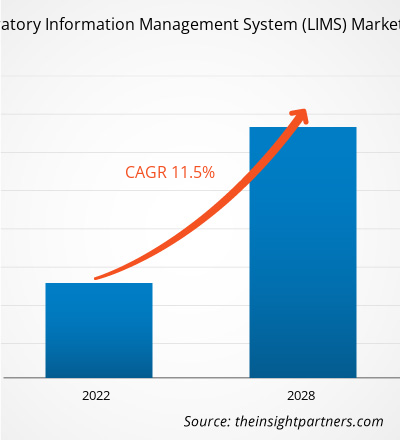
    The Laboratory Information Management System (LIMS) Market was valued at US$ 1,122.36 million in 2021 and is projected to reach US$ 2,402.48 million by 2028; it is expected to grow at a CAGR of 11.5% from 2021 to 2028.

    For more information- https://www.theinsightpartners.com/reports/laboratory-information-management-systems-lims-market

    Key Growth Drivers

    Automation transforms routine lab tasks, reducing errors and allowing staff to focus on analysis and innovation. Labs generate vast data from high-throughput testing, fueling needs for integrated processing and real-time sharing solutions. Pharmaceutical R&D and biotech expansions amplify this, as firms prioritize data integrity for regulatory adherence like FDA standards.

    Cloud-based LIMS leads deployment trends, offering scalability, remote access, and lower infrastructure costs compared to on-premises setups. These solutions support anytime data retrieval via browsers, enhancing collaboration across global teams.

    Market Segmentation Insights

    LIMS divides into standalone systems for isolated functions and integrated platforms combining LIMS with ELN or analytics for comprehensive oversight. Integrated options excel in complex environments, connecting facilities on cloud platforms for real-time data exchange and compliance.

    For deeper analysis on segments, players, and trends, Download PDF: https://www.theinsightpartners.com/sample/TIPHE100000954


    By component, software dominates for core workflow automation, while services grow fastest through implementation, training, and maintenance support. Applications span sample tracking, logistics, and security controls, with sample management holding prominence for precise content lifecycle oversight.

    End-users include hospitals, pharmaceutical firms, and contract research organizations (CROs), where CROs see rapid uptake for trial management and inventory control. Deployment favors web and cloud modes for flexibility, revolutionizing access in clinical diagnostics.
    Laboratory Information Management System (LIMS) Market Trends: Automation, AI, and Cloud Innovations United States of America– 23 Dec 2025- Laboratory Information Management Systems (LIMS) streamline lab operations by managing workflows, integrating instruments, and ensuring data security across pharmaceuticals, diagnostics, and research facilities. These platforms address rising demands for automation and compliance, enabling labs to handle complex data volumes efficiently. The Laboratory Information Management System (LIMS) Market was valued at US$ 1,122.36 million in 2021 and is projected to reach US$ 2,402.48 million by 2028; it is expected to grow at a CAGR of 11.5% from 2021 to 2028. For more information- https://www.theinsightpartners.com/reports/laboratory-information-management-systems-lims-market Key Growth Drivers Automation transforms routine lab tasks, reducing errors and allowing staff to focus on analysis and innovation. Labs generate vast data from high-throughput testing, fueling needs for integrated processing and real-time sharing solutions. Pharmaceutical R&D and biotech expansions amplify this, as firms prioritize data integrity for regulatory adherence like FDA standards. Cloud-based LIMS leads deployment trends, offering scalability, remote access, and lower infrastructure costs compared to on-premises setups. These solutions support anytime data retrieval via browsers, enhancing collaboration across global teams. Market Segmentation Insights LIMS divides into standalone systems for isolated functions and integrated platforms combining LIMS with ELN or analytics for comprehensive oversight. Integrated options excel in complex environments, connecting facilities on cloud platforms for real-time data exchange and compliance. For deeper analysis on segments, players, and trends, Download PDF: https://www.theinsightpartners.com/sample/TIPHE100000954 By component, software dominates for core workflow automation, while services grow fastest through implementation, training, and maintenance support. Applications span sample tracking, logistics, and security controls, with sample management holding prominence for precise content lifecycle oversight. End-users include hospitals, pharmaceutical firms, and contract research organizations (CROs), where CROs see rapid uptake for trial management and inventory control. Deployment favors web and cloud modes for flexibility, revolutionizing access in clinical diagnostics.
    WWW.THEINSIGHTPARTNERS.COM
    Laboratory Information Management System (LIMS) Market 2028
    Laboratory Information Management System (LIMS) Market is on track to cross value of US$ 2.4 Billion by 2028, with a impressive CAGR in the period.
    ·6K Views ·0 previzualizare
  • Global Myoglobin Market: Growth Outlook

    Polaris Market Research has published a brand-new report titled Myoglobin Market Share, Size, Trends, Industry Analysis Report, By Product Type (Human Myoglobin And Animal Myoglobin); By End Use; By Region; Segment Forecast, 2024- 2032 that includes extensive information and analysis of the industry dynamics. The opportunities and challenges in the report's dynamical trends might be useful for the worldwide Myoglobin Market. The study provides an outline of the market's foundation and organizational structure and forecasts an increase in market share. The study offers a comprehensive analysis of the Myoglobin market size, present revenue, regular deliverables, share, and profit projections. The study report includes a sizable database on future market forecasting based on an examination of previous data.

    Brief About the Report

    The market's supply-side and demand-side Myoglobin market trends are evaluated in the study. The study provides important details on applications and statistics, which are compiled in the report to provide a market prediction. Additionally, it offers thorough explanations of SWOT and PESTLE analyses depending on changes in the region and industry. It sheds light on risks, obstacles, and uncertainties, as well as present and future possibilities and challenges in the market.

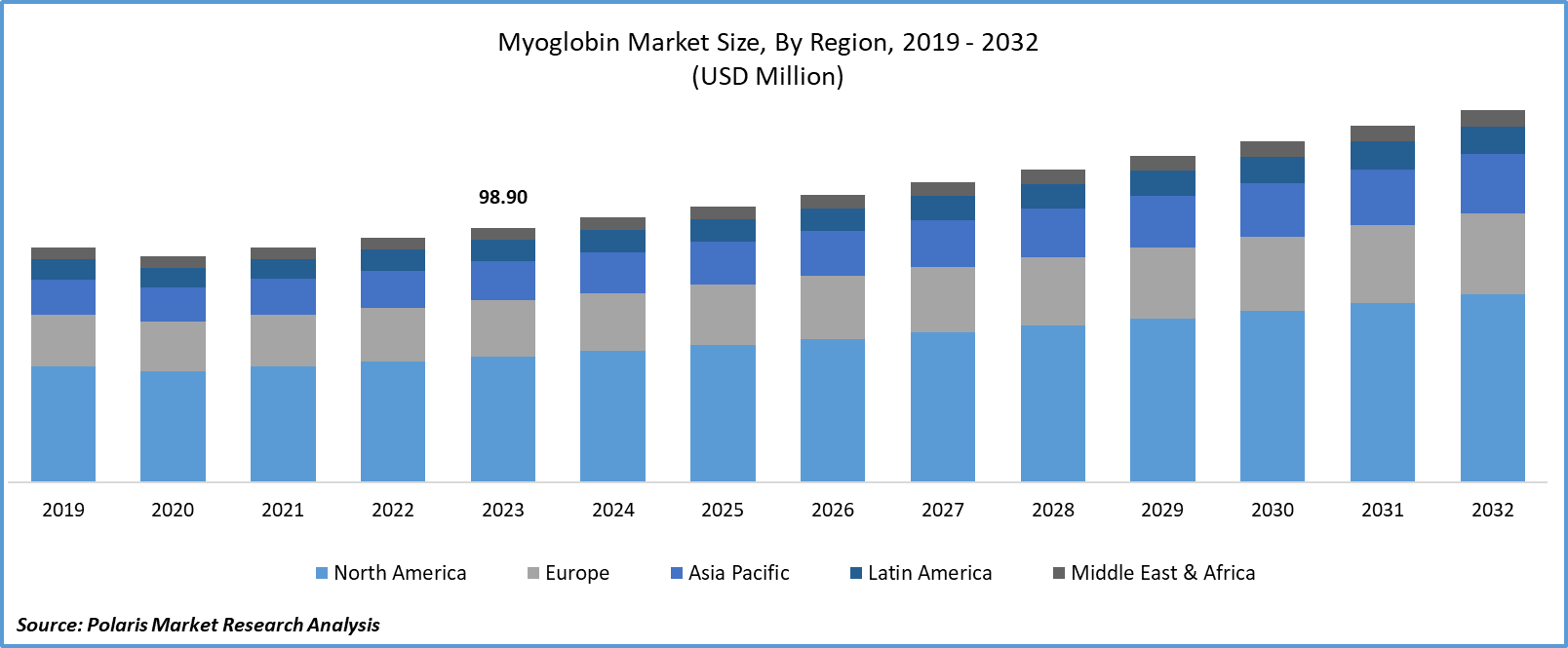
    Global myoglobin market size and share is currently valued at USD 98.90 million in 2023 and is anticipated to generate an estimated revenue of USD 144.84 million by 2032 according to the latest study by Polaris Market Research. Besides, the report notes that the market exhibits a robust 4.4% Compound Annual Growth Rate (CAGR) over the forecasted timeframe, 2024 - 2032

    Key Aspects Covered in The Report

    Market size and growth rate during the forecast period.
    Key vendors operating in the market with their company profiles
    Opportunities and threats faced by the existing vendors in the market.
    Trending factors influencing the market in the geographical regions.
    In-depth understanding of market drivers, constraints, and major micro markets.
    The critical data of each segment is highlighted at an extensive level.
    Myoglobin Market Segmentation Analysis

    The study offers a thorough analysis of the numerous market segments, including application type, product component, service types, and several geographic locations. The report's segment analysis section contains thoroughly researched expert-verified industry data. Strategic recommendations are given in terms of key business segments based on market estimations.

    Future Scope:

    The future scope of the Myoglobin Market is influenced by growing applications in biotechnology, clinical diagnostics, and the food industry. Myoglobin is widely used as a biomarker for early detection of acute myocardial infarction (AMI), and rising cardiovascular disease prevalence will drive its clinical demand. Although new cardiac biomarkers are emerging, myoglobin remains essential for rapid diagnostic testing due to its early release profile during cardiac events. In biotechnology and research applications, myoglobin’s oxygen-binding properties make it valuable for protein studies, enzymatic analysis, and structural research. Expanding R&D in muscle physiology and oxygen transport mechanisms will further stimulate usage. The food industry also uses myoglobin to enhance color stability and appearance in meat products, and demand is rising as processed meat consumption grows worldwide. With the advancement of recombinant protein production, high-purity synthetic myoglobin is becoming more accessible and cost-efficient. New opportunities will emerge in plant-based meat alternatives, where myoglobin-like proteins help mimic meat color and flavor; this trend is expected to significantly expand market potential. As precision fermentation technology advances, scalable production of myoglobin analogs will create new possibilities for food innovation. Overall, the market’s future lies in diversified applications and biotechnological advancement.

    𝐄𝐱𝐩𝐥𝐨𝐫𝐞 𝐓𝐡𝐞 𝐂𝐨𝐦𝐩𝐥𝐞𝐭𝐞 𝐂𝐨𝐦𝐩𝐫𝐞𝐡𝐞𝐧𝐬𝐢𝐯𝐞 𝐑𝐞𝐩𝐨𝐫𝐭 𝐇𝐞𝐫𝐞:

    https://www.polarismarketresearch.com/industry-analysis/myoglobin-market

    Leading Players Analysis

    The research report's chapter is entirely devoted to the competition environment. The Myoglobin market key players are examined, analyzing information on their evaluation and development in addition to a quick review of the company. Understanding the techniques employed by businesses and the steps they have recently taken to combat intense rivalry allows one to examine the competitive landscape. It covers each player's company profiles comprising sales, revenue, share, recent developments, SWOT analysis, capacity, production, revenue, gross margin, growth rate, and strategies employed by the major market players.

    Different potentials in the domestic and regional markets are revealed by regional analysis of the sector. Each regional industry associated with this market is carefully examined to determine its potential for growth in the present and the future. Moreover, information on recent mergers and acquisitions that have taken place in the market is the subject of the research. This section provides important financial information about mergers and acquisitions that have recently shaped the Myoglobin industry.

    Top Players:

    Abcam Plc
    Biomerieux
    Bio-Rad Laboratories
    Bio-Techne Corporation
    Randox Laboratories Ltd.
    Roche Diagnostics
    Siemens Healthcare
    Thermo Fisher Scientific Inc.
    Tosoh Corporation
    Regions Covered in This Report Are

    North America (United States, Canada, and Mexico)
    Europe (Germany, France, United Kingdom, Russia, Italy, and the Rest of Europe)
    Asia-Pacific (China, Japan, Korea, India, Southeast Asia, and Australia)
    South America (Brazil, Argentina, Colombia, and the rest of South America)
    The Middle East and Africa (Saudi Arabia, United Arab Emirates, Egypt, South Africa, and the Rest of the Middle East and Africa)
    Report Summary

    The analysis focuses on the regional forecast by type and application and the Myoglobin market sales and revenue prediction. The research report features data about the target market, such as pricing trends, customer requirements, and competitor analysis. The market growth has been examined using analytical approaches like PESTLE analysis, Porter's Five Forces analysis, feasibility studies, player-specific SWOT analyses, and ROI analyses.

    Objectives of the Report

    To carefully analyze and forecast the size of the market by value and volume.
    To evaluate the market shares of major segments of the market
    To explain the development of the industry in different parts of the world.
    To analyze and study micro-markets in terms of their contributions to the market, their prospects, and individual growth trends.
    To offer precise and valuable details about factors affecting the Myoglobin market forecasts
    To provide a meticulous assessment of crucial business strategies used by leading companies.
    More Trending Latest Reports By Polaris Market Research:

    Sanitary Ware Market

    Golf Cart Market

    Nicotine Pouches Market

    Hospital Electronic Health Records Market

    Golf Cart Market

    Battery TIC Market

    Virtual Power Plant Market

    Property Management Software Market

    U.S. Ophthalmic Spectacle Lenses and Equipment Market
    Global Myoglobin Market: Growth Outlook Polaris Market Research has published a brand-new report titled Myoglobin Market Share, Size, Trends, Industry Analysis Report, By Product Type (Human Myoglobin And Animal Myoglobin); By End Use; By Region; Segment Forecast, 2024- 2032 that includes extensive information and analysis of the industry dynamics. The opportunities and challenges in the report's dynamical trends might be useful for the worldwide Myoglobin Market. The study provides an outline of the market's foundation and organizational structure and forecasts an increase in market share. The study offers a comprehensive analysis of the Myoglobin market size, present revenue, regular deliverables, share, and profit projections. The study report includes a sizable database on future market forecasting based on an examination of previous data. Brief About the Report The market's supply-side and demand-side Myoglobin market trends are evaluated in the study. The study provides important details on applications and statistics, which are compiled in the report to provide a market prediction. Additionally, it offers thorough explanations of SWOT and PESTLE analyses depending on changes in the region and industry. It sheds light on risks, obstacles, and uncertainties, as well as present and future possibilities and challenges in the market. Global myoglobin market size and share is currently valued at USD 98.90 million in 2023 and is anticipated to generate an estimated revenue of USD 144.84 million by 2032 according to the latest study by Polaris Market Research. Besides, the report notes that the market exhibits a robust 4.4% Compound Annual Growth Rate (CAGR) over the forecasted timeframe, 2024 - 2032 Key Aspects Covered in The Report Market size and growth rate during the forecast period. Key vendors operating in the market with their company profiles Opportunities and threats faced by the existing vendors in the market. Trending factors influencing the market in the geographical regions. In-depth understanding of market drivers, constraints, and major micro markets. The critical data of each segment is highlighted at an extensive level. Myoglobin Market Segmentation Analysis The study offers a thorough analysis of the numerous market segments, including application type, product component, service types, and several geographic locations. The report's segment analysis section contains thoroughly researched expert-verified industry data. Strategic recommendations are given in terms of key business segments based on market estimations. Future Scope: The future scope of the Myoglobin Market is influenced by growing applications in biotechnology, clinical diagnostics, and the food industry. Myoglobin is widely used as a biomarker for early detection of acute myocardial infarction (AMI), and rising cardiovascular disease prevalence will drive its clinical demand. Although new cardiac biomarkers are emerging, myoglobin remains essential for rapid diagnostic testing due to its early release profile during cardiac events. In biotechnology and research applications, myoglobin’s oxygen-binding properties make it valuable for protein studies, enzymatic analysis, and structural research. Expanding R&D in muscle physiology and oxygen transport mechanisms will further stimulate usage. The food industry also uses myoglobin to enhance color stability and appearance in meat products, and demand is rising as processed meat consumption grows worldwide. With the advancement of recombinant protein production, high-purity synthetic myoglobin is becoming more accessible and cost-efficient. New opportunities will emerge in plant-based meat alternatives, where myoglobin-like proteins help mimic meat color and flavor; this trend is expected to significantly expand market potential. As precision fermentation technology advances, scalable production of myoglobin analogs will create new possibilities for food innovation. Overall, the market’s future lies in diversified applications and biotechnological advancement. 𝐄𝐱𝐩𝐥𝐨𝐫𝐞 𝐓𝐡𝐞 𝐂𝐨𝐦𝐩𝐥𝐞𝐭𝐞 𝐂𝐨𝐦𝐩𝐫𝐞𝐡𝐞𝐧𝐬𝐢𝐯𝐞 𝐑𝐞𝐩𝐨𝐫𝐭 𝐇𝐞𝐫𝐞: https://www.polarismarketresearch.com/industry-analysis/myoglobin-market Leading Players Analysis The research report's chapter is entirely devoted to the competition environment. The Myoglobin market key players are examined, analyzing information on their evaluation and development in addition to a quick review of the company. Understanding the techniques employed by businesses and the steps they have recently taken to combat intense rivalry allows one to examine the competitive landscape. It covers each player's company profiles comprising sales, revenue, share, recent developments, SWOT analysis, capacity, production, revenue, gross margin, growth rate, and strategies employed by the major market players. Different potentials in the domestic and regional markets are revealed by regional analysis of the sector. Each regional industry associated with this market is carefully examined to determine its potential for growth in the present and the future. Moreover, information on recent mergers and acquisitions that have taken place in the market is the subject of the research. This section provides important financial information about mergers and acquisitions that have recently shaped the Myoglobin industry. Top Players: Abcam Plc Biomerieux Bio-Rad Laboratories Bio-Techne Corporation Randox Laboratories Ltd. Roche Diagnostics Siemens Healthcare Thermo Fisher Scientific Inc. Tosoh Corporation Regions Covered in This Report Are North America (United States, Canada, and Mexico) Europe (Germany, France, United Kingdom, Russia, Italy, and the Rest of Europe) Asia-Pacific (China, Japan, Korea, India, Southeast Asia, and Australia) South America (Brazil, Argentina, Colombia, and the rest of South America) The Middle East and Africa (Saudi Arabia, United Arab Emirates, Egypt, South Africa, and the Rest of the Middle East and Africa) Report Summary The analysis focuses on the regional forecast by type and application and the Myoglobin market sales and revenue prediction. The research report features data about the target market, such as pricing trends, customer requirements, and competitor analysis. The market growth has been examined using analytical approaches like PESTLE analysis, Porter's Five Forces analysis, feasibility studies, player-specific SWOT analyses, and ROI analyses. Objectives of the Report To carefully analyze and forecast the size of the market by value and volume. To evaluate the market shares of major segments of the market To explain the development of the industry in different parts of the world. To analyze and study micro-markets in terms of their contributions to the market, their prospects, and individual growth trends. To offer precise and valuable details about factors affecting the Myoglobin market forecasts To provide a meticulous assessment of crucial business strategies used by leading companies. More Trending Latest Reports By Polaris Market Research: Sanitary Ware Market Golf Cart Market Nicotine Pouches Market Hospital Electronic Health Records Market Golf Cart Market Battery TIC Market Virtual Power Plant Market Property Management Software Market U.S. Ophthalmic Spectacle Lenses and Equipment Market
    WWW.POLARISMARKETRESEARCH.COM
    Myoglobin Market Growth Trends, Global Analysis Report, 2024-2032
    The global myoglobin market size is forecast to reach USD 144.84 million and estimated to expand at a CAGR of 4.4% by 2032, according to PMR.
    ·7K Views ·0 previzualizare
  • Diagnostics and Vaccine Production Boost Microbiology Culture Demand
    Download Sample Report: https://www.datamintelligence.com/download-sample/microbiology-culture-market?u

    The global Microbiology Culture Market reached USD 20.38 billion in 2024 and is projected to surge to USD 40.20 billion by 2033, growing at a compound annual growth rate (CAGR) of 7.2% from 2025 to 2033. This rapid expansion is being driven by rising infectious disease incidence, biotechnology advancements, food safety testing demands, and the need for high-throughput microbial analysis.

    Market Drivers & Growth Opportunities
    Escalating Infectious Disease Burden
    Global infections such as tuberculosis, pneumonia, bloodstream infections, and hospital-acquired infections continue to rise. Tuberculosis alone impacted approximately 10.8 million individuals in 2023. These trends drive demand for accurate microbial culture systems for diagnosis and drug susceptibility testing.


    Antimicrobial Resistance (AMR) Testing
    The increasing prevalence of resistant pathogens compels healthcare and pharmaceutical entities to adopt culture-based diagnostics for antimicrobial susceptibility testing and drug development, reinforcing long-term market growth.


    Food, Water & Cosmetic Safety Monitoring
    Companies across food, beverage, water treatment, and cosmetic sectors are investing in quality control testing to meet regulatory requirements, fueling steady demand for microbial culture media and related instruments.


    Biopharma R&D & Vaccine Manufacturing
    Microbial culture systems are integral to vaccine production, biologic development, fermentation processes, and quality control in pharmaceuticals, further boosting investment.


    Technological Innovation in Culture Systems
    The integration of automation, smart incubators, high-throughput bioreactors, and AI-enhanced systems is improving efficiency, reliability, and scalability in microbiology workflows.


    Strategic Consolidation & Partnerships
    Collaborations such as the integration of single-use bioreactors into broader bioprocess platforms are expanding capabilities. Additionally, AI-powered digital pathology solutions introduced by industry players signal further cross-sector innovation.

    Market Segment Highlights
    By Product Type:


    Culture Equipment (incubators, bioreactors, sterilization systems) accounts for the largest share.


    Culture Supplements, Measuring Instruments, Analytical Devices also contribute significantly to revenue.


    By Culture Type:


    Bacterial Culture remains dominant due to its use in clinical diagnostics, research, and industrial testing.


    Eukaryotic/Mammalian Culture is growing, primarily within biopharma and vaccine production.


    By Consistency:


    Solid agar media, liquid broths, and semi-solid media cater to diverse testing requirements across diagnostics, R&D, and industrial applications.


    By Application:


    Segments include clinical diagnostics, pharmaceutical/biotechnology, food & beverage testing, water testing, and cosmetics. Clinical and pharma sectors remain the highest contributors.


    Regional Insights
    North America holds the largest market share (~43%) due to its high healthcare infrastructure, regulatory environment for food and clinical safety, and strong R&D activity.


    Europe remains a stable market driven by regulatory mandates, advanced lab networks, and environmental surveillance.


    Asia-Pacific is poised for high growth, with a projected CAGR of ~8.9% through 2033, fueled by rising disease awareness, healthcare modernization, and biopharma investments in countries like China, India, and Japan.


    Latin America and MEA are emerging markets, expanding investment in diagnostics, food processing, and public health infrastructure.


    Request a customized report tailored to your business needs: https://www.datamintelligence.com/customize/microbiology-culture-market?u
    Recent Industry Trends
    Adoption of AI-powered digital pathology solutions in Europe for integrated microbial and histopathology diagnostics.


    Expansion of point-of-care microbial testing devices in U.S. hospitals and labs, reducing time-to-result and improving patient management.


    Japanese manufacturers are strengthening microbial monitoring in food, cosmetic production, and biopharma fermentation.


    Development of smart bioreactor platforms combining single-use systems with automated culture control for vaccine and biologic manufacturing.


    Market Challenges
    Regulatory Complexity: Compliance with FDA, EMA, and ISO standards for media and consumable manufacturing increases time-to-market and cost.


    High Capital Expenditure: Automated culture systems and bioreactors require significant investment.


    Supply Chain Vulnerability: Reliance on raw inputs like agar raises vulnerability to price and availability fluctuations.


    Data Silos & Integration Gaps: Interfacing culture instruments with LIMS and EHR systems remains a technical hurdle.


    Buy an Exclusive copy of this report: https://www.datamintelligence.com/buy-now-page?report=microbiology-culture-market?u
    Strategic Outlook & Recommendations
    Accelerate Smart System Integration
    Adopt automated, high-throughput culture platforms and bioreactors to capitalize on R&D and diagnostic growth.


    Expand Digital and AI Capabilities
    Integrate culture data with AI for rapid antimicrobial resistance characterization, outbreak prediction, and predictive quality control.


    Enhance Regulatory Strategy
    Develop globally compliant media formulations and enhance documentation to fast-track regulatory approvals.


    Strengthen End-Market Collaboration
    Partner with food, beverage, water, cosmetics, and pharmaceutical firms to co-develop application-specific media and protocols.


    Penetrate High-Growth Regions
    Focus on Asia-Pacific and Latin America through educational outreach, technology transfer, and local manufacturing partnerships.
    Subscribe for more Industry reports: https://www.datamintelligence.com/reports-subscription

    About Us:
    DataM Intelligence is a market research and consulting firm that provides end-to-end business solutions to organizations, from research to consulting. We, at DataM Intelligence, leverage our top trademark trends, insights, and developments to provide swift and astute solutions to clients like you. We encompass a multitude of syndicate reports and customized reports with a robust methodology.
    Our research database features countless statistics and in-depth analyses across a wide range of 6300+ reports in 40+ domains, creating business solutions for more than 200+ companies across 50+ countries, catering to the key business research needs that influence the growth trajectory of our vast clientele.

    Contact Us:
    Company Name: DataM Intelligence
    Contact Person: Sai Kiran
    Email: sai.k@datamintelligence.com
    Phone: +1 877 441 4866
    Website: https://www.datamintelligence.com
    Diagnostics and Vaccine Production Boost Microbiology Culture Demand Download Sample Report: https://www.datamintelligence.com/download-sample/microbiology-culture-market?u The global Microbiology Culture Market reached USD 20.38 billion in 2024 and is projected to surge to USD 40.20 billion by 2033, growing at a compound annual growth rate (CAGR) of 7.2% from 2025 to 2033. This rapid expansion is being driven by rising infectious disease incidence, biotechnology advancements, food safety testing demands, and the need for high-throughput microbial analysis. Market Drivers & Growth Opportunities Escalating Infectious Disease Burden Global infections such as tuberculosis, pneumonia, bloodstream infections, and hospital-acquired infections continue to rise. Tuberculosis alone impacted approximately 10.8 million individuals in 2023. These trends drive demand for accurate microbial culture systems for diagnosis and drug susceptibility testing. Antimicrobial Resistance (AMR) Testing The increasing prevalence of resistant pathogens compels healthcare and pharmaceutical entities to adopt culture-based diagnostics for antimicrobial susceptibility testing and drug development, reinforcing long-term market growth. Food, Water & Cosmetic Safety Monitoring Companies across food, beverage, water treatment, and cosmetic sectors are investing in quality control testing to meet regulatory requirements, fueling steady demand for microbial culture media and related instruments. Biopharma R&D & Vaccine Manufacturing Microbial culture systems are integral to vaccine production, biologic development, fermentation processes, and quality control in pharmaceuticals, further boosting investment. Technological Innovation in Culture Systems The integration of automation, smart incubators, high-throughput bioreactors, and AI-enhanced systems is improving efficiency, reliability, and scalability in microbiology workflows. Strategic Consolidation & Partnerships Collaborations such as the integration of single-use bioreactors into broader bioprocess platforms are expanding capabilities. Additionally, AI-powered digital pathology solutions introduced by industry players signal further cross-sector innovation. Market Segment Highlights By Product Type: Culture Equipment (incubators, bioreactors, sterilization systems) accounts for the largest share. Culture Supplements, Measuring Instruments, Analytical Devices also contribute significantly to revenue. By Culture Type: Bacterial Culture remains dominant due to its use in clinical diagnostics, research, and industrial testing. Eukaryotic/Mammalian Culture is growing, primarily within biopharma and vaccine production. By Consistency: Solid agar media, liquid broths, and semi-solid media cater to diverse testing requirements across diagnostics, R&D, and industrial applications. By Application: Segments include clinical diagnostics, pharmaceutical/biotechnology, food & beverage testing, water testing, and cosmetics. Clinical and pharma sectors remain the highest contributors. Regional Insights North America holds the largest market share (~43%) due to its high healthcare infrastructure, regulatory environment for food and clinical safety, and strong R&D activity. Europe remains a stable market driven by regulatory mandates, advanced lab networks, and environmental surveillance. Asia-Pacific is poised for high growth, with a projected CAGR of ~8.9% through 2033, fueled by rising disease awareness, healthcare modernization, and biopharma investments in countries like China, India, and Japan. Latin America and MEA are emerging markets, expanding investment in diagnostics, food processing, and public health infrastructure. Request a customized report tailored to your business needs: https://www.datamintelligence.com/customize/microbiology-culture-market?u Recent Industry Trends Adoption of AI-powered digital pathology solutions in Europe for integrated microbial and histopathology diagnostics. Expansion of point-of-care microbial testing devices in U.S. hospitals and labs, reducing time-to-result and improving patient management. Japanese manufacturers are strengthening microbial monitoring in food, cosmetic production, and biopharma fermentation. Development of smart bioreactor platforms combining single-use systems with automated culture control for vaccine and biologic manufacturing. Market Challenges Regulatory Complexity: Compliance with FDA, EMA, and ISO standards for media and consumable manufacturing increases time-to-market and cost. High Capital Expenditure: Automated culture systems and bioreactors require significant investment. Supply Chain Vulnerability: Reliance on raw inputs like agar raises vulnerability to price and availability fluctuations. Data Silos & Integration Gaps: Interfacing culture instruments with LIMS and EHR systems remains a technical hurdle. Buy an Exclusive copy of this report: https://www.datamintelligence.com/buy-now-page?report=microbiology-culture-market?u Strategic Outlook & Recommendations Accelerate Smart System Integration Adopt automated, high-throughput culture platforms and bioreactors to capitalize on R&D and diagnostic growth. Expand Digital and AI Capabilities Integrate culture data with AI for rapid antimicrobial resistance characterization, outbreak prediction, and predictive quality control. Enhance Regulatory Strategy Develop globally compliant media formulations and enhance documentation to fast-track regulatory approvals. Strengthen End-Market Collaboration Partner with food, beverage, water, cosmetics, and pharmaceutical firms to co-develop application-specific media and protocols. Penetrate High-Growth Regions Focus on Asia-Pacific and Latin America through educational outreach, technology transfer, and local manufacturing partnerships. Subscribe for more Industry reports: https://www.datamintelligence.com/reports-subscription About Us: DataM Intelligence is a market research and consulting firm that provides end-to-end business solutions to organizations, from research to consulting. We, at DataM Intelligence, leverage our top trademark trends, insights, and developments to provide swift and astute solutions to clients like you. We encompass a multitude of syndicate reports and customized reports with a robust methodology. Our research database features countless statistics and in-depth analyses across a wide range of 6300+ reports in 40+ domains, creating business solutions for more than 200+ companies across 50+ countries, catering to the key business research needs that influence the growth trajectory of our vast clientele. Contact Us: Company Name: DataM Intelligence Contact Person: Sai Kiran Email: sai.k@datamintelligence.com Phone: +1 877 441 4866 Website: https://www.datamintelligence.com
    ·22K Views ·0 previzualizare
Babafig https://www.babafig.com