

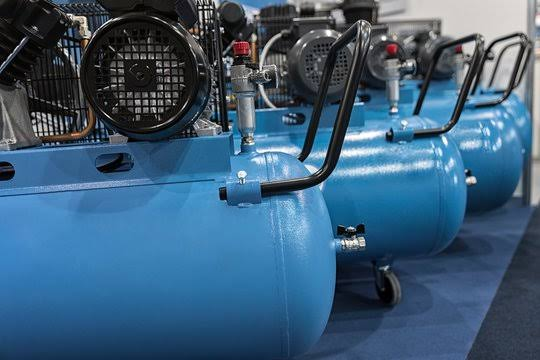

Compressor systems are becoming increasingly important across Middle Eastern and African industrial infrastructure. Their applications extend from gas processing and transmission to manufacturing, mining, power generation, chemicals, construction, and utilities. Demand is being influenced by expanding industrial capacity, energy infrastructure development, and the need for reliable equipment capable of operating in demanding environmental and production conditions.
The Middle East & Africa Compressor Market covers compressor equipment used across diverse industrial applications, with demand shaped by differences in regional infrastructure and procurement cycles. The market was valued at USD 3.11 billion in 2025 and is estimated at USD 3.19 billion in 2026, with the market projected to reach USD 5.21 billion by 2032 at a CAGR of 8.52% during 2026–2032. Gas infrastructure, industrial diversification, pipeline development, and centralized CNG compression are among the themes influencing the market outlook.
According to compressor industry market analysis from Markntel Advisor, gas compressors represented 58% of the market in 2026. The report also identifies oil and gas, chemicals and petrochemicals, construction, manufacturing, power and utilities, mining, food and beverage, pharmaceuticals, and textiles among the major end-user categories.
Unlike a single-demand industrial market, compressor requirements across the region are linked to several investment cycles. GCC countries are seeing requirements associated with gas monetization and processing capacity, while African markets are developing pipeline and gas infrastructure. At the same time, mining, manufacturing, cement, food processing, pharmaceuticals, and other industries are expanding their use of compressed-air systems for production and plant operations.
Industrial Expansion Broadens Compressor Applications
Industrial diversification is creating compressor demand beyond conventional oil and gas applications. New manufacturing and heavy-industry facilities require compressed air for pneumatic conveying, packaging, instrumentation, automated valves, and other plant functions. Saudi Arabia illustrates this shift, with industrial production growth and expansion across manufacturing activities contributing to a broader installed base of compressor equipment.
A similar pattern is visible across African industries. Cement capacity expansion requires compressed-air systems for plant instrumentation, pneumatic valve actuation, automation, and packing operations. Mining projects also use compressed air for drilling and related equipment. As industrial capacity increases, demand can emerge not only for new compressor installations but also for replacement equipment, spare parts, maintenance, and aftermarket services.
Gas Infrastructure Remains a Major Demand Driver
Gas-related infrastructure remains central to regional compressor requirements because compression is required at multiple points across production, processing, transmission, and storage networks. In Saudi Arabia, continued investment in gas expansion is creating requirements for compression equipment, while the development of large pipeline networks increases the need for strategically positioned compressor stations to maintain pressure and flow.
Africa presents a different but complementary demand profile. Long-distance gas transportation projects can require compressor stations as pressure declines along transmission corridors. Nigeria is also developing centralized CNG infrastructure, where mother or compression stations compress gas before transportation to daughter stations. These infrastructure models create equipment requirements that vary according to project design, network distance, processing needs, and transportation structure.
Efficiency and Electrification Are Reshaping Equipment Choices
Energy efficiency is becoming increasingly relevant to compressor selection because compression systems can represent a significant portion of industrial energy consumption. This is encouraging interest in equipment with improved motors, variable-speed operation, intelligent controls, monitoring capabilities, and more efficient system management. The focus is shifting from equipment acquisition alone toward performance across the operating life of the compressor.
The region is also seeing growing attention toward electrified and renewable-powered compression systems. Industrial decarbonization initiatives in the UAE and renewable electricity adoption in African mining demonstrate a broader movement toward reducing dependence on conventional diesel-powered equipment. Battery-powered and electrically driven compressors can be relevant where portable equipment is required or where operators are seeking lower-emission alternatives.
Localization Is Becoming More Important
Local-content requirements represent another important factor affecting compressor suppliers operating across the region. Energy-sector procurement programs increasingly emphasize domestic manufacturing, sourcing, assembly, engineering, and service capabilities. For equipment manufacturers, these requirements can influence how regional operations are structured and where investment is directed.
Localization can also affect the aftermarket side of the industry. Compressor users operating critical industrial assets require timely access to maintenance, components, technical expertise, and servicing. Consequently, regional manufacturing and service networks can become increasingly relevant to procurement decisions, particularly for large energy and industrial projects where equipment reliability and support infrastructure are closely connected.
Saudi Arabia Maintains a Strong Regional Position
Saudi Arabia represents an important market within the broader regional landscape because of its concentration of oil and gas, petrochemical, manufacturing, mining, and infrastructure activity. Gas expansion projects provide a direct source of compressor requirements, while industrial diversification is broadening applications for compressed-air systems across non-hydrocarbon sectors.
The country accounted for approximately 16% of the regional market in 2026, according to the cited Markntel Advisor research. Large gas infrastructure developments, industrial capacity expansion, and continued investment in processing and manufacturing are contributing to the country’s position within the regional compressor landscape.
Market Outlook Reflects Multiple Growth Pathways
The regional compressor industry is being shaped by several distinct pathways rather than one uniform trend. GCC gas-processing and capacity expansion, African pipeline development, Nigeria’s CNG infrastructure, and industrial growth across manufacturing and mining are creating different equipment requirements. This diversity can influence compressor specifications, pressure ratings, technologies, portability, lubrication preferences, and service requirements across individual markets.
Overall, the outlook points toward continued development of compressor applications alongside broader industrial and energy infrastructure investment. Gas compressors remain important for large-scale energy projects, while compressed-air systems are gaining relevance across diversified manufacturing and resource-based industries. At the same time, efficiency, electrification, localization, and aftermarket support are becoming increasingly important considerations in the evolution of compressor procurement across the Middle East and Africa.


