

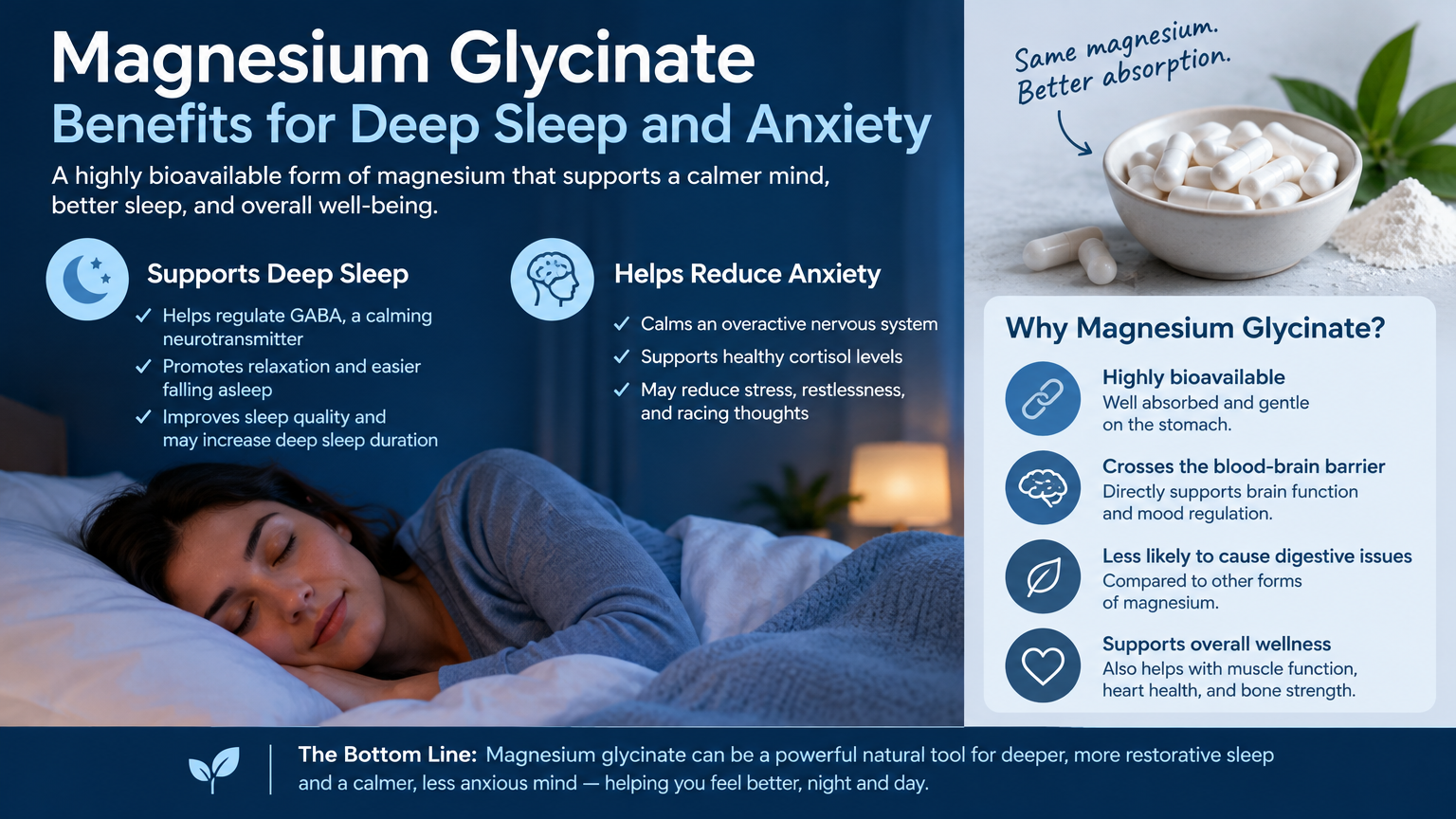

Magnesium Glycinate Benefits for Deep Sleep and Anxiety: What You Should Know
Struggling to fall asleep, feeling restless at night, or dealing with everyday stress? You may have heard about magnesium glycinate, a popular supplement often promoted for relaxation, better sleep, and anxiety support.
Magnesium is an essential mineral that helps the body with normal muscle and nerve function, energy production, and many other processes. Magnesium glycinate is a form in which magnesium is bound to the amino acid glycine. It is often chosen because it may be gentler on the stomach than some other forms.
But can it really help you sleep more deeply and feel less anxious? Let's look at the potential benefits and what research says.
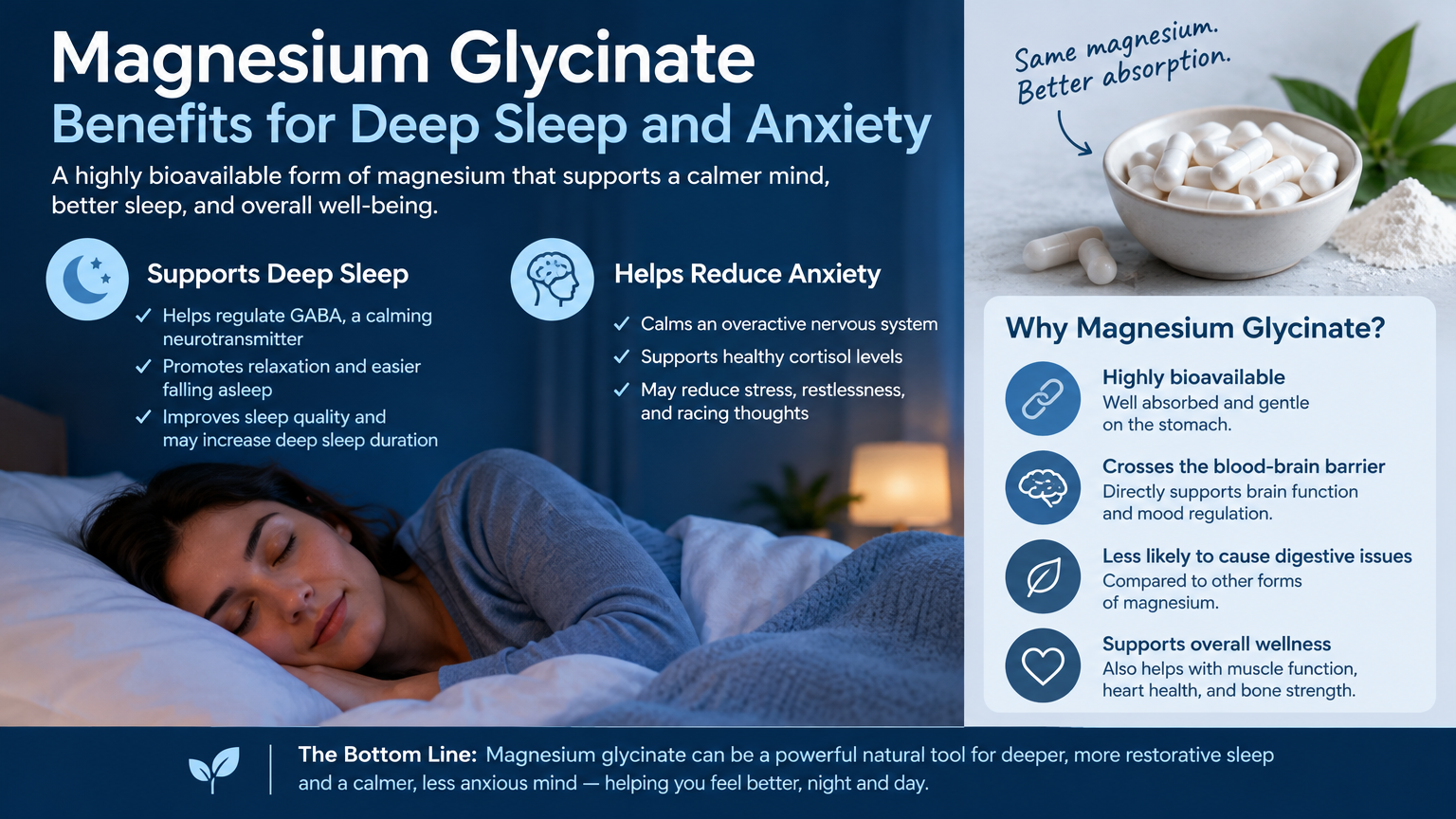
1. May Support Better Sleep Quality
Magnesium plays a role in normal nervous-system function and processes involved in sleep regulation. If your magnesium intake is inadequate, correcting that shortfall may support overall health.
Some small studies suggest magnesium supplementation may improve certain sleep-related outcomes, such as the time it takes to fall asleep. However, research findings are inconsistent, and current evidence does not establish magnesium as a reliable treatment for insomnia. A 2026 systematic review found that the certainty of evidence was low to very low.
What this means: Magnesium glycinate may be worth discussing with a healthcare professional if your dietary magnesium intake is low, but it is not a guaranteed solution for deep sleep.
2. May Help Support Relaxation
Magnesium is involved in normal nerve and muscle function. Adequate magnesium intake is important for the body's normal physiological processes.
Some people report feeling more relaxed when taking magnesium supplements. However, research has not yet established that magnesium glycinate specifically treats stress or anxiety.
A 2024 systematic review found some encouraging results in studies measuring self-reported anxiety, but the studies varied considerably in their doses, formulations, and participants. Larger, better-designed trials are still needed.
3. May Be Gentler on the Stomach
Magnesium glycinate is often selected by people who experience digestive discomfort with other magnesium supplements. It may be better tolerated by some individuals, although personal responses vary.
It is important to remember that different magnesium forms have different properties. There is not enough direct clinical evidence to say that magnesium glycinate is superior to every other form for sleep or anxiety.
4. Helps Maintain Normal Muscle and Nerve Function
Magnesium contributes to normal muscle contraction, nerve signalling, and electrolyte balance. Getting enough magnesium through food or, when appropriate, supplements helps support these essential functions.
Good dietary sources include:
-
Pumpkin seeds
-
Almonds and cashews
-
Spinach and other leafy greens
-
Beans and lentils
-
Whole grains
-
Milk and yoghurt
A balanced diet should be the starting point for meeting your nutritional needs.
How to Take Magnesium Glycinate Safely
There is no universally recommended magnesium glycinate dose for deep sleep or anxiety because research has not established an effective dose for these purposes.
If considering a supplement:
-
Check the label for the amount of elemental magnesium, not just the total compound weight.
-
Follow the product instructions and ask a healthcare professional whether it is suitable for you.
-
Avoid combining multiple magnesium products without checking the total amount.
-
Do not assume that taking more will produce better results.
For adults, the tolerable upper intake level for magnesium from supplements and medications is generally 350 mg per day, unless a healthcare professional recommends otherwise. This limit does not include magnesium naturally present in food.
People with kidney disease should consult a healthcare professional before using magnesium supplements. Magnesium can also interfere with the absorption of certain antibiotics and osteoporosis medicines, so medication timing may need adjustment.
Natural Habits for Better Sleep and Less Stress
Supplements should not replace healthy lifestyle habits. Try combining good nutrition with a consistent sleep routine:
-
Go to bed and wake up at regular times.
-
Reduce caffeine intake later in the day.
-
Limit phone and computer use before bedtime.
-
Practise gentle breathing or meditation.
-
Stay physically active during the day.
-
Include magnesium-rich foods in your meals.
-
Make your bedroom quiet, dark, and comfortable.
If anxiety or sleep problems persist or interfere with daily life, speak with a qualified healthcare professional. Effective treatments are available, and ongoing symptoms deserve proper assessment.
Final Thoughts
Magnesium glycinate is a popular supplement that may help some people meet their magnesium needs. It is often chosen for its potential digestive tolerability, while its specific benefits for deep sleep and anxiety remain uncertain.
The best approach is to focus on balanced nutrition, regular exercise, stress management, and consistent sleep habits. If you are considering supplementation, discuss your individual needs and medication use with a healthcare professional.
Medical Disclaimer: This article is for general educational purposes only. It is not a diagnosis or a substitute for professional medical advice. Consult a qualified healthcare professional before starting a supplement, especially if you have a medical condition or take prescription medication.


