

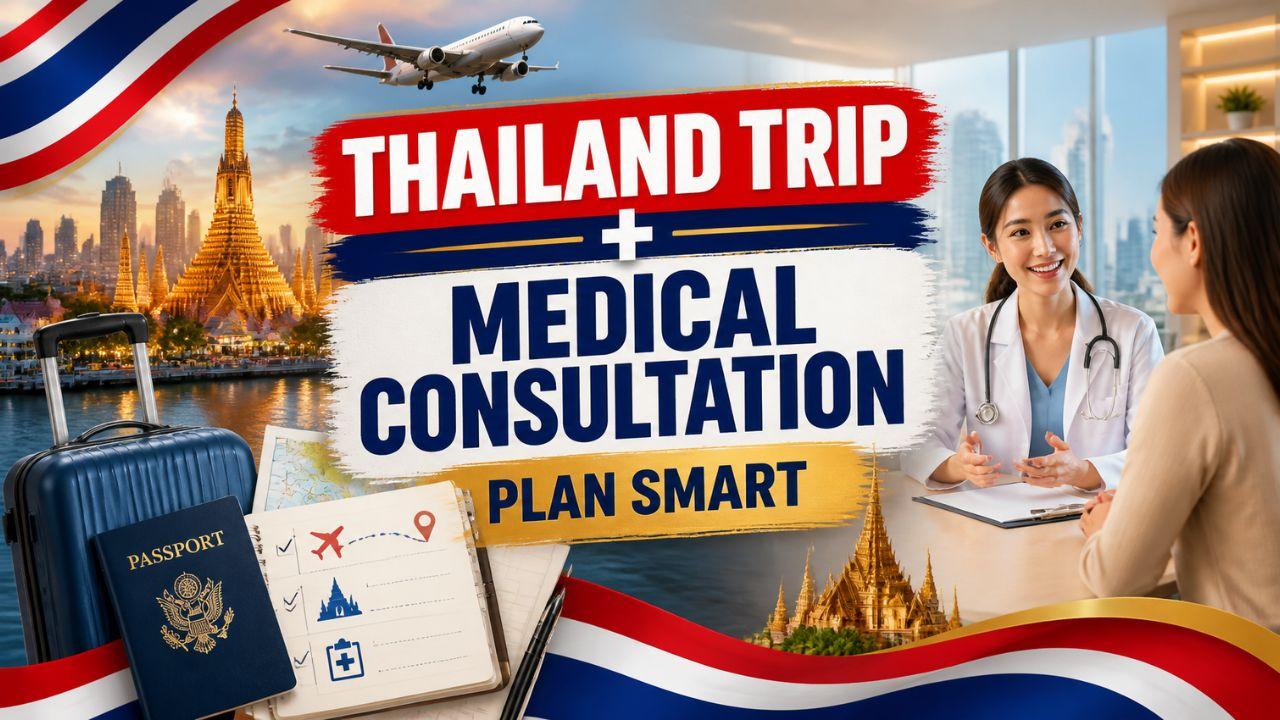

Many travelers from Dhaka approach a Thailand trip as a straightforward holiday until a doctor recommends getting a second opinion or a specific test done abroad. At that point, the quietly trip shifts from pure leisure into something that needs a bit more structural planning — appointment scheduling, hospital documentation, and a visa application that accurately reflects the medical component of the visit. Handling this transition well makes a real difference to how smoothly the trip unfolds.
Recognizing When a Trip Becomes a Medical Trip
Not every visit that includes a hospital stop needs to be treated as a formal medical trip. A routine health check-up squeezed in during a holiday is different from a scheduled consultation with a specialist that forms the core reason for travel. If the medical component is a significant part of the itinerary, it is worth treating it as such from the planning stage rather than as an afterthought, since this affects which visa category and supporting documents are appropriate.
Coordinating the Appointment Before the Visa Application
Ideally, the hospital appointment should be arranged before the visa application process begins, since confirmation of the appointment, along with any invitation or supporting letter from the hospital, often forms a key part of the application file. Trying to work in the reverse order — applying for a visa first and scrambling to arrange a hospital appointment afterwards — tends to create unnecessary stress and can leave gaps in the documentation that the embassy may question.
Building a Realistic Itinerary
A trip combining travel and a medical consultation benefits from a realistic itinerary that accounts for appointment timing, potential follow-up visits, and recovery time if any procedure is involved. Overpacking the schedule with sightseeing immediately before or after a significant appointment can be counterproductive, both for health reasons and for simple logistics. It helps to build in buffer days around the appointment itself, particularly if test results or follow-up consultations might be needed before the end of the trip.
Documentation Specific to Medical Travel
Beyond the standard visa documents — passport, photographs, application form, financial proof — a trip involving medical consultation typically requires some form of invitation or supporting letter from the treating hospital. This is one of the more hospital-specific pieces of paperwork, and it is where working with a provider that has an established relationship with the destination hospital proves genuinely useful. Patients heading to Bumrungrad International Hospital, for example, can draw on Thailand Visa Service in Dhaka that is specifically structured around that hospital relationship, which tends to streamline obtaining the necessary invitation letter and aligning it with the visa application.
Practical Logistics Around the Hospital Visit
Beyond the visa itself, a few practical details make a medical-focused trip run more smoothly: confirming how to get to and from the hospital from your accommodation, understanding what documents or medical records to bring along, and having a general sense of what the consultation or procedure will involve so there are no surprises on arrival. Keeping copies of relevant medical history, previous test results, or referral notes from a doctor in Dhaka can also support a more productive first consultation in Thailand.
Budgeting for the Full Trip, Not Just the Visa
It is worth remembering that visa costs are only one part of the overall expense of a medical trip. Travel, accommodation, consultation fees, and any follow-up treatment all factor into the total cost, and these vary depending on the specific hospital, specialist, and nature of the medical need. Rather than assuming a fixed cost structure, it is more realistic to treat the budget as something to be confirmed directly with the hospital and travel providers involved, since figures can differ significantly case by case.
Pre-Travel Guidance Matters
A good support structure around medical travel typically extends beyond just the visa paperwork to include general pre-travel guidance — what to expect on arrival, how appointments are typically scheduled once in Thailand, and what documents to carry during the trip itself. This kind of guidance reduces the number of unknowns for a first-time medical traveller and helps the trip feel less like an improvised journey and more like a planned process.
Keeping Family Informed
If the trip involves a procedure or an extended consultation period, it is sensible to keep family members in Dhaka informed of the schedule and any contact information for the hospital, particularly if the traveller is going alone. Having a clear point of contact back home, along with basic details of the treating hospital and attending physician, provides useful peace of mind on both ends.
Bringing It All Together
A Thailand trip centered around a medical consultation requires a bit more structural planning than a standard holiday, but none of the additional steps are unmanageable individually. Confirming the appointment early, assembling hospital-specific documentation alongside the standard visa paperwork, building a realistic itinerary with appropriate buffer time, and seeking general pre-travel guidance all contribute to a trip that feels organized rather than improvised, even when the underlying reason for travel is a health concern.


