

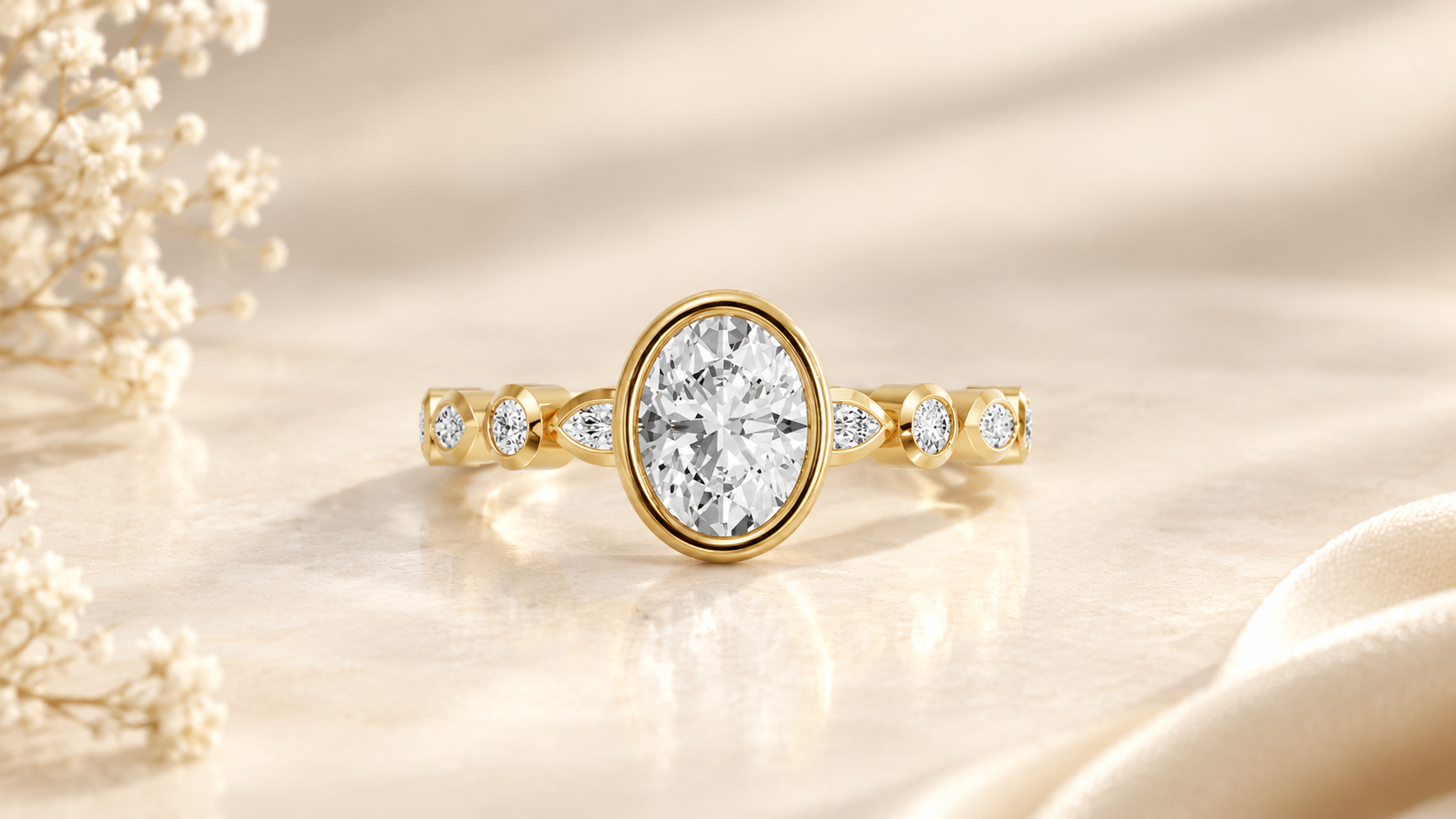

An engagement ring should feel personal, comfortable, and practical enough to become part of everyday life. Bezel engagement rings offer a distinctive approach because the metal surrounds the outer edge of the diamond rather than holding it with traditional prongs. When paired with a lab grown diamond, this setting creates a ring that combines a clean appearance with a secure structure. For shoppers looking for something different from a standard prong setting, a bezel design can be an interesting option to consider.
What Is a Bezel Engagement Ring?
A bezel setting holds a diamond by surrounding its edge with a thin rim of metal. Instead of using several small prongs, the metal border keeps the stone in place from the sides.
This construction gives the ring a smooth outline. There are fewer raised areas that can catch on clothing, hair, or other materials. The result is a ring that can work well for people who prefer jewelry that feels simple and easy to wear.
The bezel setting also changes the way the diamond looks. Since the metal frames the stone, the outline of the diamond becomes an important part of the overall design. Round, oval, pear, emerald, and other diamond shapes can all create different visual results when placed inside a bezel.
Why Choose a Lab Grown Diamond?
Lab grown diamonds are diamonds created in controlled laboratory environments using technology that replicates the conditions involved in natural diamond formation. They have the same basic chemical composition and crystal structure as mined diamonds.
For an engagement ring, this gives shoppers another way to select a diamond while focusing on factors such as shape, carat weight, cut, color, clarity, and budget.
Pairing a lab grown diamond with a bezel setting can also create a distinct combination. The diamond provides the center of attention, while the metal border gives the ring a defined frame.
Someone searching for a lab grown bezel engagement ring may appreciate this combination because it brings together a contemporary diamond choice and a setting with a long history in jewelry design.
The Secure Structure of a Bezel Setting
One of the main reasons people consider bezel rings is their structure.
With a traditional prong setting, small metal claws hold the diamond from several points around its edge. A bezel uses a continuous metal rim around the stone.
This can provide useful protection to the diamond's outer edge. The metal can also reduce the number of exposed areas around the stone.
For people who work with their hands or simply want a ring that feels secure during daily activities, this construction may be worth considering.
Of course, no engagement ring should be treated as indestructible. Regular inspection and proper jewelry care are still important regardless of the setting.
Bezel Rings Have a Distinctive Look
A bezel setting does more than hold a diamond. It creates a visible frame around the stone.
This makes bezel set engagement rings easy to recognize. The metal border can create a strong contrast between the diamond and the band, particularly when the ring uses yellow, white, or rose gold.
The effect can also vary depending on the diamond shape.
A round diamond inside a bezel can have a neat, balanced appearance. An oval diamond can create a longer visual line, while a pear-shaped diamond can bring a more distinctive outline to the ring.
Because the setting surrounds the diamond, the overall design often feels cohesive rather than heavily divided into separate components.
Bezel Solitaire Engagement Rings
A solitaire design keeps the center diamond as the main feature of the ring. When combined with a bezel setting, the result can be particularly clean.
A bezel solitaire engagement ring can be suitable for someone who prefers a single center stone without additional side diamonds or elaborate detailing.
The metal border gives the center stone definition, while the plain band allows the diamond shape to remain the focus.
This type of ring can also be paired with different band profiles. A narrow band can create a delicate appearance, while a wider band can give the ring a stronger presence.
What Makes Bezel Diamond Engagement Rings Different?
A bezel diamond engagement ring stands apart from many traditional engagement ring styles because the setting itself becomes a noticeable part of the design.
With prong settings, the diamond can appear visually open from the sides. With a bezel, the metal surrounds the stone and creates a defined boundary.
This difference can affect the overall character of the ring.
A bezel can be a good choice for someone who likes clear lines, a smooth surface, and a setting that does not rely on multiple visible prongs.
It can also work well with a variety of personal styles. The same basic setting can be made with different metals, diamond shapes, band widths, and design details.
Unique Bezel Engagement Rings for Different Styles
There is no single way to design a bezel ring.
Some rings use a complete bezel around the diamond, while others combine bezel details with additional design elements. A bezel can also be used for center stones, accent stones, or both.
This makes unique bezel engagement rings possible without moving too far away from the practical structure of the setting.
For example, an oval center diamond with a slim bezel can create a different appearance from a round diamond surrounded by a wider metal frame. East-west orientations can also change the visual direction of certain elongated diamond shapes.
Small details such as band width, metal color, stone proportions, and gallery design can make two bezel rings look completely different.
The Comfort Factor
Comfort is an important consideration when choosing an engagement ring because the ring may be worn for many hours each day.
The smooth outer edge of a bezel setting can reduce the number of exposed points that may catch against fabric or hair. This can be useful for people who prefer a ring with a smooth profile.
The exact comfort level depends on the ring's construction, including the band, setting height, interior shape, and finger size.
Trying different styles can help shoppers understand which design feels natural on their hand.
Bezel Settings and Everyday Wear
An engagement ring is often exposed to everyday activities. Cooking, working, traveling, cleaning, exercising, and handling different materials can all put normal wear on jewelry.
The enclosed edge of a bezel setting can make it appealing to people who want additional coverage around the diamond.
That does not mean the ring requires no maintenance. Diamonds can still collect dirt, and precious metals can develop scratches over time. Regular cleaning and periodic professional inspection can help keep the ring in good condition.
It is also wise to remove any fine jewelry when performing activities that could place excessive pressure on the ring.
How to Choose the Right Bezel Ring
When choosing a bezel engagement ring, start with the diamond.
Consider the shape first because the shape has a strong influence on the finished design. Then look at carat weight, cut, color, and clarity according to your priorities.
Next, consider the metal. White gold can create a light, neutral frame around the diamond, while yellow gold provides stronger color contrast. Rose gold offers another option for shoppers who prefer a warmer metal tone.
Band width should also be considered. A narrow band may place more visual attention on the center stone, while a wider band can create a bolder appearance.
Finally, think about how the ring fits into your daily routine. A design that looks attractive but feels uncomfortable may not be the right choice for long-term wear.
Why Lab Grown and Bezel Work Well Together
The combination of a lab grown diamond and bezel setting gives shoppers two distinct design choices in one ring.
The lab grown diamond provides an alternative to a mined diamond, while the bezel determines how that diamond is held and presented.
For shoppers who want a ring with a clean outline and a less traditional setting, the combination can be worth exploring.
Those interested in this style can buy bezel engagement rings in different diamond shapes and metal options, depending on the available designs and personal preferences.
The key is to look beyond the name of the setting and consider the complete ring: diamond proportions, band design, metal, comfort, and construction all influence the finished piece.
Where to Explore Lab Grown Bezel Designs
Choosing an engagement ring can take time, especially when comparing different settings and diamond shapes. Looking at several designs can make it easier to identify details you like.
Antiquecut offers lab grown diamond ring designs that include bezel-inspired styles for shoppers interested in this setting.
Before purchasing, compare the diamond specifications, ring measurements, metal type, setting construction, and available customization options. If the ring is intended for daily wear, pay particular attention to fit and overall comfort.
Final Thoughts
A lab grown bezel engagement ring can be special because of the way its diamond choice and setting work together. The bezel surrounds the stone with a metal rim, giving the ring a defined outline while offering coverage around the diamond's edge.
Whether you prefer a simple solitaire, a distinctive diamond shape, or a more personalized design, bezel settings provide several possibilities.
For anyone considering an engagement ring outside the usual prong styles, exploring bezel designs can be a useful part of the shopping process. The right choice ultimately comes down to the diamond, setting, metal, comfort, and personal style that feel right for the wearer.


