

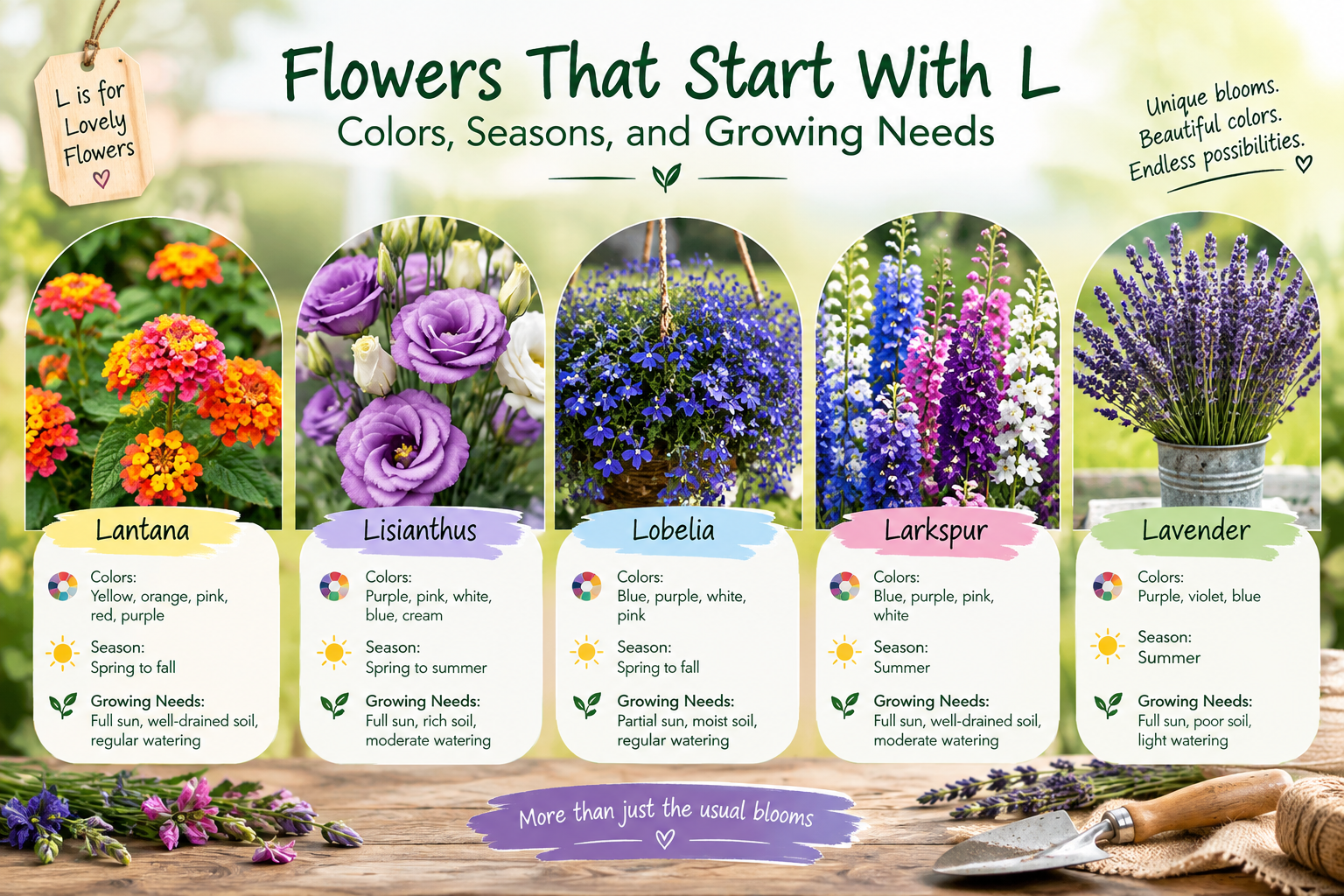

Every garden looks better with a mix of colors and blooming times spread across the year. Flowers that start with L give you exactly that. Some bloom in cool spring weather. Others thrive in the heat of summer. Each one brings its own color palette and growing needs to your yard. This guide breaks down what season each flower prefers, what colors to expect, and what conditions help it grow well.
Let's explore these flowers that start with L, one by one.
Lily: Summer Blooms in Bold Colors
Lilies bloom during summer months. They come in bold shades like orange, red, deep pink, and pure white. Some varieties even have spotted petals, which adds visual interest.
These flowers need full sun and rich soil. They don't like wet feet, so drainage matters a lot. Plant the bulbs in early spring, and you'll see blooms by mid-summer. Lilies also do well in slightly cooler regions, as long as they get enough sunlight during the day.
Lavender: A Summer Favorite With Cool Purple Tones
Lavender blooms through late spring into summer. Its color is a soft, calming purple that pairs well with almost any garden theme. This flower doesn't ask for much.
It grows best in dry, sandy soil with lots of direct sun. Too much water or shade will hurt it. Lavender actually does better in poor soil than rich soil, which makes it a low-effort choice for busy gardeners.
Lilac: Early Spring Color With a Strong Scent
Lilacs are some of the first flowers that start with L to bloom each year. They open up in early spring, filling the air with a sweet fragrance. Their colors range from soft lavender to deep purple, and some varieties even bloom white.
These shrubs need a cold winter to bloom properly the following spring. They also want full sun and soil that drains well. If your region has cold winters, lilacs are a smart, low-maintenance choice.
Larkspur: Cool Season Blooms in Bright Blues
Larkspur prefers cooler weather. It blooms in late spring before the summer heat sets in. Its colors include vivid blue, soft pink, and white, often growing on the same tall stalk.
This flower doesn't like extreme heat. If you live somewhere with mild summers, larkspur will keep blooming longer. Plant seeds in fall for spring flowers, or in early spring for summer blooms.
Small gardening communities, like Yourhomify, often talk about how seasonal planning like this makes a real difference in how gardens turn out.
Lupine: Wild Colors That Bloom in Late Spring
Lupines bloom in late spring to early summer. Their colors range widely, from blue and purple to pink, yellow, and white, sometimes all on the same plant.
These flowers prefer cooler climates and don't do well in intense heat. They need well-drained, slightly acidic soil. Once established, lupines come back year after year, making them a good long-term investment for your garden.
Lisianthus: Soft Colors That Bloom All Summer
Lisianthus flowers bloom from early summer through fall. Their colors are soft and romantic, think pale pink, lavender, and creamy white. The petals look layered, almost like a rose.
This flower needs warm weather and full sun to thrive. It also needs consistent watering, since it doesn't handle dry spells well. Lisianthus takes a bit longer to grow from seed, but the wait is worth it.
Lotus: A Summer Bloom for Water Gardens
Lotus flowers are unique among flowers that start with L because they grow in water, not soil. They bloom during the warmer months, typically from June through September. Their colors include soft pink, white, and sometimes yellow.
Lotus plants need still, warm water and plenty of sunlight. They're not suited for cold climates unless grown indoors or in a heated pond. If you have a water feature, lotus flowers can turn it into a real showstopper.
Lantana: Bright Summer Colors That Handle Heat
Lantana blooms nonstop through summer and into early fall. Its clusters of tiny flowers often mix two or three colors together, like orange and yellow, or pink and red.
This flower loves heat and doesn't mind dry conditions. It's one of the more forgiving choices if you tend to forget watering. Lantana also attracts butterflies, which adds movement and life to your garden.
Lobelia: Cool Weather Blooms in Deep Blue
Lobelia blooms best in cooler temperatures, typically spring and fall. Its color is a deep, rich blue that stands out in garden beds and containers. Some varieties also come in white or purple.
This flower struggles in extreme summer heat. It prefers partial shade and soil that stays consistently moist. In hot climates, planting lobelia where it gets afternoon shade will help it last longer.
Lily of the Valley: Shade-Loving Spring Blooms
Lily of the valley blooms in early to mid-spring. Its small white bell-shaped flowers grow low to the ground and carry a sweet, delicate scent.
This flower prefers shade over direct sun. It needs moist, cool soil to spread well. Once planted, it fills in shaded areas nicely and comes back reliably every year.
Liatris: Late Summer Spikes in Purple
Liatris blooms in mid to late summer. Its tall spikes are covered in fuzzy purple flowers that open from the top down, which is a bit unusual compared to most blooms.
This flower handles heat and dry spells well once it's established. It needs full sun and soil that drains easily. Liatris is also a strong pollinator magnet, drawing in bees and butterflies all season long.
Understanding when and how each flower grows makes planning your garden much easier. Flowers that start with L cover almost every season, from lilac in early spring to liatris in late summer. Pick a mix based on your climate, and you'll have color in your garden for months at a time.
Final Thoughts: Bringing It All Together
Flowers that start with L offer something for every season and every corner of your garden. You get early spring color from lilacs, summer boldness from lilies and lantana, and calm blue tones from lobelia when the weather cools down again. Each flower has its own personality, its own bloom time, and its own care routine.
The best way to start is simple. Don't try to plant all eleven at once. Pick two or three that match your climate and the amount of sun your garden gets. Once you see how they grow, you can add more varieties next season.
Gardening is a bit of trial and error. Some flowers will surprise you. Others might need a second attempt. That's normal, and it's part of the process. With a little patience, your garden can have color and fragrance almost all year round, thanks to this simple, beautiful group of L flowers.
Frequently Asked Questions
Which flowers that start with L bloom in spring?
Lilac and lily of the valley are two early spring bloomers. Larkspur and lupine also start blooming in late spring.
Which flowers that start with L are best for hot summers?
Lantana and lavender both handle heat well. They're drought-tolerant and don't mind full sun for long hours.
Do any flowers that start with L grow in water?
Yes. The lotus is a water flower. It needs a pond or a large water container to grow properly.
Which flowers that start with L prefer shade?
Lobelia and lily of the valley both do better in partial to full shade, especially in warmer climates.
Can flowers that start with L grow in cold climates?
Lilacs actually need cold winters to bloom well the next spring. Larkspur and lupine also tolerate cooler weather better than intense heat.


