

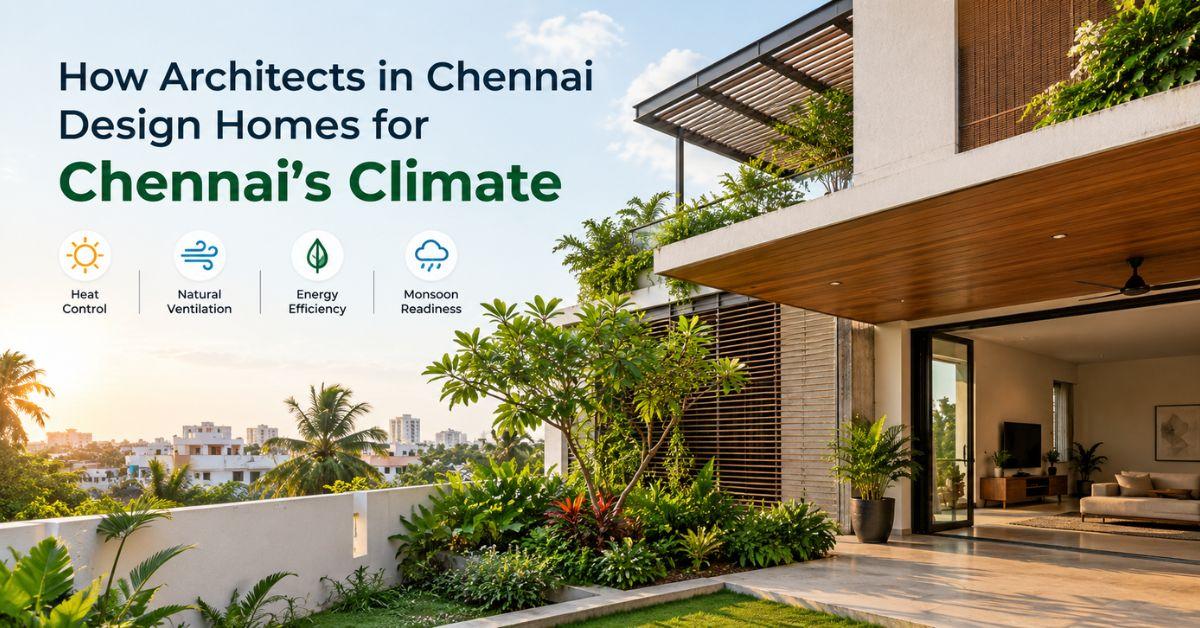

Chennai’s tropical climate brings hot summers, high humidity, seasonal rainfall, and strong coastal winds. These conditions make climate-responsive planning an important part of residential architecture. Architects in Chennai consider factors such as building orientation, ventilation, shading, materials, and water management to create homes that remain comfortable throughout the year.
Understanding Chennai’s Climate
Chennai experiences a predominantly hot and humid climate, with temperatures remaining high for much of the year. Humidity can make indoor spaces feel warmer, while heavy rainfall during the northeast monsoon requires effective drainage and waterproofing. Homes therefore need designs that respond to both heat and seasonal rain.
Understanding these conditions at the planning stage allows architects to make better decisions about the building layout, openings, materials, and outdoor spaces.
Planning for Natural Ventilation
Good ventilation is essential for homes in a warm and humid environment. Architects can position windows and openings strategically to encourage cross ventilation and allow fresh air to move through different areas of the home.
Openings placed on opposite or adjacent walls can improve airflow, while larger windows in suitable locations can help reduce dependence on artificial cooling. Internal courtyards, balconies, and ventilated transitional spaces can also contribute to better air circulation.
Using Shading to Reduce Heat
Direct sunlight can significantly increase indoor temperatures. Homes in Chennai can benefit from design elements that limit excessive solar exposure without completely blocking natural daylight.
Overhangs, balconies, sunshades, pergolas, fins, and strategically positioned vegetation can provide shade around windows and external walls. These features can reduce heat gain while maintaining comfortable and naturally lit interiors.
Choosing Suitable Building Materials
Material selection plays an important role in climate-responsive construction. Materials with appropriate thermal properties can help reduce the transfer of external heat into living spaces.
Light-coloured exterior finishes can also help reflect solar radiation. Architects may consider locally suitable materials and finishes based on factors such as durability, maintenance requirements, thermal performance, and resistance to Chennai’s humid and coastal environment.
Designing for Natural Light
A climate-responsive home should balance natural lighting with heat control. Large openings can bring in plenty of daylight, but their orientation and shading need to be carefully considered.
Skylights, clerestory windows, shaded openings, and appropriately positioned windows can provide natural illumination while reducing unnecessary heat gain. This approach can make interiors feel brighter and more comfortable during the day.
Managing Monsoon Rainfall
Chennai’s northeast monsoon makes rainwater management an important design consideration. Sloped surfaces, effective roof drainage, properly designed gutters, and adequate site drainage can help direct rainwater away from the building.
Waterproofing is also important for roofs, terraces, balconies, bathrooms, and other areas exposed to moisture. Proper detailing during construction can help reduce the risk of water seepage and long-term damage.
Incorporating Green Spaces
Plants and landscaped areas can contribute to a more comfortable residential environment. Trees can provide shade, while gardens and planted areas can soften hard surfaces around the property.
Thoughtful landscaping can also improve the outdoor experience and create a transition between indoor and outdoor spaces. Selecting plants suited to the local climate can make maintenance more practical.
Considering Coastal Conditions
Chennai’s coastal location means some areas may experience higher exposure to humidity and salt-laden air. Material selection and maintenance planning should therefore account for potential corrosion and moisture-related issues.
Durable external finishes, appropriate protective treatments, and suitable materials for doors, windows, railings, and other exposed components can help improve longevity.
Creating Comfortable Homes for All Seasons
Climate-responsive design is not limited to reducing heat. A well-planned home should provide comfort during hot periods while also managing humidity, rainfall, and changing weather conditions.
Combining orientation, ventilation, shading, appropriate materials, natural lighting, landscaping, and effective water management can create a home that responds naturally to Chennai’s environment.
Building Climate-Responsive Homes
Design is only one part of creating a home suited to the local climate. Careful execution and attention to construction quality are equally important. Working with experienced Construction Companies in Chennai can help ensure that climate-responsive design elements, waterproofing, drainage, material selection, and structural details are implemented properly.
A home designed specifically for its environment can offer better comfort, durability, and functionality while reducing the need for excessive mechanical cooling and maintenance.


