English
 Arabic
 Français
 Spanish
 Portuguese
 Deutsch
 Turkish
 Dutch
Dutch
 Italiano
 Russian
 Romaian
 Portuguese (Brazil)
 Greek
Greek
 Réunionnais
 India
India
Osteo-Odonto-Keratoprosthesis (OOKP) Market Poised for Growth as Life-Changing Surgery Expands Globally
Alimentation - Produits |
2025-11-24 16:21:30
 Entreprises locales
 Runsound music
 La silver économie
 Affiliation Matrice 3x9
 Récompenses
 Babarun (BBRN)
 Calculez vos calories
 Collab Influenceurs
 Événementiels
 Procaly
 Affiliation
 Prêts Immobiliers

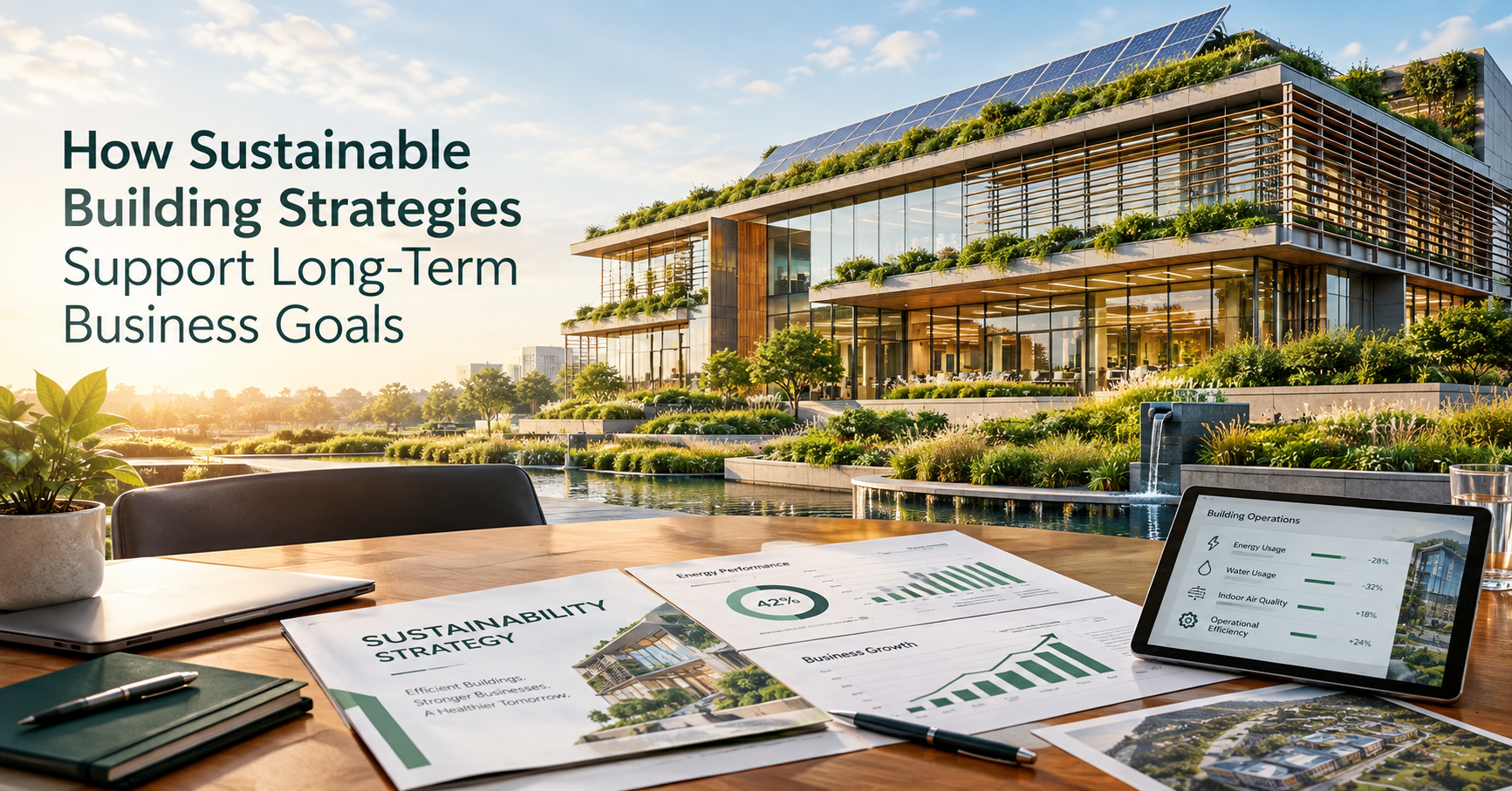
Sustainable building strategies are becoming an important part of modern business planning. Companies are increasingly looking beyond immediate construction costs to consider energy consumption, resource efficiency, operational performance, and environmental responsibility. Working with sustainability consultancy firms can help organizations identify practical opportunities to improve building performance while aligning sustainability initiatives with broader business objectives. A well-planned sustainable building can support cost management, occupant comfort, regulatory readiness, and long-term operational resilience.
Sustainable building strategies involve designing, constructing, and operating buildings in ways that reduce unnecessary resource consumption and environmental impact. These strategies can include energy-efficient systems, responsible material selection, water conservation, waste reduction, renewable energy integration, and improved indoor environmental quality.
Rather than treating sustainability as a separate feature, businesses can incorporate these principles into the entire building lifecycle. This approach allows sustainability considerations to influence decisions from initial planning through construction and ongoing facility management.
One of the most direct business benefits of sustainable building design is improved operational efficiency. Energy-efficient lighting, HVAC systems, insulation, and building controls can help reduce unnecessary energy consumption.
Water-efficient fixtures, rainwater management, and optimized plumbing systems can also reduce water usage. Although some sustainable technologies may require higher initial investment, their operational savings can contribute to better long-term cost management.Businesses can evaluate these investments based on lifecycle costs rather than focusing only on the initial construction budget.
Energy management is central to sustainable building performance. Building orientation, daylight utilization, efficient equipment, and smart energy management systems can all contribute to lower energy demand.
Modern buildings can also incorporate renewable energy solutions such as rooftop solar power where suitable. Monitoring systems can provide useful information about consumption patterns, allowing facility teams to identify areas where energy use can be optimized.Better energy performance can help businesses manage operating expenses while supporting environmental objectives.
Sustainable buildings are not only about reducing environmental impact. They can also contribute to healthier and more comfortable indoor environments.
Natural lighting, effective ventilation, thermal comfort, acoustic considerations, and appropriate indoor air quality can influence how people experience a building. For offices and commercial spaces, creating comfortable working environments can support employee satisfaction and productivity.These factors make occupant well-being an important consideration when developing long-term building strategies.
Environmental regulations and sustainability expectations are evolving across industries. Businesses that incorporate sustainable practices into their buildings can be better prepared to respond to changing requirements.Tracking energy use, emissions, water consumption, and waste can also provide organizations with useful information for sustainability reporting and internal decision-making.A structured sustainability strategy can therefore support both current operational requirements and future business planning.
Construction and building operations involve significant quantities of materials, energy, and water. Sustainable planning can help organizations use these resources more efficiently.
Material selection can consider durability, maintenance requirements, recycled content, and environmental impact. Designing buildings for long-term adaptability can also reduce the need for major renovations when business requirements change.This approach can extend the useful life of building assets while reducing unnecessary resource consumption.
Sustainability can also influence how customers, employees, investors, and other stakeholders view an organization. Businesses that demonstrate measurable environmental responsibility may be better positioned to communicate their sustainability commitments.However, sustainability claims are most effective when supported by measurable actions and transparent reporting. Organizations should focus on practical improvements rather than relying solely on sustainability-focused messaging.
Sustainability works best when considered from the earliest stages of a project. Architects, engineers, contractors, and facility teams can collaborate to evaluate energy performance, water systems, materials, and building operations before construction begins.
Early integration can also help prevent expensive design changes later in the project. Digital modeling and performance analysis can further support informed decisions by allowing teams to evaluate different design scenarios.
Mechanical, electrical, and plumbing systems have a major influence on building efficiency. HVAC performance, electrical distribution, lighting, water supply, drainage, and building controls should therefore be considered as part of an integrated sustainability strategy.
Mep design companies in Chennai can support this process by developing coordinated building-service designs focused on energy efficiency, system performance, and practical project requirements. Proper MEP coordination can help reduce conflicts during construction while supporting reliable building operations over the long term.
Sustainable building strategies should ultimately support measurable business objectives. Lower operating costs, improved resource efficiency, better occupant environments, regulatory preparedness, and longer asset lifecycles can all contribute to long-term value.The most effective approach is to connect sustainability decisions with the organization's specific operational requirements and financial goals. By considering environmental performance alongside functionality and lifecycle costs, businesses can create buildings that remain useful, efficient, and adaptable for years to come.
Sustainable building strategies are increasingly becoming part of long-term business planning rather than being treated as optional additions. From energy-efficient systems and responsible materials to water conservation and better indoor environments, these measures can provide benefits throughout a building's lifecycle.
When sustainability is integrated early and supported by coordinated design and measurable performance goals, businesses can make more informed investments and develop buildings that support both operational efficiency and future organizational needs.