English
 Arabic
 Français
 Spanish
 Portuguese
 Deutsch
 Turkish
 Dutch
Dutch
 Italiano
 Russian
 Romaian
 Portuguese (Brazil)
 Greek
Greek
 Réunionnais
 India
India
What Makes Yonoel First Aid Kit the Best Choice for Safety?
Actualité |
2025-09-09 02:52:48
 Entreprises locales
 Runsound music
 La silver économie
 Affiliation Matrice 3x9
 Récompenses
 Babarun (BBRN)
 Calculez vos calories
 Collab Influenceurs
 Événementiels
 Procaly
 Affiliation
 Prêts Immobiliers

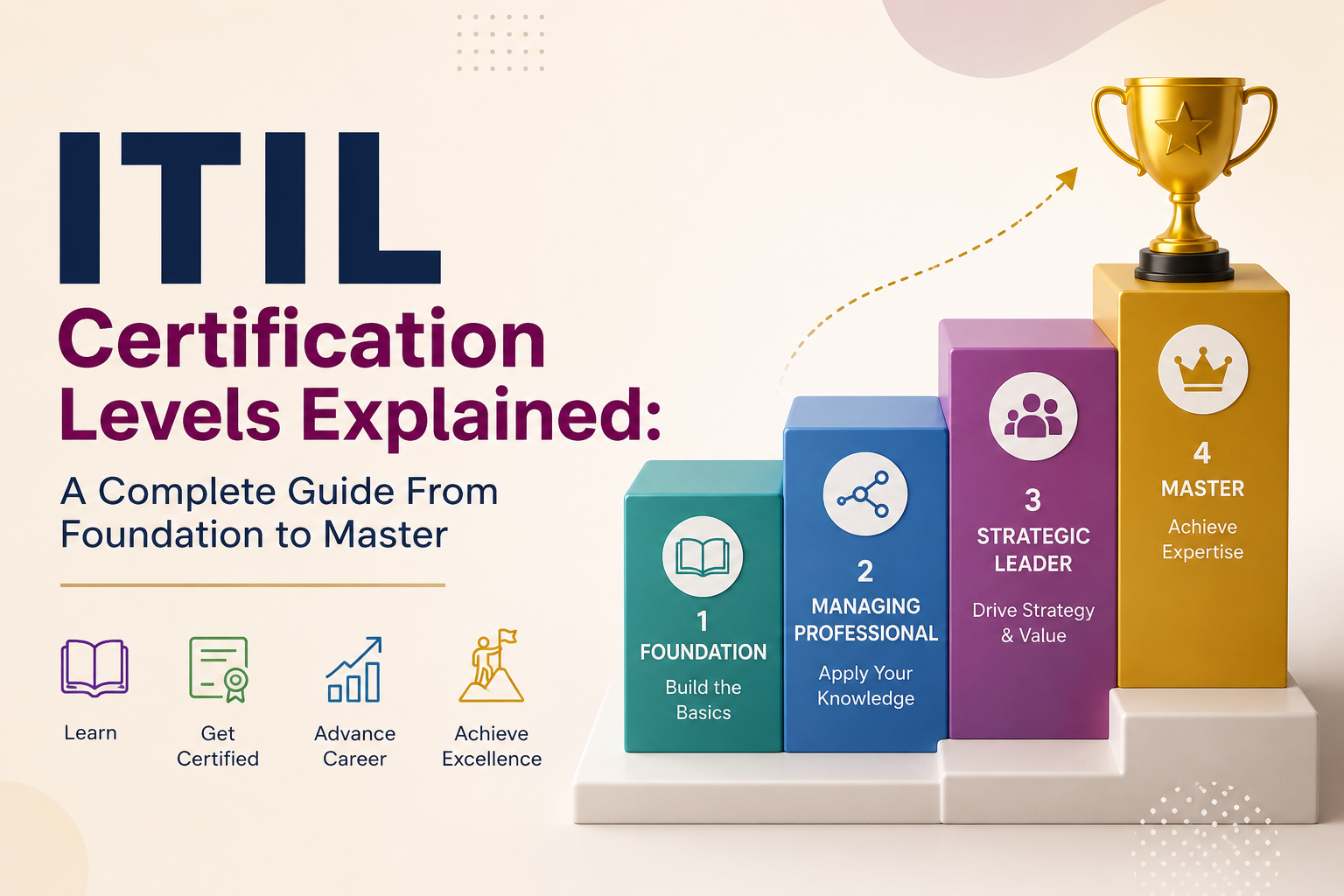
IT Service Management (ITSM) has become the backbone of how modern organizations deliver technology-driven value, and ITIL remains the most widely recognized framework guiding this practice. But one question trips up almost every newcomer: which ITIL certification level should you actually pursue? Unlike a single one-and-done exam, ITIL is structured as a progressive journey, with each level building on the last. Understanding this ladder is the first step toward planning a career path that actually makes sense for your goals.
Why ITIL Is Structured in Levels
ITIL isn't designed as a single certificate because IT service management itself isn't a single skill. A helpdesk analyst, a service delivery manager, and a CIO all need different depths of knowledge from the same framework. The tiered structure lets professionals enter at a level appropriate to their experience and then climb as their responsibilities grow.
The Core ITIL Certification Levels
Here's how the current ITIL certification scheme breaks down:
ITIL 4 Foundation – The entry point for everyone, covering key concepts, terminology, and the four dimensions of service management.
ITIL 4 Managing Professional (MP) – A stream aimed at IT practitioners handling projects, teams, and technology-driven services.
ITIL 4 Strategic Leader (SL) – Designed for professionals who need to understand how IT strategy connects to overall business strategy.
ITIL 4 Extension Modules – Specialized modules like Sustainability in Digital & IT, Acquiring & Managing Cloud Services, and Digital & IT Strategy for niche expertise.
ITIL Master – The pinnacle level, reserved for seasoned professionals who can demonstrate applied, real-world use of ITIL principles across an organization.
Choosing where to start on this ladder matters more than people expect. Jumping straight to a specialist module without Foundation-level grounding often leads to gaps in understanding that show up later, whether in an exam or on the job.
Why ITIL 4 Certification Is Worth the Investment
Earning an ITIL 4 certification does more than add a line to your resume — it signals to employers that you understand a globally recognized language for delivering IT services efficiently. Organizations increasingly list ITIL certification as a preferred or required qualification for ITSM, service desk, and IT operations roles, which means certified professionals often get shortlisted ahead of equally experienced but uncertified peers. Beyond hiring, the framework itself gives you practical tools for incident management, change control, and continual improvement that you can apply from day one, making the certification valuable even outside a strict "career ladder" sense.
How to Choose the Right Starting Point
If you're new to ITSM, ITIL 4 Foundation is the only sensible starting point — nearly every higher-level module lists it as a prerequisite. If you already hold Foundation and work hands-on with service delivery, the Managing Professional stream will feel more relevant. If your role involves strategic decision-making or you're aiming for leadership positions, the Strategic Leader stream aligns better with your day-to-day responsibilities.
It's worth resisting the temptation to collect every module available. Certifications should map to the work you actually do or the role you're aiming for next — not simply the next badge on the list.
Common Mistakes When Planning an ITIL Path
A few patterns show up repeatedly among professionals who feel stuck partway through their ITIL journey:
Treating Foundation as a formality rather than genuinely learning the terminology, which causes trouble at higher levels.
Choosing extension modules based on trend rather than actual job relevance.
Underestimating the time needed between modules, leading to knowledge decay between exams.
Ignoring practical application — passing exams without applying concepts at work weakens long-term retention.
Avoiding these pitfalls usually comes down to pacing yourself and staying honest about why you're pursuing each level.
Building a Long-Term ITSM Career
Certifications are a milestone, not a destination. The professionals who benefit most from ITIL treat it as an ongoing framework for thinking about service value, not a static syllabus to memorize once. Pair your certification path with real project exposure — volunteering for incident reviews, contributing to service improvement initiatives, or shadowing a service delivery manager — and the concepts will stick far better than exam prep alone.
Final Thoughts
The ITIL certification ladder can look intimidating from the outside, but it's built with intention: each level exists to match a real stage of professional growth. Start with Foundation, be deliberate about which stream fits your career direction, and treat each certification as a tool for better service delivery rather than just a credential to display. Done right, this path can steadily open doors across ITSM, IT operations, and even broader business strategy roles.