


A ring can look beautiful in a display case, but the real test of its design is how naturally it fits into everyday life. An engagement ring is usually worn through many different parts of the day, from a morning coffee to a work meeting, a dinner with friends, or a quiet weekend at home. Because of this, many people look beyond the center diamond alone and consider how the entire ring feels, functions, and fits into their regular routine.
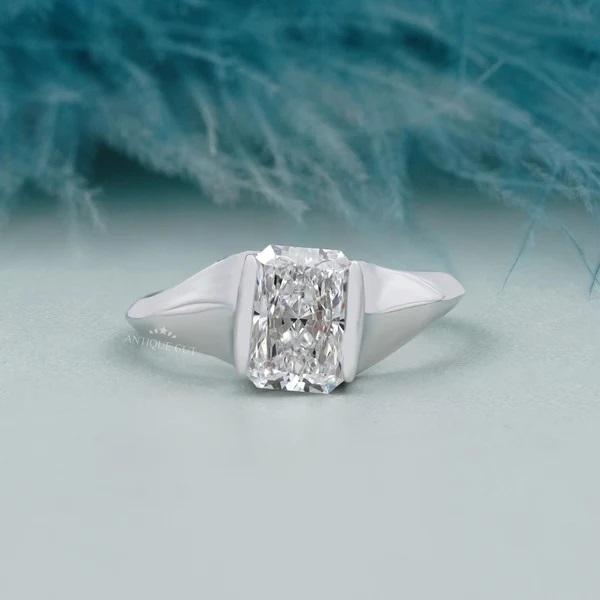
A radiant-cut center diamond already has a distinctive presence because of its rectangular outline and faceted appearance. When that shape is paired with a bezel setting, the result has a particularly clean structure. Instead of relying on individual prongs at the corners, the metal surrounds the outer edge of the diamond. This creates a defined border around the center stone and gives the ring a visually complete appearance.
The everyday appeal of this design comes from the way its different elements work together. The shape provides character, the surrounding metal establishes a clear frame, and the band determines how the ring sits on the finger. These details can make the design feel appropriate for someone who wants a noticeable center stone without choosing a heavily decorated setting.
A Shape That Feels Distinct Without Being Overcomplicated
One reason people are drawn to radiant-cut diamonds is their combination of structure and movement. The outline has straight sides and trimmed corners, while the faceting inside the stone creates variation when viewed from different angles. It is neither completely round nor sharply square, which gives it a different personality from many traditional diamond shapes.
That balance can be useful for everyday jewelry. A person may want a ring with enough character to feel special but not so much decoration that it becomes difficult to coordinate with other pieces. The radiant shape provides much of the visual interest on its own.
The proportions of the center diamond also have an important effect on the finished appearance. A more elongated radiant can create a different impression from one that is closer to a square outline. Neither choice is automatically better. The right option depends on the wearer's preferred proportions and how the center stone relates to the finger.
The bezel setting adds another layer to this decision. Because the metal follows the outer shape of the diamond, the outline becomes an important part of the overall design. A well-proportioned bezel should complement the stone rather than overwhelm it. The border can make the center look clearly defined while keeping the design visually organized.
Evaluating how stone length-to-width ratios, rim thicknesses, and precious metals interact gives you clear perspective on a setting's visual weight. When buyers see more options of radiant cut bezel ring styles, directly comparing how low-profile mountings and subtle band variations shape the silhouette helps ensure the final design aligns with their daily wear preferences.
Why the Bezel Setting Works Well for Regular Wear
Daily wear brings different considerations than choosing a ring purely for appearance. Hands come into contact with clothing, bags, desks, countertops, and countless other surfaces throughout the day. For someone who plans to wear an engagement ring frequently, the setting itself deserves attention.
A bezel setting surrounds the edge of the center diamond with metal. This gives the stone a different type of construction from a traditional prong setting. The enclosed edge can create a smooth transition between the diamond and the metal, which is one reason bezel rings appeal to people who prefer a more contained design.
The profile of the ring also matters. A ring can look excellent from the top while feeling less comfortable if the underside or side profile does not suit the wearer. When considering a bezel design, it is useful to look at the ring from several angles rather than judging it only from a straight-on view.
Another practical point is how the ring interacts with other jewelry. Someone who wears a watch, bracelet, stackable rings, or a wedding band may want an engagement ring that does not feel visually disconnected from the rest of their collection. A defined bezel can provide a strong central shape without requiring additional stones across the entire band.
The band itself can change the character of the design considerably. A narrow band can place greater emphasis on the center, while a wider band can create a stronger overall presence. A plain band keeps attention toward the radiant center, whereas small accent details can introduce additional visual interest.
For everyday use, comfort should also be considered alongside appearance. Finger shape, ring size, band width, and the way a ring sits between neighboring fingers can all influence how enjoyable it is to wear. These are personal factors, so a design that feels perfect for one person may not feel the same for another.
Choosing the Right Look for Your Daily Style
An everyday ring does not have to match one particular type of clothing. In fact, one of the strengths of a well-balanced design is its ability to work with different parts of a wardrobe. A radiant center with a clean bezel can work with simple clothing because the diamond provides the main point of interest. At the same time, the structured shape can complement outfits with sharper tailoring, geometric accessories, or more distinctive jewelry.
Metal color is another detail that can influence the final impression. White metals can create a continuous visual relationship between the diamond and its surrounding frame. Yellow gold introduces a warmer contrast, making the metal itself more noticeable. Rose gold offers another direction, particularly for someone who prefers a softer color relationship between the setting and the skin. There is no universal rule that one metal color works best with a radiant diamond.
The same idea applies to the band finish. A polished surface has a different visual character from a textured or detailed band. Someone who prefers clean accessories may lean toward a simpler construction, while someone with a more decorative jewelry collection might enjoy additional band details. For people comparing several designs, it can help to ask practical questions rather than focusing only on the first impression.
Making the Ring Feel Personal
An engagement ring becomes part of someone's personal style over time. While current jewelry preferences can influence the initial decision, the better choice is often the one that feels natural alongside the pieces already worn. For example, someone who rarely wears decorative jewelry may prefer a radiant bezel design with a straightforward band. The center diamond can provide enough visual presence without requiring a heavily embellished setting.
On the other hand, a person who enjoys layering jewelry may want more definition in the band or additional design elements. The bezel can act as a strong foundation while the surrounding details provide opportunities for personalization. A larger-looking face-up outline can create a stronger visual effect, while a smaller center may feel more understated. Carat weight alone does not determine how large a diamond appears from above. The shape and proportions also influence the amount of visible surface area.
This is worth remembering when comparing rings. Two diamonds with the same carat weight can have different measurements and therefore different visual impressions. With a bezel setting, the relationship between those measurements and the surrounding metal becomes even more noticeable because the metal follows the diamond's outline. The band should also be considered as part of the complete composition. If the center is visually strong, a very busy band may compete with it.
Personal lifestyle should remain part of the decision as well. Someone who works with their hands frequently may prioritize a different ring profile from someone whose daily routine involves mostly desk work. People who travel often may also think differently about how easily the ring pairs with other jewelry. Ultimately, an everyday engagement ring should feel comfortable enough to become part of normal life rather than something reserved for specific settings.
Finding a Balance Between Design and Practicality
The appeal of a radiant bezel design comes from its ability to bring several characteristics into one ring. The radiant shape offers a recognizable outline, while the bezel creates a clear boundary around it. The band then determines how those elements translate into something that can be worn comfortably.
When looking at designs from Antiquecut, it is worth paying attention to the relationship between the diamond and the surrounding structure rather than judging the center stone by itself. Details such as the bezel width, corner treatment, band proportions, metal finish, and overall profile can make a noticeable difference in the finished ring.
It can also be helpful to think beyond the engagement period. An engagement ring may eventually be worn alongside a wedding band and other personal jewelry. Choosing a design with a clear visual identity can make future pairing easier because you already have a defined center around which other pieces can be coordinated.
There is also something appealing about a ring that does not depend on excessive decoration to stand out. A carefully considered center shape and setting can create enough interest through proportion and construction. For many wearers, that makes the design easier to incorporate into different parts of their lives.
The most suitable ring is ultimately the one that matches the wearer's priorities. Some people care most about the center stone's shape, others focus on comfort, and some place greater importance on metal color or band design. Considering all of these elements together creates a more realistic picture of whether a particular ring will work for everyday wear.
Conclusion
The everyday appeal of a radiant cut bezel ring comes from more than its appearance. Its character is created through the relationship between the radiant-shaped center, the surrounding metal, and the structure of the band. Each part contributes to how the ring looks on the finger and how naturally it fits into a person's regular routine.
The radiant shape gives the design a distinctive outline without requiring a complicated setting. The bezel adds a defined metal border around the center, while different band widths, finishes, and metal colors allow the overall ring to move in different stylistic directions. For someone choosing an engagement ring for frequent wear, these details can be just as important as the initial visual impression.
Rather than choosing a ring based solely on trends or carat weight, it can be more useful to consider how the complete design fits into everyday life. A well-balanced radiant bezel ring can become a natural part of a jewelry collection while still giving the wearer a clearly defined center piece that feels personal.


