English
 Arabic
 Français
 Spanish
 Portuguese
 Deutsch
 Turkish
 Dutch
Dutch
 Italiano
 Russian
 Romaian
 Portuguese (Brazil)
 Greek
Greek
 Réunionnais
 India
India
Personal Care Contract Manufacturing Market Size, Outlook, Competitive Landscape and Segment Forecasts 2023-2032
Autres |
2023-09-11 06:46:09
 Entreprises locales
 Runsound music
 La silver économie
 Affiliation Matrice 3x9
 Récompenses
 Babarun (BBRN)
 Calculez vos calories
 Collab Influenceurs
 Événementiels
 Procaly
 Affiliation
 Prêts Immobiliers

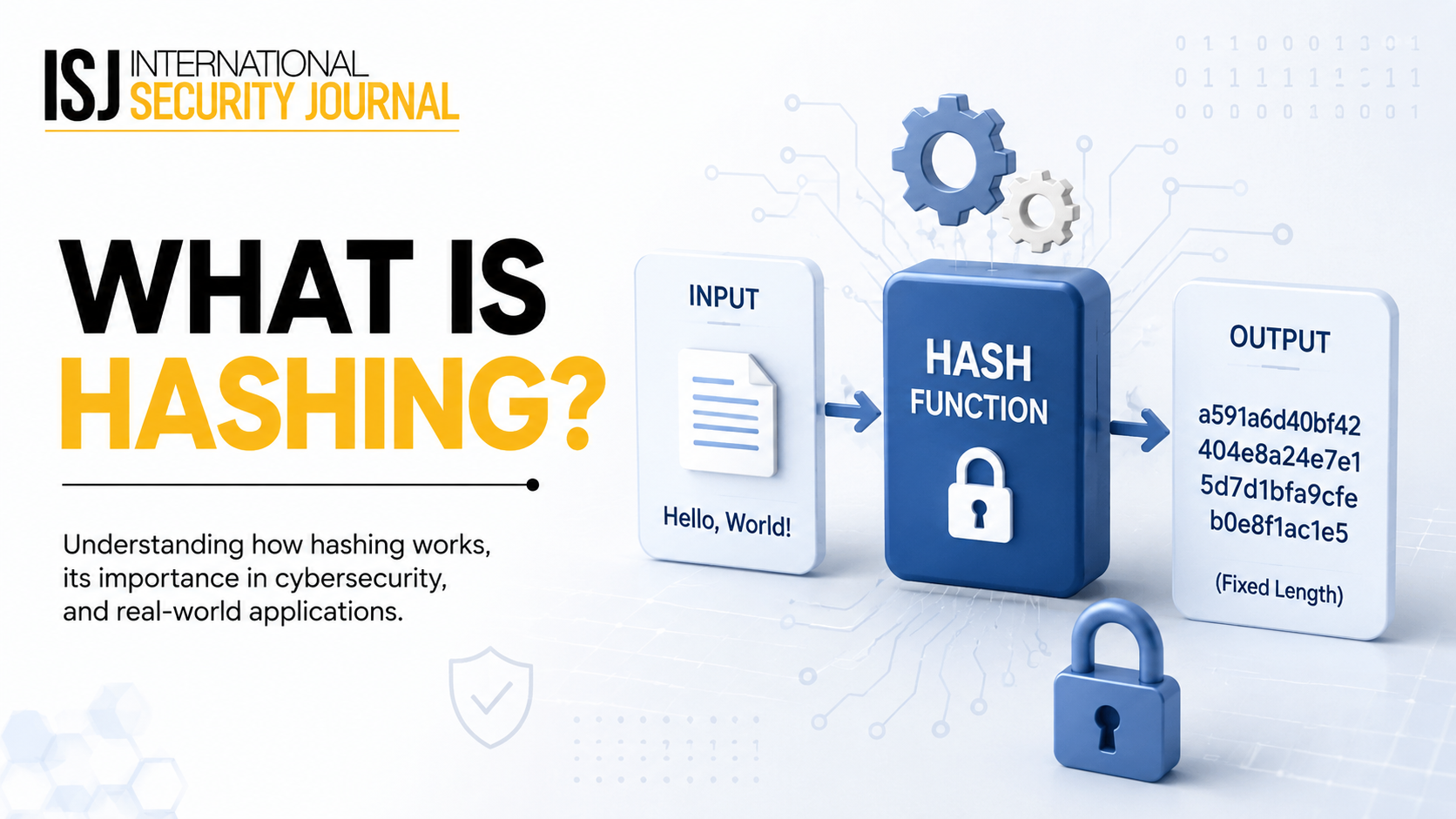
Cybersecurity threats are increasing as businesses store and process massive amounts of sensitive digital information. Protecting passwords, verifying data integrity, and preventing unauthorised changes have become essential security priorities. Hashing is one of the most widely used cryptographic techniques that helps organizations secure information without storing sensitive data in its original form.
By converting data into fixed-length hash values, hashing supports secure authentication, digital verification, malware detection, and blockchain security. Understanding what is hashing in cybersecurity helps businesses implement stronger data protection strategies and reduce risks associated with cyberattacks.
Hashing in cybersecurity is a cryptographic process that converts input data, such as passwords, files, or messages, into a unique fixed-length string called a hash value or digest. This transformation is performed using a mathematical algorithm known as a hash function.
Unlike encryption, hashing is designed to be a one-way process, meaning the original data cannot be easily recovered from the hash value. This makes it useful for securely storing passwords and verifying whether information has been modified.
A secure hashing algorithm should have important properties, including collision resistance, where two different inputs should not generate the same hash output, and consistency, where identical inputs always produce identical hash values.
The hashing process begins when data is provided as input to a hashing algorithm. The algorithm analyzes the input and generates a fixed-length output regardless of the original data size.
For example, a short password and a large document can both produce hash values with the same length when processed through the same algorithm. Even a minor change in the original input creates a completely different hash value, making unauthorized modifications easier to detect.
Modern cybersecurity systems use advanced hashing algorithms such as SHA-256 and SHA-3 because they provide stronger protection against attacks compared to older methods.
Hashing algorithms vary in their security strength, performance, and applications. From older algorithms with known vulnerabilities to advanced cryptographic solutions, each type serves different security requirements.
MD5 was once commonly used for file verification and data integrity checks. However, security researchers discovered collision vulnerabilities that allow attackers to create different files with the same hash value. Due to these weaknesses, MD5 is no longer considered secure for protecting sensitive information.
SHA-1 was widely adopted for digital certificates and authentication processes. However, advances in computing power revealed weaknesses in the algorithm, leading organizations to replace it with stronger alternatives.
SHA-256 and SHA-3 are modern hashing algorithms designed to provide stronger security. They are widely used in cybersecurity applications, including digital signatures, blockchain networks, and secure authentication systems.
Password-specific hashing algorithms such as bcrypt, scrypt, and Argon2 are designed to slow down attackers attempting brute-force attacks. These algorithms use techniques such as salting, which adds random data to passwords before hashing, making password cracking significantly more difficult.
Hashing is widely used across cybersecurity systems to protect sensitive data, verify information accuracy, and strengthen authentication processes. Its applications help organizations prevent unauthorized access and detect security threats.
One of the most common uses of hashing is password security. Instead of storing passwords directly, organisations store their hash values. When users log in, the entered password is hashed and compared with the stored hash.
Using secure password hashing algorithms with salts helps prevent attackers from accessing user credentials even if databases are compromised.
Hashing helps organizations verify whether files, software updates, or digital messages have been changed. A generated hash value acts like a digital fingerprint. If the file changes, the hash value also changes, indicating possible tampering.
Hashing plays an important role in digital signatures by creating a secure representation of messages or documents. This helps verify the authenticity of information and confirms that it has not been modified during transmission.
Blockchain networks rely heavily on hashing to maintain transaction security. Hash functions connect blocks of transactions and ensure that previous records cannot be easily altered.
Cybersecurity tools use hash values to identify known malware files. Security solutions compare file hashes against databases of malicious software to detect potential threats quickly.
Hashing provides several advantages for modern cybersecurity systems:
Hashing protects sensitive information by ensuring that original data is not stored in an exposed format. This reduces the impact of database breaches.
Hash values allow security systems to quickly compare and verify large amounts of data without analyzing complete files.
Many cybersecurity frameworks recommend secure hashing practices for protecting passwords, digital records, and confidential information.
Hashing helps detect changes in files, software, and communications, allowing organizations to identify potential security incidents.
Hashing and encryption are both important security techniques, but they serve different purposes.
Hashing is a one-way process mainly used for verification and data integrity. Encryption is a reversible process used to protect confidentiality by converting readable data into an encrypted format that can be restored using a key.
Organizations often use both methods together to achieve stronger security protection.
As cyber threats continue to evolve, organizations must adopt stronger cryptographic techniques to protect digital assets. Artificial intelligence-powered attacks and advancements in computing technology are increasing the need for secure hashing algorithms.
Future cybersecurity strategies will focus on advanced cryptographic methods that can withstand emerging threats, including potential risks from quantum computing.
Hashing remains a critical component of modern cybersecurity by protecting passwords, verifying data integrity, supporting authentication, and securing digital transactions. Its ability to create unique digital fingerprints makes it valuable for preventing unauthorized access and detecting security threats.
As organizations continue to strengthen their cybersecurity strategies, understanding hashing and implementing secure algorithms will become increasingly important. Publications like International Security Journal highlight the importance of adopting advanced security practices to address evolving digital risks and protect sensitive information.
Hashing in cybersecurity is a process that converts data into a fixed-length hash value using a cryptographic algorithm. It is mainly used for password protection, data verification, and security authentication.
No. Hashing is a one-way process used for verification, while encryption is a reversible process used to protect confidential information.
Modern algorithms such as SHA-256, SHA-3, bcrypt, and Argon2 are considered secure options for different cybersecurity applications.
Hashing prevents organizations from storing passwords in plain text. Even if attackers access a password database, they only obtain hash values instead of the original passwords.