

Why Every ICT Company Needs a SOC 2 Consultant Before Pursuing SOC2 Type2 Compliance

The ICT industry thrives on innovation, connectivity, and data-driven services. From cloud platforms and managed IT services to software development and telecommunications, organizations in this sector process vast amounts of sensitive customer and business information every day. As cyber threats become more sophisticated and enterprise customers tighten vendor security requirements, achieving compliance with globally recognized frameworks has become a strategic necessity.
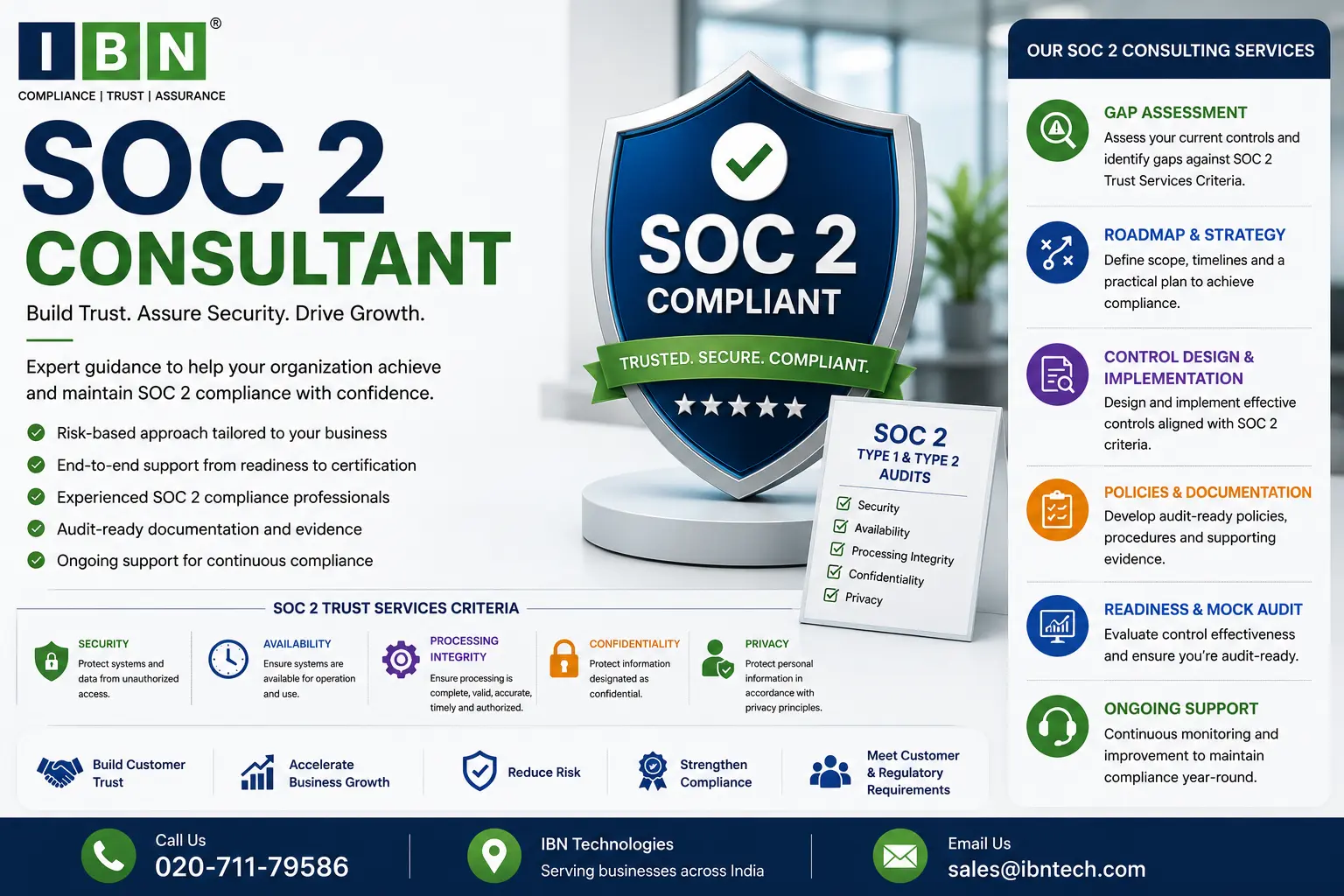
This is where an experienced SOC 2 consultant can make a significant difference. Rather than simply helping organizations prepare documentation, a consultant provides expert guidance throughout the compliance journey, ensuring security controls align with industry best practices and audit expectations. For businesses planning to achieve SOC2 Type2 compliance, professional consulting support can reduce implementation challenges, improve operational efficiency, and accelerate audit readiness.
Why ICT Companies Are Prioritizing SOC2 Type2
Technology companies increasingly serve global clients that require independent proof of strong information security practices. Whether offering SaaS products, cloud hosting, managed infrastructure, or cybersecurity services, organizations are expected to demonstrate that customer data is protected through consistently operating security controls.
Unlike a point-in-time assessment, SOC2 Type2 evaluates how effectively these controls perform over an observation period, making it one of the most respected assurance reports for ICT businesses.
Some of the key business drivers include:
- Meeting enterprise procurement requirements
- Strengthening customer trust
- Supporting international business expansion
- Improving cybersecurity governance
- Reducing operational risks
- Enhancing vendor credibility
- Building investor confidence
As digital transformation continues across industries, SOC2 Type2 has become an important competitive advantage.
What Does a SOC 2 Consultant Do?
A SOC 2 consultant works closely with an organization to prepare it for a successful independent audit. While the consultant does not issue the final SOC 2 report, they help establish the processes, documentation, and controls necessary to meet the AICPA Trust Services Criteria.
Typical responsibilities include:
- Performing compliance gap assessments
- Conducting risk assessments
- Developing information security policies
- Recommending technical security controls
- Supporting evidence collection
- Preparing audit documentation
- Conducting readiness assessments
- Assisting with remediation planning
Their objective is to ensure the organization is fully prepared before the independent auditor begins the examination.
Benefits of Hiring a SOC 2 Consultant
Attempting SOC 2 compliance without expert guidance often leads to delays, incomplete documentation, or control deficiencies. An experienced consultant helps organisations avoid these common issues.
Key benefits include:
Faster Compliance Preparation
Consultants identify security gaps early, allowing organisations to prioritise improvements before the audit period begins.
Improved Documentation
SOC 2 requires extensive documentation covering policies, procedures, and operational evidence. Consultants help create documentation that accurately reflects organisational practices.
Stronger Security Controls
Beyond compliance, consultants recommend practical improvements that strengthen overall cybersecurity and operational resilience.
Reduced Audit Risk
A structured readiness programme helps minimise audit findings by ensuring controls are properly implemented and consistently maintained.
Preparing for SOC2 Type2 Compliance
Achieving SOC2 Type2 compliance requires more than implementing security tools. Organisations must establish repeatable processes that demonstrate effective governance over time.
A typical preparation roadmap includes:
1. Compliance Readiness Assessment
Review current security practices to identify gaps against the Trust Services Criteria.
2. Risk Assessment
Evaluate technical, operational, and third-party risks that may affect customer information.
3. Policy Development
Create or update policies covering:
- Information security
- Access management
- Incident response
- Change management
- Vendor management
- Business continuity
- Data retention
4. Technical Control Implementation
Deploy security controls such as:
- Multi-factor authentication
- Role-based access control
- Encryption
- Endpoint protection
- Continuous monitoring
- Vulnerability management
- Backup and disaster recovery
5. Evidence Collection
Maintain records demonstrating that controls operate consistently throughout the observation period.
Common Compliance Challenges for ICT Businesses
Technology companies often face unique operational challenges while preparing for SOC 2.
These may include:
- Rapid cloud infrastructure changes
- Multiple third-party integrations
- Decentralised development teams
- Inconsistent access reviews
- Limited documentation
- Informal change management
- Difficulty maintaining audit evidence
A knowledgeable consultant helps address these issues before they become audit observations.
Choosing the Right SOC 2 Consultant
Not every compliance advisor has experience working with technology-focused organisations. Selecting the right consultant is essential for achieving efficient and sustainable compliance.
Look for professionals who offer:
- ICT industry expertise
- Knowledge of cloud-native environments
- Experience with SaaS and managed services
- Structured implementation methodology
- Practical remediation guidance
- Audit readiness support
- Collaboration with independent audit firms
A consultant who understands your technology stack and business model can tailor the compliance programme to your operational needs.
Best Practices for Long-Term Compliance
SOC 2 should be integrated into everyday business operations rather than treated as a one-time project.
Successful ICT organizations typically:
- Review security policies regularly.
- Monitor systems continuously.
- Conduct periodic internal risk assessments.
- Train employees on cybersecurity awareness.
- Review user access permissions frequently.
- Test disaster recovery procedures.
- Assess third-party vendor risks.
- Preserve compliance evidence throughout the year.
Embedding these practices into daily operations simplifies future audits and strengthens organizational resilience.
Frequently Asked Questions
Is a SOC 2 consultant mandatory?
No. Organizations can prepare independently, but many choose to work with a consultant to streamline implementation, improve documentation quality, and reduce audit risks.
What is the difference between a consultant and an auditor?
A consultant prepares the organization for compliance, while an independent licensed CPA performs the audit and issues the official SOC 2 report.
How long does SOC2 Type2 preparation take?
Preparation timelines vary depending on the organization's existing security maturity, available documentation, and operational complexity. The audit itself evaluates controls over a defined observation period, typically ranging from three to twelve months.
Which ICT businesses benefit most from SOC2 Type2?
SaaS providers, software development firms, cloud service providers, managed IT service companies, telecommunications providers, cybersecurity firms, and technology startups handling customer data all benefit from SOC2 Type2 compliance.
Final Thoughts
As enterprise customers place greater emphasis on cybersecurity and vendor assurance, working with an experienced SOC 2 consultant can significantly improve an ICT organization's compliance journey. From conducting readiness assessments and implementing effective controls to strengthening governance and preparing audit evidence, consultants help businesses build a robust security foundation that extends beyond compliance.
For organizations pursuing SOC2 Type2, expert guidance not only increases the likelihood of a successful audit but also supports long-term operational maturity, customer confidence, and sustainable business growth in an increasingly security-conscious digital landscape.


