

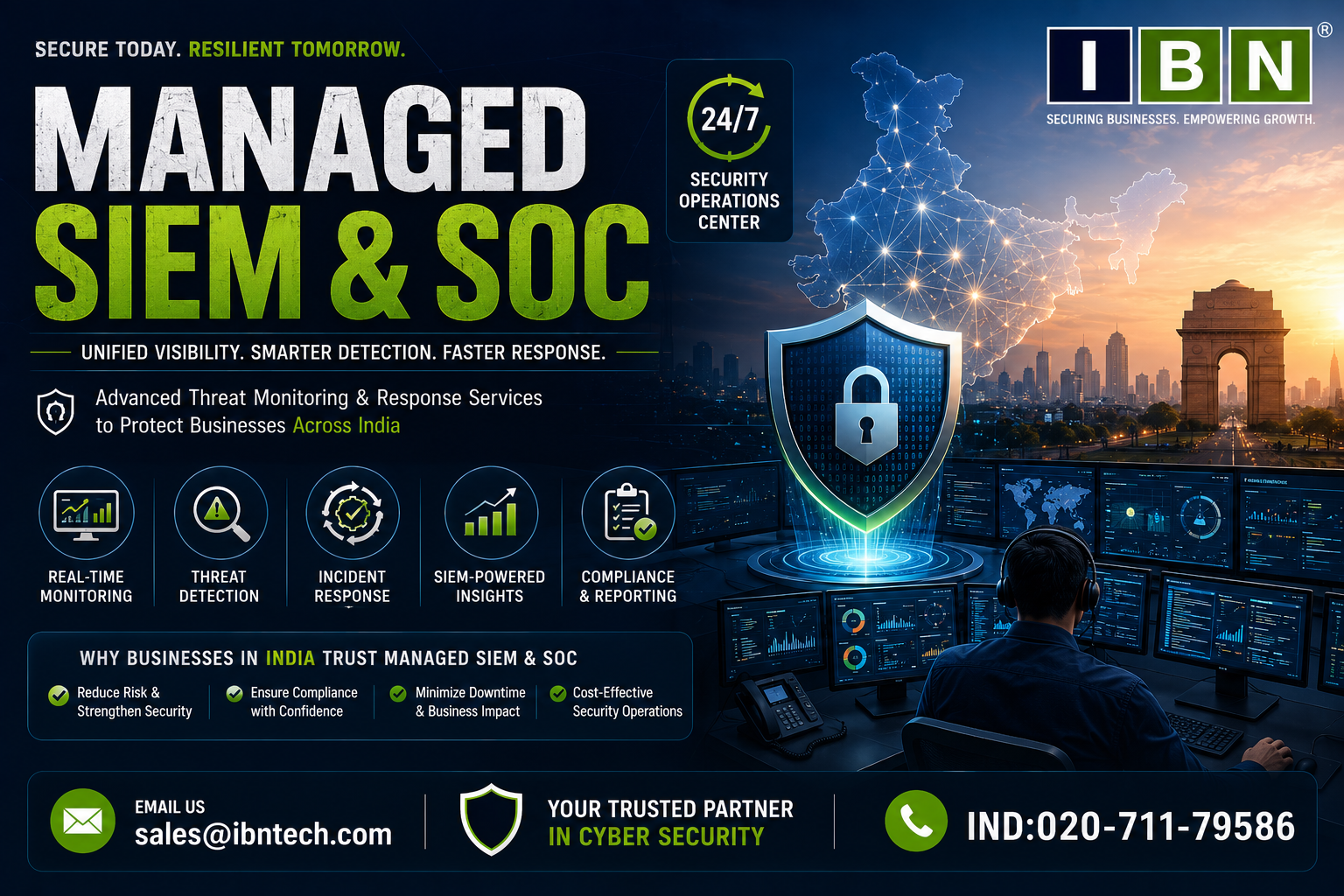

Strengthening IT Security With Managed SIEM and SOC Operations
IT organizations are managing increasingly complex technology environments that include cloud infrastructure, enterprise applications, remote access systems, and customer-facing platforms. As businesses continue their digital transformation journey, cybersecurity monitoring has become a critical operational requirement.
Companies searching for managed siem and soc solutions want to improve security visibility, monitor threats continuously, and strengthen incident response without creating additional pressure on internal teams.
Managed Security Information and Event Management (SIEM) combined with Security Operations Center (SOC) capabilities provides organizations with a structured approach to collect security data, analyze events, identify suspicious activity, and respond to potential risks.
Why Managed SIEM and SOC India Matters for IT Organizations
IT companies handle valuable business information, customer data, applications, and infrastructure that require constant protection.
Security teams must monitor:
- Cloud platforms
- Enterprise applications
- Network environments
- User access activities
- Endpoints and systems
- Business-critical applications
Without continuous monitoring, identifying important security events among thousands of daily activities can become challenging.
Managed SIEM and SOC India helps IT organizations achieve better visibility by combining security technologies with expert analysis and operational support.
This approach allows IT leaders to focus on business innovation while maintaining stronger cybersecurity processes.
The Growing Need for Enterprise Security Monitoring
Modern IT environments generate large amounts of security information from multiple sources. Every login attempt, network activity, application event, and system change can provide valuable security insights.
However, organizations often face challenges such as:
- Increasing security alerts
- Limited cybersecurity expertise
- Complex infrastructure management
- Delayed incident investigation
- Difficulty prioritizing risks
Enterprise Security Monitoring helps organizations analyze security events more effectively by bringing information together into a centralized monitoring framework.
Instead of reviewing isolated alerts, security teams can understand the complete context behind suspicious activities.
Why Traditional Security Approaches Are Not Enough
Many IT organizations invest in security tools such as firewalls, endpoint protection, and vulnerability management solutions. While these technologies provide important protection, they often work independently.
This creates challenges for internal teams that need to identify connections between different security events.
|
Traditional Security Approach |
Managed SIEM and SOC Approach |
|
Separate security tools |
Centralized security monitoring |
|
Manual alert review |
Continuous event analysis |
|
Limited threat visibility |
Improved security awareness |
|
Reactive incident handling |
Proactive risk identification |
A managed SIEM and SOC model improves cybersecurity effectiveness by combining technology, processes, and security expertise.
How Enterprise Security Monitoring Works
Enterprise Security Monitoring involves multiple activities designed to improve threat visibility and response.
Security Data Collection
Security information from applications, networks, endpoints, and systems is collected for centralized analysis.
Event Correlation
Security events are reviewed together to identify patterns that may indicate potential threats.
Threat Investigation
Security professionals analyze suspicious activities and determine whether additional action is required.
Incident Response Support
Organizations receive guidance to manage security incidents and improve response procedures.
This approach helps IT companies create a more proactive security environment.
Benefits of Managed SIEM and SOC for IT Companies
Organizations can achieve several advantages through managed security operations.
Key benefits include:
- Improved cybersecurity visibility
- Faster threat identification
- Reduced workload for internal IT teams
- Better incident response readiness
- Stronger security governance
- Improved operational resilience
- More informed security decisions
For IT companies delivering technology services, strong cybersecurity capabilities also support customer confidence.
IT Industry Use Case
An IT services organization manages cloud applications and infrastructure for multiple enterprise customers. As business operations expand, the security team receives alerts from different platforms and struggles to analyze every event efficiently.
The company adopts a managed SIEM and SOC approach to improve centralized monitoring. Security events from multiple systems are reviewed together, helping analysts identify suspicious activities and prioritize important risks.
The organization gains improved security visibility while allowing internal teams to focus on technology delivery and business growth.
Checklist for Evaluating Managed SIEM and SOC Services
IT leaders should review several areas before selecting a managed security solution.
|
Evaluation Area |
Key Consideration |
|
Monitoring capability |
Does the service provide continuous visibility? |
|
SIEM functionality |
Can security events be analyzed effectively? |
|
SOC expertise |
Are skilled analysts available? |
|
Incident response |
Are response processes defined? |
|
Reporting |
Are security insights clearly communicated? |
|
Scalability |
Can services support future growth? |
A structured evaluation helps organizations choose services aligned with cybersecurity goals.
Compliance and Security Governance
IT organizations often support customers with strong security expectations. Maintaining effective monitoring, documentation, and incident management processes supports better governance.
Managed SIEM and SOC services help businesses improve security visibility, strengthen operational processes, and maintain better awareness of cybersecurity activities.
Building Stronger IT Cybersecurity Operations
As technology environments continue expanding, IT organizations need security strategies that can adapt to changing threats.
Implementing managed siem and soc enables businesses to improve threat monitoring, strengthen incident response, and build stronger cyber resilience through Enterprise Security Monitoring.
A mature security operations approach helps IT companies protect critical systems while supporting continuous digital growth.


