

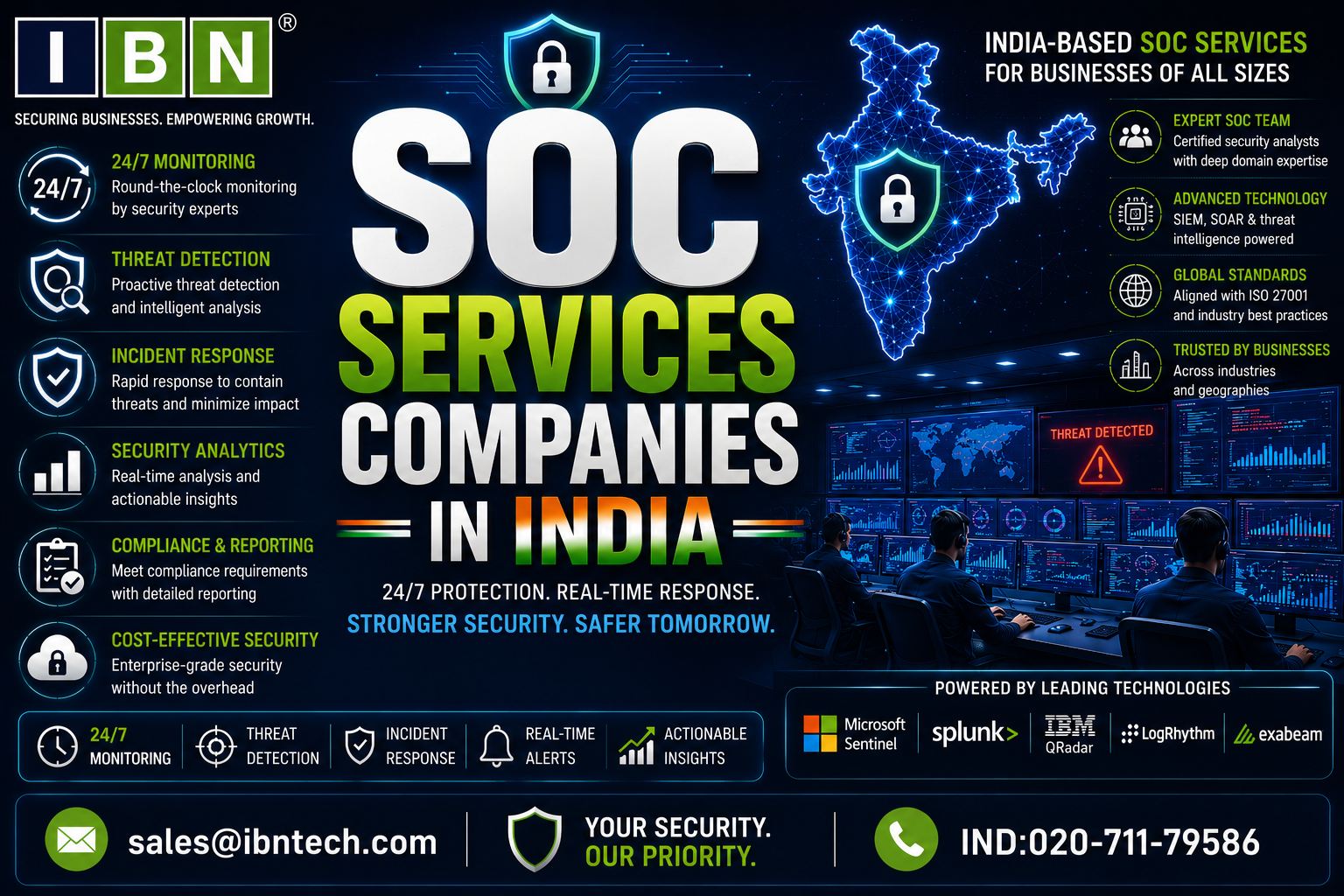

What IT Leaders Should Know About SOC Services Companies in India
Most IT leaders can describe what a firewall does. Far fewer can clearly explain what a security operations center actually monitors day to day, or why it matters more than the tools already sitting in their stack. That gap in understanding is exactly why so many IT companies delay evaluating SOC services companies in India, even while their exposure to threats keeps growing.
Why This Understanding Gap Matters in India's IT Sector
India's IT companies increasingly manage distributed teams, multi-cloud environments, and client systems that span borders. Each of these adds complexity that basic security tools were never designed to correlate on their own. Without a clear picture of what SOC services actually do, many IT leaders either overinvest in isolated tools or underinvest in the continuous monitoring their environment genuinely needs.
The Business Driver Behind Growing Interest in SOC Services
Client contracts increasingly require proof of active security monitoring, not just a list of tools in place. At the same time, ransomware and credential-based attacks have grown more targeted, often exploiting the exact blind spots that isolated monitoring tools miss. IT leaders are being asked to demonstrate security maturity in ways that a firewall dashboard alone cannot support.
Why Basic Tools Alone Fall Short
Many IT companies assume that antivirus software, a firewall, and occasional log reviews amount to adequate protection. In practice, this combination misses the patterns that matter most:
- Isolated alerts from different tools rarely get correlated into a single threat picture
- No one is reviewing logs continuously outside business hours
- Genuine incidents often look like noise until someone with the right expertise investigates
- Response, when it happens, is improvised rather than following a tested process
This is the exact gap that a dedicated SOC service is designed to close.
SOC Services India Explained: What's Actually Involved
At its core, a managed SOC combines continuous monitoring, correlated threat detection, and expert-led incident response into a single, ongoing operation. IBN Technologies' Managed SIEM & SOC service brings these elements together, watching for anomalies across servers, endpoints, and cloud environments, and investigating flagged activity in real time rather than during a scheduled review.
How Detection and Response Actually Work Together
The value of a SOC lies less in any single alert and more in how events are connected. A login from an unusual location, followed by an unexpected data transfer, might look harmless individually but suspicious together. Correlated analysis is what allows a SOC to catch this kind of multi-step activity that isolated tools typically miss.
What to Evaluate When Comparing Providers
- Confirm whether monitoring is genuinely continuous or limited to defined hours
- Ask how alerts are investigated before being escalated to your team
- Check integration support for your specific cloud and on-premise environment
- Review sample reporting to judge clarity and usefulness
SOC Capability Comparison
|
Capability |
Basic Security Tools |
Managed SOC Service |
|
Continuous monitoring |
Limited or absent |
Included as standard |
|
Event correlation |
Minimal, tool-siloed |
Cross-system analysis |
|
Incident investigation |
Manual, reactive |
Analyst-led |
|
Reporting depth |
Fragmented |
Consolidated, actionable |
Industry Use Case: Multi-Client IT Service Providers
An IT company managing infrastructure for multiple external clients carries a layered responsibility: a gap in its own monitoring can expose every client relying on it. Understanding what a SOC actually covers, rather than assuming existing tools are sufficient, is often the first step toward closing this exposure before it becomes a client-facing incident.
Benefits of Understanding SOC Services Before Choosing One
IT leaders who take time to understand what SOC services genuinely involve make better evaluation decisions. They ask sharper questions during vendor discussions, avoid providers offering alerting without real investigation, and set internal expectations correctly about what continuous monitoring should look like in practice.
Best Practices for IT Teams Getting Started
- Map your current monitoring coverage honestly before assuming it's sufficient
- Involve both technical and business stakeholders when reviewing SOC options
- Ask providers to explain their process in plain language, not just technical jargon
- Treat SOC evaluation as an ongoing relationship, not a one-time purchase
Compliance Context for IT Companies
As client contracts and industry expectations increasingly require documented security practices, IT companies benefit from being able to clearly explain what their monitoring setup covers. Working with established SOC services companies in India gives IT leaders a documented, continuously maintained answer to this question, rather than an assumption made under audit pressure.
For IT leaders still unclear on what a security operations center actually delivers day to day, closing that understanding gap is the first step toward choosing a monitoring partner that matches the real risks their environment faces.


