

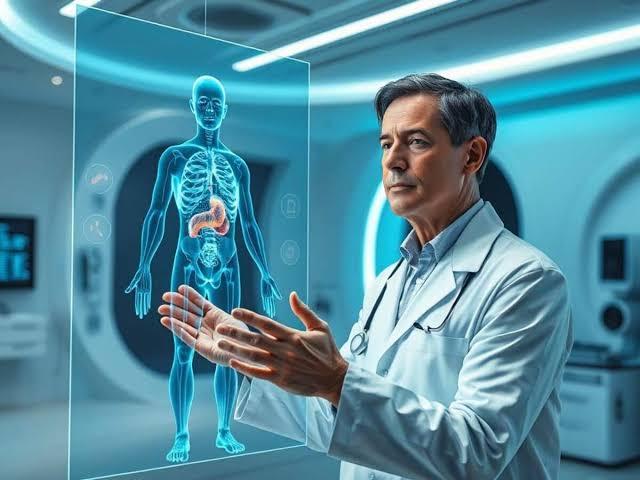

Artificial intelligence (AI) is reshaping healthcare by enabling faster, more consistent, and data-driven diagnostic processes. From interpreting medical images to assisting physicians with clinical decision-making, AI-powered diagnostic tools are becoming an integral part of modern healthcare systems. As healthcare providers manage increasing patient volumes and more complex diseases, AI is helping improve efficiency while supporting better clinical outcomes.
The adoption of AI in diagnostics is accelerating because of advancements in machine learning, medical imaging, cloud computing, and digital healthcare infrastructure. A detailed analysis of AI-powered diagnostic technologies highlights how healthcare organizations are integrating intelligent solutions into radiology, pathology, laboratory testing, and other diagnostic workflows to improve operational performance and diagnostic accuracy.
Healthcare institutions are also investing in connected digital ecosystems where AI can analyze vast amounts of patient information in real time. Rather than replacing clinicians, these technologies are designed to assist healthcare professionals by identifying patterns that may otherwise be difficult to detect, enabling more informed and timely clinical decisions.
Why AI Has Become Essential in Diagnostics
Traditional diagnostic procedures often require significant manual interpretation, particularly in imaging and pathology. AI algorithms can rapidly process thousands of medical images, identify abnormalities, and prioritize urgent cases for physician review. This reduces reporting time while helping clinicians focus on the most critical patients.
AI is particularly valuable in healthcare environments experiencing shortages of skilled specialists. Automated image analysis and decision-support systems help improve workflow efficiency while maintaining consistent diagnostic standards across healthcare facilities. Research also suggests that AI-assisted systems are increasingly being evaluated to enhance diagnostic workflows and clinical decision support across multiple medical specialties.
Major Applications Across Healthcare
Artificial intelligence is expanding beyond radiology into numerous diagnostic disciplines. Hospitals and diagnostic laboratories are deploying AI-enabled platforms that support clinicians throughout the patient journey.
- Medical imaging interpretation for CT, MRI, ultrasound, mammography, and X-ray.
- Pathology image analysis for faster tissue examination.
- Clinical laboratory automation and result interpretation.
- Cardiology diagnostics through ECG and cardiac imaging analysis.
- Neurology support for stroke and neurological disorder detection.
- Oncology screening to identify tumors at earlier stages.
These applications help improve diagnostic consistency while reducing repetitive manual tasks for healthcare professionals.
Machine Learning Is Driving Better Clinical Insights
Machine learning forms the foundation of many AI diagnostic solutions. By training algorithms on large datasets of medical images and patient records, these systems continuously improve their ability to recognize disease patterns. Advanced deep learning techniques can identify subtle abnormalities that may be difficult to observe during manual interpretation, providing clinicians with additional confidence during diagnosis.
As AI models become more sophisticated, they are increasingly being integrated into routine clinical workflows rather than functioning as standalone software solutions.
Challenges That Still Need Attention
Despite its growing adoption, AI in diagnostics continues to face several important challenges. Healthcare organizations must address data privacy, cybersecurity, regulatory compliance, and algorithm transparency before large-scale implementation. High-quality datasets are also essential for training reliable AI models, making data governance an ongoing priority.
Another critical consideration is physician trust. Successful implementation depends on developing AI systems that provide explainable recommendations rather than functioning as "black box" solutions. Human oversight remains essential for ensuring patient safety and maintaining clinical accountability.
The Growing Role of Digital Healthcare Infrastructure
Healthcare digitalization is creating the foundation necessary for AI adoption. Electronic health records, cloud computing, connected diagnostic devices, and interoperable healthcare systems allow AI platforms to access the structured information required for effective analysis.
Healthcare providers are increasingly viewing AI as part of a broader digital transformation strategy that combines intelligent software, connected medical devices, and data analytics to improve patient care and operational efficiency. According to research published by MarkNtel Advisors, expanding digital infrastructure, increasing healthcare digitalization, and growing demand for AI-assisted imaging solutions continue to support adoption across global healthcare systems.
Looking Ahead
The future of AI in diagnostics will likely focus on improving collaboration between intelligent software and healthcare professionals. Emerging technologies such as generative AI, predictive analytics, multimodal imaging analysis, and real-time clinical decision support are expected to enhance diagnostic capabilities across hospitals, imaging centers, and laboratories.
Rather than replacing medical expertise, AI is becoming an important clinical assistant that helps healthcare providers analyze complex information more efficiently. As technology continues to mature alongside regulatory frameworks and healthcare digitalization, AI-assisted diagnostics are expected to become an increasingly valuable component of modern patient care.


