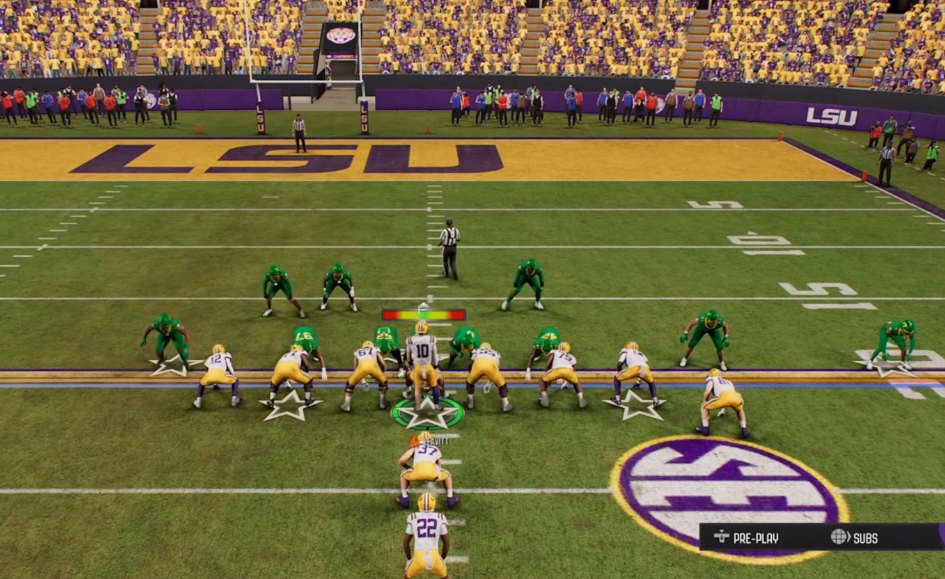
In EA Sports College Football 27, playing on the road is not just a visual experience—it is a gameplay challenge. The Stadium Pulse system makes certain venues feel genuinely hostile, affecting your audibles, shaking your screen, and even distorting route visuals when the crowd gets loud. Some stadiums are manageable. Others feel like survival missions.
Below is the official breakdown of the hardest stadium environments in the game, where home-field advantage can completely change the outcome of a match.
The Most Brutal Stadium in College Football 27
At the very top sits LSU’s legendary home field, where chaos is basically part of the gameplay design.
Tiger Stadium is ranked No. 1 overall for one simple reason: no other stadium combines noise, momentum swings, and defensive pressure quite like it. In College Football 27, this is the place where even experienced players struggle to stay consistent on offense. Hot routes become unreliable, and timing-based passing gets noticeably harder.
If you can win here, you can win anywhere.
Top 10 Elite “Survival” Stadiums
These are the environments that consistently punish visiting teams. Most of them belong to SEC and Big Ten powerhouses, where crowd intensity is baked into the game’s difficulty design.
Tiger Stadium – LSU
Ohio Stadium – Ohio State
Beaver Stadium – Penn State
Sanford Stadium – Georgia
Bryant-Denny Stadium – Alabama
Autzen Stadium – Oregon
Ben Hill Griffin Stadium – Florida
Neyland Stadium – Tennessee
Memorial Stadium – Clemson
Kyle Field – Texas A&M
These stadiums share one common trait: momentum snowballs fast. A single turnover can turn into a full defensive takeover once the crowd meter fills up.
The Rest of the Top 25 (11–25)
Outside the top 10, the difficulty stays high but becomes more situational. Some stadiums are loud in key rivalry games, while others rely on altitude, weather effects, or unique crowd animations.
Gaylord Family Oklahoma Memorial Stadium – Oklahoma
Michigan Stadium – Michigan
Darrell K Royal–Texas Memorial Stadium – Texas
Jordan–Hare Stadium – Auburn
Husky Stadium – Washington
Williams–Brice Stadium – South Carolina
Memorial Stadium – Indiana
Rice–Eccles Stadium – Utah
Kinnick Stadium – Iowa
Notre Dame Stadium – Notre Dame
Doak S. Campbell Stadium – Florida State
Lane Stadium – Virginia Tech
Carter–Finley Stadium – NC State
LaVell Edwards Stadium – BYU
Davis Wade Stadium – Mississippi State
This group is where matchups start to feel unpredictable. Some venues, like Iowa or Washington, introduce environmental pressure beyond just crowd noise, while others spike in difficulty only during high-stakes rivalry games.
What Makes These Stadiums So Hard to Survive
The ranking system in College Football 27 is not just cosmetic. Stadium difficulty is driven by multiple in-game mechanics:
The Stadium Pulse effect disrupts player control by shaking the screen during critical moments, making it harder to read defensive coverages.
Audibles become unreliable in louder environments, especially when playing at night or during rivalry games.
Route visuals can distort slightly under extreme crowd pressure, leading to timing mistakes on passing plays.
Momentum swings are more aggressive in top-ranked stadiums, meaning one mistake can quickly turn into a multi-drive disadvantage.
Key Shifts in the Rankings
LSU remains the undisputed king of home-field advantage, holding the No. 1 spot again this year without serious competition.
Tennessee’s Neyland Stadium made the biggest leap into the elite tier, climbing into the top 10 thanks to its upgraded crowd intensity system.
Meanwhile, Clemson’s Memorial Stadium slipped slightly, showing how even legendary venues can shift as EA tunes atmosphere balance year to year.
Texas A&M’s Kyle Field also stabilized in the top tier after fluctuating in previous rankings, reinforcing its reputation as one of the loudest environments in the game.
Surviving away games in College Football 27 is about more than skill—it is about composure under pressure. The top stadiums amplify mistakes, punish hesitation, and reward home momentum in ways that feel almost scripted when the crowd gets going.
If you want to build a true championship-caliber dynasty, you cannot just win at home. You have to learn how to survive in places like Baton Rouge, Columbus, and Tuscaloosa when everything in the game is working against you.