


How to Become a Mental Health Counselor: Education, Salary, Career Path, and Job Opportunities
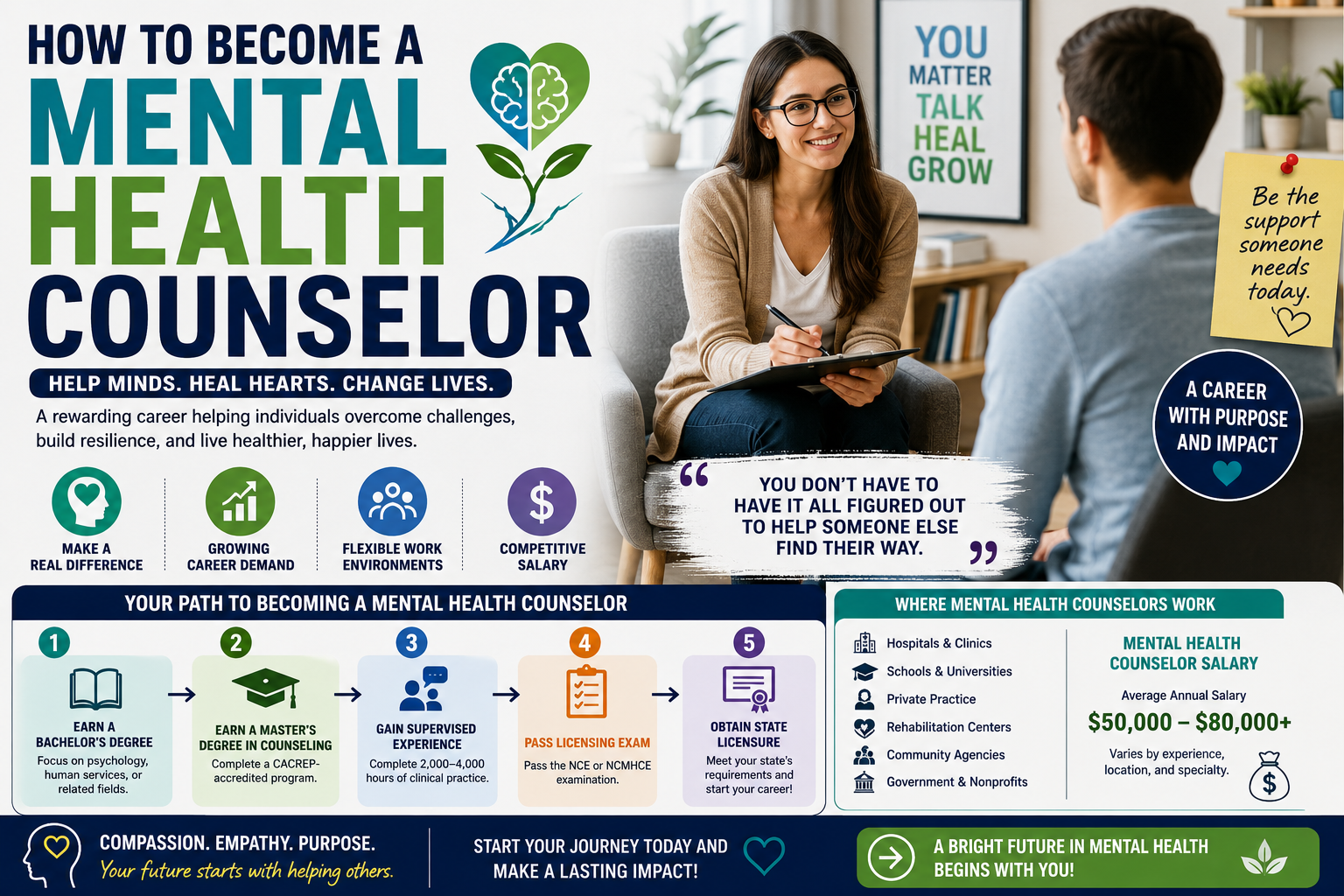
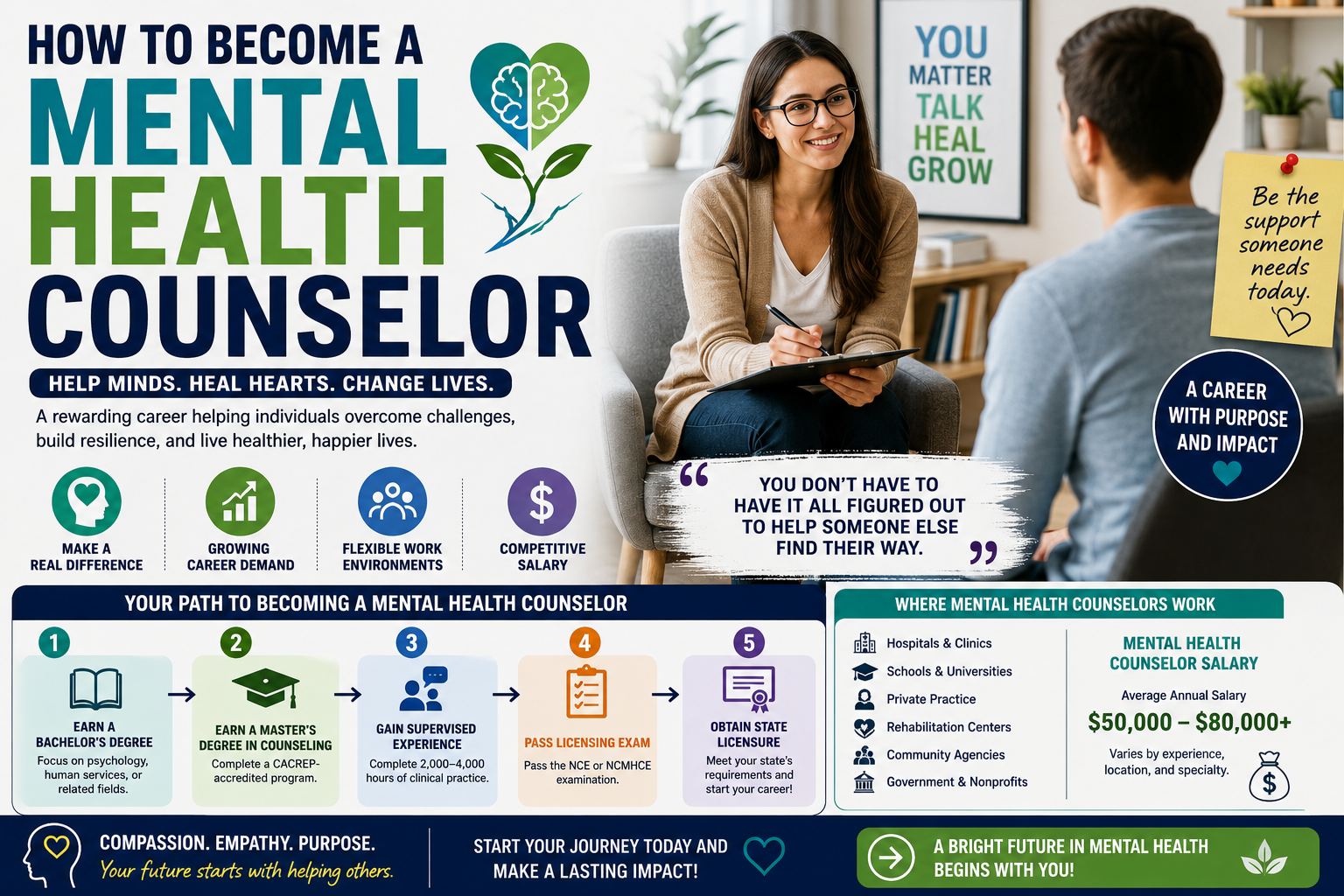
Mental health awareness has become increasingly important, creating a growing demand for qualified professionals who can help individuals manage emotional, psychological, and behavioral challenges. If you're passionate about helping others and interested in a rewarding healthcare career, becoming a mental health counselor may be an excellent choice.
In this guide, you'll learn everything you need to know about becoming a mental health counselor, including education requirements, licensing, career opportunities, salaries, and frequently asked questions.
https://www.youtube.com/watch?v=tD2ComS6DJo
What Is a Mental Health Counselor?
Many people ask, "What is a mental health counselor?"
A mental health counselor is a trained professional who helps people cope with mental health conditions, emotional difficulties, stress, trauma, anxiety, depression, and relationship problems. They provide therapy, assessments, treatment planning, and emotional support to improve clients' overall well-being.
These professionals work in various settings, including:
- Hospitals
- Mental health clinics
- Schools and universities
- Private practices
- Rehabilitation centers
- Government agencies
Why Choose a Career as a Mental Health Counselor?
Working as a mental health counselor offers many benefits:
- Strong job growth
- Meaningful and rewarding work
- Flexible work settings
- Opportunities for private practice
- Competitive income
- Ability to positively impact lives
Demand for mental health services continues to rise worldwide, making counseling one of the fastest-growing healthcare professions.
Step 1: Earn a Bachelor's Degree
The first step toward becoming a mental health counselor is obtaining a bachelor's degree.
Popular undergraduate majors include:
- Psychology
- Sociology
- Human Services
- Social Work
- Behavioral Science
Although no specific bachelor's degree is required, studying psychology provides a strong foundation for future counseling education.
Step 2: Obtain a Master's Degree
A master's degree is required for those wondering how to become a mental health counselor.
Common graduate programs include:
- Clinical Mental Health Counseling
- Counseling Psychology
- Marriage and Family Therapy
- Rehabilitation Counseling
These programs generally take two to three years to complete and cover subjects such as:
- Counseling theories
- Human development
- Psychopathology
- Ethics and professional standards
- Group counseling
- Crisis intervention
Step 3: Complete Supervised Clinical Experience
Before becoming a licensed mental health counselor, candidates must complete supervised counseling hours.
Most states require:
- 2,000–4,000 hours of supervised experience
- Work under licensed professionals
- Hands-on counseling practice
Clinical experience helps students develop practical skills needed to treat clients effectively.
Step 4: Pass Licensing Exams
For individuals researching how to become a licensed mental health counselor, passing a licensing examination is essential.
Common exams include:
National Counselor Examination (NCE)
or
National Clinical Mental Health Counseling Examination (NCMHCE)
These exams evaluate knowledge in:
- Counseling techniques
- Ethics
- Diagnosis
- Treatment planning
Passing the required exam allows you to become a licensed mental health counselor in your state.
Step 5: Apply for State Licensure
Licensure requirements vary depending on location.
A licensed mental health counselor must typically provide:
- Graduate transcripts
- Supervised experience documentation
- Examination scores
- Background checks
- Licensing fees
Once approved, counselors can legally practice independently.
Skills Needed to Become a Successful Mental Health Counselor
Successful counselors possess several important skills:
Communication Skills
Effective communication builds trust with clients.
Empathy
Understanding emotions is essential in counseling.
Active Listening
Clients need to feel heard and understood.
Problem-Solving
Counselors help individuals develop healthy coping strategies.
Patience
Progress often takes time and requires compassion.
Specializations for Mental Health Counselors
A mental health counselor can specialize in various areas, including:
Addiction Counseling
Helping individuals overcome substance abuse disorders.
Marriage and Family Counseling
Addressing relationship and family issues.
Trauma Counseling
Supporting survivors of abuse, violence, or disasters.
Child and Adolescent Counseling
Helping children and teenagers manage emotional challenges.
Grief Counseling
Assisting individuals dealing with loss and bereavement.
Work Settings for Mental Health Counselor Jobs
The demand for mental health counselor jobs continues to increase.
Counselors may work in:
- Community mental health centers
- Private practices
- Schools
- Hospitals
- Veterans' facilities
- Substance abuse treatment centers
- Correctional institutions
Remote counseling opportunities are also expanding rapidly through telehealth services.
Job Outlook for Mental Health Counselor Jobs
According to labor market projections, mental health counselor jobs are expected to grow significantly over the next decade.
Factors driving demand include:
- Increased awareness of mental health
- Greater acceptance of therapy
- Rising rates of anxiety and depression
- Expansion of telehealth counseling
As society prioritizes emotional well-being, the need for skilled counselors continues to rise.
Mental Health Counselor Salary
One of the most common questions involves mental health counselor salary.
Income varies depending on:
- Education level
- State of practice
- Experience
- Employer
- Specialty
Average annual mental health counselor salary ranges include:
| Experience Level | Average Salary |
|---|---|
| Entry-Level | $45,000–$55,000 |
| Mid-Career | $60,000–$75,000 |
| Experienced | $80,000–$100,000+ |
| Private Practice Owners | $100,000+ |
Specialized counselors often earn higher salaries.
Factors Affecting Mental Health Counselor Salary
Several factors influence mental health counselor salary, including:
Geographic Location
Urban areas generally offer higher compensation.
Years of Experience
Experienced counselors command better pay.
Education
Advanced certifications may increase earning potential.
Work Setting
Private practice often provides greater income opportunities.
How Much Do Mental Health Counselors Make?
Many people wonder, how much do mental health counselors make.
Most professionals earn between $50,000 and $80,000 annually, though salaries vary by location and specialization.
Private practice counselors may earn considerably more depending on client volume and services offered.
Finding a Mental Health Counselor Near Me
People frequently search online for a mental health counselor near me when seeking emotional support.
When choosing a counselor, consider:
- Credentials
- Experience
- Areas of specialization
- Insurance coverage
- Online reviews
- Availability
Directories and telehealth platforms make it easier than ever to find a mental health counselor near me.
Benefits of Becoming a Licensed Mental Health Counselor
Becoming a licensed mental health counselor offers several advantages:
- Independent practice opportunities
- Higher earning potential
- Increased credibility
- Better job prospects
- Greater professional flexibility
Licensure demonstrates expertise and commitment to ethical standards.
Continuing Education Requirements
A licensed mental health counselor must maintain ongoing education throughout their career.
Continuing education helps professionals stay updated on:
- New therapies
- Ethics regulations
- Emerging mental health conditions
- Evidence-based practices
Most states require continuing education credits for license renewal.
Challenges of Being a Mental Health Counselor
While rewarding, counseling also presents challenges:
- Emotional exhaustion
- High caseloads
- Burnout risks
- Difficult client situations
- Administrative responsibilities
Maintaining self-care is essential for long-term success.
Future of the Counseling Profession
The future looks bright for mental health counselor jobs.
Growing awareness about emotional health and increasing demand for therapy services ensure continued career opportunities.
Technology, telehealth, and online counseling are also transforming the profession, allowing counselors to serve more clients than ever before.
Conclusion
If you're wondering how to become a mental health counselor, the journey begins with education, supervised clinical experience, licensing, and ongoing professional development.
A career as a mental health counselor offers the chance to make a meaningful difference while enjoying strong job prospects and competitive earnings. Whether you're interested in private practice, hospitals, schools, or community agencies, this profession provides numerous opportunities for growth and fulfillment.
Frequently Asked Questions (FAQ)
1. How to become a mental health counselor?
To become a mental health counselor, you need a bachelor's degree, a master's degree in counseling, supervised clinical experience, and state licensure.
2. How to become a licensed mental health counselor?
To become a licensed mental health counselor, complete a master's degree, gain supervised experience, pass licensing exams, and meet state requirements.
3. How much do mental health counselors make?
Most counselors earn between $50,000 and $80,000 annually, while experienced professionals and private practitioners may earn over $100,000.
4. What is a mental health counselor?
A mental health counselor is a trained professional who helps individuals manage emotional, psychological, and behavioral challenges through therapy and support.
5. How much does a mental health counselor make?
Average mental health counselor salary ranges from $45,000 to over $100,000 annually, depending on experience and specialization.
6. What degree is needed to become a counselor?
A master's degree in Clinical Mental Health Counseling or a related field is generally required.
7. Are mental health counselor jobs in demand?
Yes, mental health counselor jobs are projected to grow significantly due to increasing awareness of mental health issues.
8. Can a licensed mental health counselor open a private practice?
Yes, many experienced professionals establish independent practices after obtaining licensure.
9. How long does it take to become a counselor?
It usually takes six to eight years, including undergraduate and graduate education plus supervised experience.
10. How can I find a mental health counselor near me?
You can search online directories, healthcare providers, telehealth platforms, or insurance networks to find a mental health counselor near me.


