

Mental Health RCM Billing in the USA: Strategies to Improve Reimbursements and Reduce Claim Denials

Introduction
The demand for mental health services in the USA has grown significantly over the past few years. From therapy and counseling to psychiatric evaluations and medication management, behavioral health providers are serving more patients than ever before. While this growth creates opportunities for practices, it also brings administrative challenges—especially when it comes to billing and reimbursement.
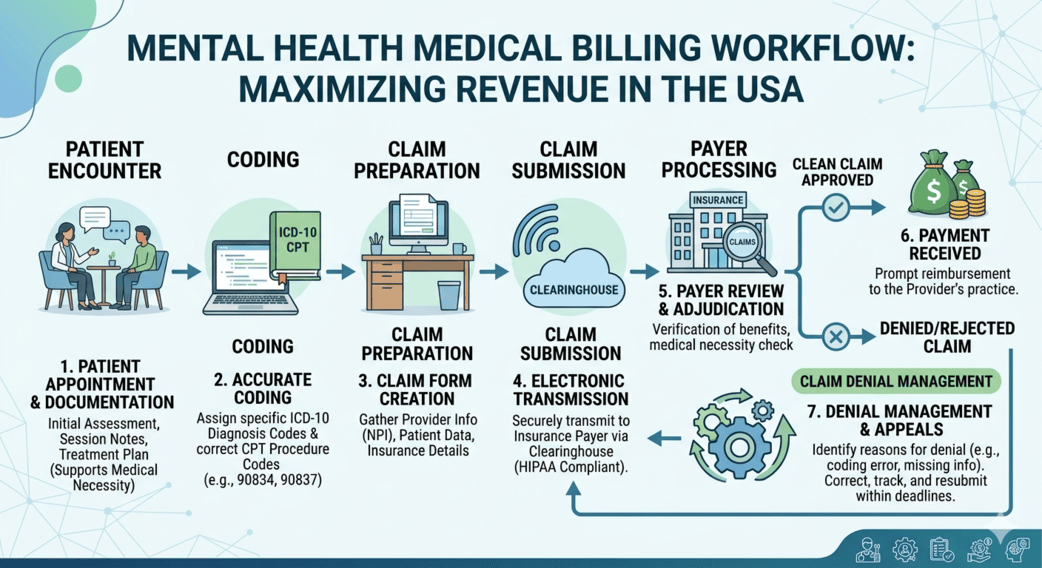
Mental health RCM billing plays a critical role in maintaining the financial stability of behavioral health organizations. Revenue cycle management involves every financial process from patient registration and insurance verification to claim submission, payment posting, and denial management. When these processes are handled efficiently, providers can focus more on patient care and less on administrative burdens.
However, mental health billing requires specialized knowledge due to evolving payer regulations, documentation requirements, telehealth policies, and coding complexities. Understanding how to optimize billing workflows can significantly improve revenue collection while reducing costly errors.
Understanding Mental Health RCM Billing
Mental health RCM billing refers to the complete management of the financial lifecycle of behavioral health services. It encompasses all administrative and financial activities required to ensure providers receive timely and accurate reimbursement for services rendered.
The revenue cycle typically includes:
- Patient registration
- Insurance eligibility verification
- Authorization management
- Charge capture
- Medical coding
- Claim submission
- Payment posting
- Denial management
- Patient collections
- Financial reporting
Unlike many other medical specialties, behavioral health billing often involves unique payer policies, session-based reimbursements, and varying coverage limitations that require careful oversight.
Why Mental Health Billing Is More Complex Than Traditional Medical Billing
Mental health providers frequently encounter billing challenges that differ from other healthcare specialties.
Authorization Requirements
Many insurance companies require prior authorization for behavioral health services. Missing or expired authorizations can result in claim denials and delayed payments.
Session-Based Billing
Mental health services are commonly billed based on session duration. Accurate documentation of treatment times is essential to support proper code selection and reimbursement.
Telehealth Compliance
Virtual therapy sessions have become a standard component of behavioral healthcare. Providers must stay updated on payer-specific telehealth billing requirements and modifiers.
Frequent Policy Changes
Insurance regulations related to mental health coverage continue to evolve. Practices must remain compliant with changing payer rules to avoid reimbursement issues.
Because of these complexities, many organizations invest in specialized mental health billing services to streamline operations and improve financial outcomes.
Key Components of Successful Mental Health Medical Billing
Accurate Insurance Verification
Insurance verification is the foundation of effective mental health medical billing. Verifying benefits before appointments helps identify:
- Coverage limitations
- Copayment responsibilities
- Deductible balances
- Authorization requirements
- Session limits
Early verification minimizes unexpected denials and improves patient satisfaction.
Proper Documentation
Clinical documentation directly impacts reimbursement. Providers should ensure records clearly support:
- Medical necessity
- Treatment plans
- Progress notes
- Session duration
- Diagnosis accuracy
Incomplete documentation often leads to denied or delayed claims.
Correct Coding Practices
Coding errors remain one of the most common causes of claim rejections. Behavioral health providers must accurately assign diagnosis and procedure codes that reflect services provided.
Proper coding helps:
- Reduce claim denials
- Improve reimbursement accuracy
- Maintain regulatory compliance
- Support audit readiness
This is where professional medical coding services can add substantial value by ensuring claims are coded correctly before submission.
Common Challenges in Billing for Mental Health Services
Many behavioral health providers face recurring obstacles that affect revenue collection.
Claim Denials
Denials frequently occur because of:
- Missing authorizations
- Coding inaccuracies
- Eligibility issues
- Documentation deficiencies
- Modifier errors
Without a structured denial management process, practices can lose significant revenue.
Delayed Payments
Even approved claims can experience payment delays due to payer processing backlogs or claim errors that require corrections.
Staff Shortages
Many practices struggle to maintain in-house billing teams with sufficient expertise in behavioral health billing regulations.
Compliance Risks
Failure to comply with payer requirements and federal regulations can result in audits, penalties, and reimbursement recoupments.
These challenges demonstrate why billing services for mental health providers have become increasingly important in today's healthcare environment.
Benefits of Specialized Mental Health Billing Services
Partnering with experienced mental health billing services can provide several advantages for behavioral health practices.
Improved Claim Acceptance Rates
Specialized billing professionals understand behavioral health payer requirements and can submit cleaner claims from the start.
Faster Reimbursements
Efficient claim processing reduces payment delays and improves cash flow.
Reduced Administrative Burden
Providers can spend more time treating patients while billing specialists manage financial operations.
Better Revenue Visibility
Advanced reporting helps practices monitor performance indicators and identify revenue opportunities.
Stronger Compliance
Dedicated billing teams stay current with payer updates, coding changes, and regulatory requirements.
For many organizations, outsourcing mental health billing allows them to scale operations without increasing administrative overhead.
The Role of Mental Health Billing Solutions in Practice Growth
Technology has transformed the way behavioral health organizations manage revenue cycles.
Modern mental health billing solutions provide automation and analytics that improve operational efficiency.
Key features often include:
- Electronic claim submission
- Eligibility verification tools
- Automated appointment tracking
- Denial management workflows
- Payment reconciliation
- Revenue reporting dashboards
These tools help practices identify bottlenecks and improve overall financial performance.
As behavioral health demand continues to rise, technology-driven billing solutions are becoming essential for sustainable growth.
How Mental Health Billing Companies Support Providers
Many practices choose to work with specialized mental health billing companies rather than managing billing internally.
Experienced billing partners provide:
Dedicated Behavioral Health Expertise
Mental health billing requires knowledge that differs significantly from general medical billing.
Denial Resolution
Professional teams actively monitor rejected claims and implement corrective actions to recover revenue.
Regulatory Compliance
Billing experts stay informed about payer updates and regulatory requirements.
Revenue Optimization
Continuous performance monitoring helps identify opportunities to improve collections and reduce revenue leakage.
Leading mental health billing companies often serve as strategic partners that contribute directly to financial success.
Revenue Cycle Management Services for Behavioral Health Practices
Comprehensive revenue cycle management services go beyond basic claim submission.
These services often include:
Patient Financial Management
Accurate patient billing and collection processes improve transparency and reduce outstanding balances.
Claims Management
Claims are reviewed, submitted, tracked, and corrected as needed throughout the reimbursement process.
Denial Prevention
Proactive audits identify recurring issues before they impact revenue.
Financial Reporting
Detailed reports help leadership evaluate practice performance and make informed business decisions.
A well-managed revenue cycle creates predictable cash flow and supports long-term organizational growth.
The Importance of Medical Billing and Coding Services
Behavioral health reimbursement depends heavily on accurate billing and coding.
Professional medical billing and coding services help practices:
- Improve claim accuracy
- Reduce coding-related denials
- Ensure compliance with payer guidelines
- Increase reimbursement rates
- Strengthen audit preparedness
When billing and coding processes work together effectively, providers experience fewer payment disruptions and greater financial stability.
Why Credentialing Services Matter for Mental Health Providers
Credentialing is another critical factor that directly affects reimbursement.
Before providers can bill many insurance plans, they must complete credentialing and enrollment requirements.
Professional credentialing services help practices:
- Complete payer enrollment applications
- Maintain provider credentials
- Monitor renewal deadlines
- Avoid network participation delays
- Prevent reimbursement interruptions
Effective credentialing ensures providers remain eligible for insurance reimbursement and can continue serving patients without disruption.
Best Practices for Optimizing Mental Health Billing
Behavioral health organizations can improve financial performance by following several proven strategies.
Verify Benefits Before Every Visit
Insurance coverage can change frequently. Verifying benefits reduces eligibility-related denials.
Monitor Key Performance Indicators
Track metrics such as:
- Days in accounts receivable
- First-pass claim acceptance rate
- Denial percentage
- Collection rate
Invest in Staff Training
Ongoing education helps teams stay current with billing and coding requirements.
Conduct Regular Audits
Routine audits identify compliance risks and revenue leakage.
Leverage Specialized Expertise
Working with experienced professionals can improve operational efficiency and reimbursement outcomes.
Conclusion
As behavioral healthcare continues to expand across the USA, effective mental health RCM billing has become essential for financial success. From insurance verification and coding accuracy to denial management and compliance, every stage of the revenue cycle influences reimbursement outcomes.
Behavioral health providers that implement strong mental health billing processes can reduce administrative burdens, improve cash flow, and focus more attention on delivering quality patient care.
Organizations seeking long-term revenue optimization often benefit from partnering with experienced professionals who offer medical billing services, medical coding services, medical billing and coding services, revenue cycle management services, and credentialing services tailored to behavioral health practices. Companies such as 247 Medical Billing Services support healthcare organizations by helping streamline billing operations while maintaining compliance and maximizing reimbursement opportunities.
Frequently Asked Questions
1. What is mental health RCM billing?
Mental health RCM billing refers to managing the entire revenue cycle for behavioral health services, including insurance verification, coding, claim submission, payment posting, denial management, and collections.
2. Why is mental health billing different from traditional medical billing?
Mental health billing often involves session-based coding, authorization requirements, telehealth regulations, and unique payer policies that require specialized expertise.
3. How can mental health billing services improve reimbursements?
Mental health billing services help reduce claim errors, improve coding accuracy, manage denials effectively, and ensure compliance with payer requirements, resulting in higher reimbursement rates.
4. What are mental health billing solutions?
Mental health billing solutions are software platforms and workflow tools designed to automate billing processes, track claims, manage denials, and improve revenue cycle efficiency.
5. Why are credentialing services important for behavioral health providers?
Credentialing services help providers enroll with insurance networks, maintain active credentials, and avoid reimbursement disruptions caused by expired or incomplete provider records.
6. Should mental health practices outsource billing?
Many practices choose to outsource billing because specialized experts can improve claim acceptance rates, reduce administrative workload, strengthen compliance, and increase overall revenue performance.


