Babafig

what are mental health safety tips

7 min de lecture

What Are Mental Health Safety Tips? A Complete Guide to Protecting Your Mental Well-Being

Mental health is just as important as physical health. In today’s fast-paced world, stress, anxiety, burnout, and emotional challenges have become increasingly common. Understanding what are mental health safety tips can help individuals build resilience, maintain emotional balance, and improve their overall quality of life.

Whether you're dealing with everyday stress or looking for ways to strengthen your emotional well-being, following proven mental health tips can make a significant difference. This guide explores practical strategies, evidence-based recommendations, and self-care practices that support long-term mental wellness.

Why Mental Health Is Important

Many people focus on physical fitness but overlook the importance of emotional and psychological health. The truth is that mental health is important because it affects how we think, feel, behave, and interact with others.

Good mental health helps you:

  • Cope with stress effectively
  • Build healthy relationships
  • Make sound decisions
  • Stay productive
  • Enjoy life more fully
  • Improve physical health outcomes

Poor mental health can impact every area of life, including work performance, relationships, sleep quality, and overall happiness.

What Are Mental Health Safety Tips?

What are mental health safety tips refers to practices and habits that help protect your emotional well-being and reduce the risk of mental health challenges.

These safety tips focus on:

  • Stress management
  • Emotional resilience
  • Healthy lifestyle habits
  • Self-awareness
  • Social support
  • Professional help when needed

Let's explore the most effective strategies.


1. Prioritize Self-Care Every Day

One of the most valuable self care tips for mental health is making self-care a daily priority.

Self-care doesn't mean being selfish. It means taking care of your emotional, physical, and mental needs.

Examples include:

  • Getting enough sleep
  • Taking breaks during work
  • Eating nutritious foods
  • Practicing relaxation techniques
  • Engaging in hobbies you enjoy

Learning how to self care properly helps reduce stress and improve emotional resilience.


2. Get Regular Physical Activity

Exercise is one of the most effective ways to improve mental health naturally.

Research consistently shows that physical activity can:

  • Reduce anxiety
  • Improve mood
  • Lower depression symptoms
  • Boost self-esteem
  • Improve sleep quality

Walking, cycling, yoga, swimming, and strength training are all excellent options.

Among the most recommended mental health tips, regular exercise remains one of the most powerful.


3. Build Strong Social Connections

Humans are social beings.

Maintaining healthy relationships helps provide emotional support during difficult times.

Ways to strengthen connections:

  • Call family members regularly
  • Meet friends in person
  • Join community groups
  • Participate in volunteer activities
  • Engage in meaningful conversations

Strong relationships are essential for mental health and wellbeing.


4. Learn Healthy Stress Management Techniques

Stress is unavoidable, but managing it effectively is crucial.

Helpful stress-management strategies include:

Deep Breathing

Slow, controlled breathing helps calm the nervous system.

Meditation

Just 10 minutes daily can reduce stress and improve focus.

Mindfulness

Mindfulness encourages living in the present moment rather than worrying about the future.

Journaling

Writing down thoughts and feelings can improve emotional clarity.

These proven self care techniques can significantly improve mental wellness.


5. Get Quality Sleep

Sleep and mental health are closely connected.

Poor sleep can increase:

  • Anxiety
  • Irritability
  • Depression symptoms
  • Difficulty concentrating

Adults should aim for 7–9 hours of quality sleep each night.

Sleep improvement tips:

  • Maintain a consistent bedtime
  • Limit screen time before bed
  • Avoid caffeine late in the day
  • Create a relaxing sleep environment

Sleep is one of the most overlooked tips for mental health.


6. Practice Positive Self-Talk

Many people are their own harshest critics.

Negative self-talk can increase stress and lower self-esteem.

Instead:

  • Challenge negative thoughts
  • Focus on personal strengths
  • Celebrate small achievements
  • Practice self-compassion

A valuable tip for mental health learn to distinguish between constructive self-reflection and destructive self-criticism.

Positive thinking doesn't mean ignoring problems—it means approaching challenges with balance and optimism.


7. Limit Exposure to Negative News and Social Media

Constant exposure to negative information can increase anxiety and emotional distress.

To protect your mental health:

  • Set limits on news consumption
  • Take social media breaks
  • Follow positive and educational content
  • Avoid doom-scrolling

Being informed is important, but overexposure can negatively affect mental well-being.


8. Maintain a Healthy Diet

Nutrition plays a major role in brain function and emotional health.

Foods that support mental wellness include:

  • Fruits
  • Vegetables
  • Whole grains
  • Lean proteins
  • Healthy fats
  • Nuts and seeds

Poor dietary habits can contribute to fatigue, mood swings, and increased stress.

A healthy diet is a foundational part of how to improve mental health evidence-based tips.


9. Set Healthy Boundaries

Boundaries help protect your emotional energy.

Healthy boundaries may include:

  • Saying no when necessary
  • Limiting toxic relationships
  • Taking personal time
  • Avoiding overcommitment

Many people experience burnout because they struggle to establish limits.

Learning boundary-setting skills is one of the most effective mental health tips for long-term well-being.


10. Seek Professional Support When Needed

There's no shame in asking for help.

Mental health professionals can provide:

  • Counseling
  • Therapy
  • Coping strategies
  • Mental health assessments
  • Emotional support

If you're experiencing persistent symptoms of anxiety, depression, or emotional distress, professional guidance can be life-changing.

One of the most important top 10 tips to maintain your mental health is knowing when to seek expert help.


11. Develop Healthy Daily Routines

Routines create stability and predictability.

Benefits include:

  • Reduced stress
  • Better time management
  • Improved productivity
  • Enhanced emotional control

A balanced routine might include:

  • Morning exercise
  • Healthy meals
  • Scheduled breaks
  • Family time
  • Relaxation activities

Daily structure supports overall mental health and wellbeing.


12. Practice Gratitude

Gratitude shifts attention toward positive experiences.

Research shows gratitude can:

  • Improve happiness
  • Reduce depression symptoms
  • Strengthen relationships
  • Enhance resilience

Simple gratitude practices include:

  • Keeping a gratitude journal
  • Reflecting on positive moments
  • Thanking others regularly

This simple habit is among the easiest self care tips for mental health to implement.


13. Learn Emotional Awareness

Understanding emotions helps prevent them from becoming overwhelming.

Ask yourself:

  • What am I feeling?
  • Why do I feel this way?
  • What triggered this emotion?

Emotional awareness improves decision-making and stress management.

A critical tip for mental health learn to distinguish between temporary emotions and deeper ongoing mental health concerns.


14. Spend Time in Nature

Nature has powerful mental health benefits.

Studies show spending time outdoors can:

  • Lower stress hormones
  • Improve mood
  • Reduce anxiety
  • Increase feelings of calm

Activities include:

  • Walking in parks
  • Gardening
  • Hiking
  • Outdoor meditation

Nature exposure remains one of the most recommended mental health tips worldwide.


15. Continue Learning and Growing

Personal growth contributes to psychological well-being.

Ways to stimulate your mind:

  • Read books
  • Learn new skills
  • Take courses
  • Explore hobbies
  • Practice creativity

Growth fosters confidence and purpose, both essential for good mental health.


Mental Health Tips for September 22nd and Beyond

Many organizations promote awareness campaigns featuring mental health tips for September 22nd and throughout the year. While awareness days are valuable, mental health should be prioritized every day.

Remember:

  • Mental wellness is ongoing.
  • Small daily actions create lasting benefits.
  • Consistency matters more than perfection.

Top 10 Tips to Maintain Your Mental Health

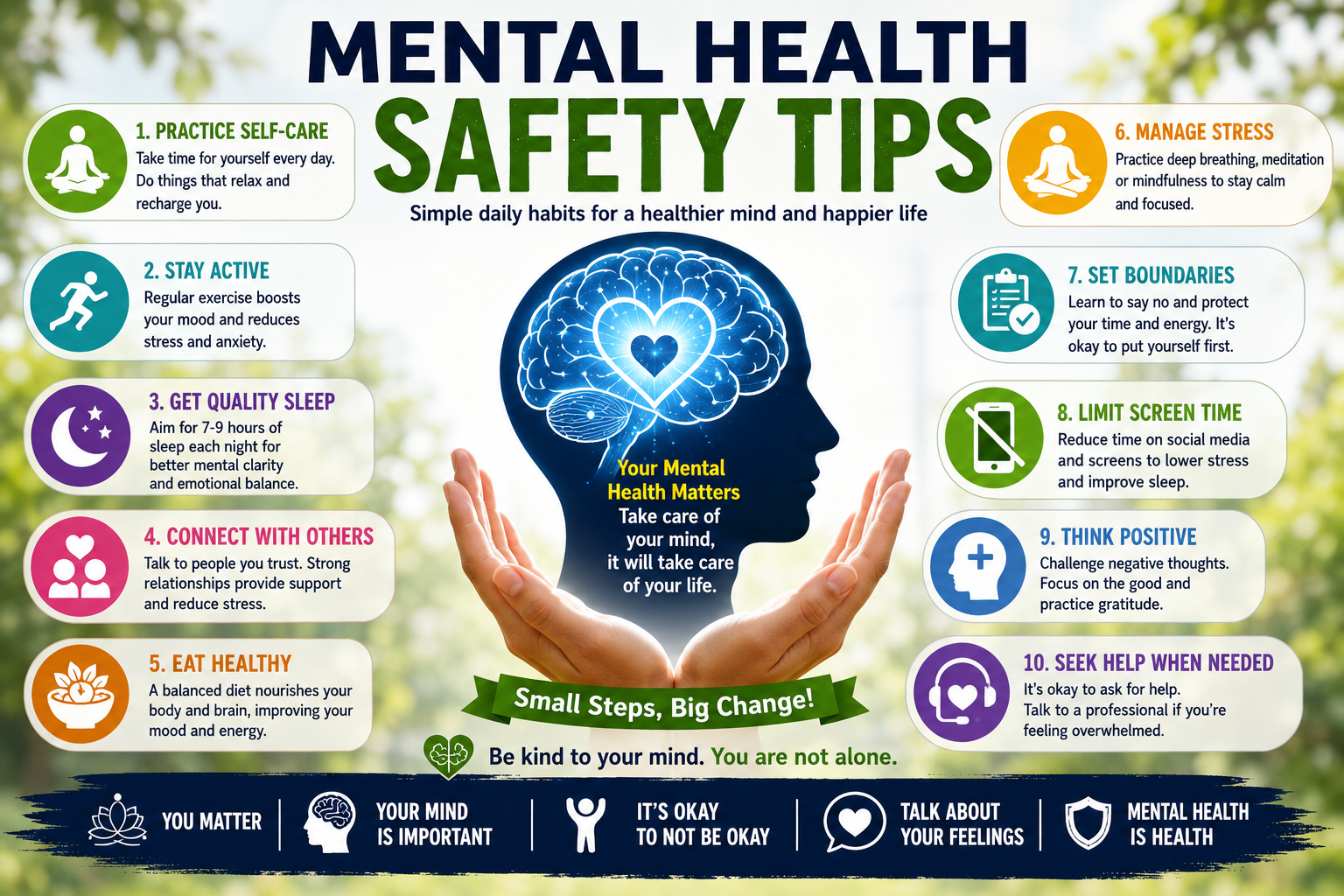
Here's a quick summary of the top 10 tips to maintain your mental health:

  1. Practice daily self-care.
  2. Exercise regularly.
  3. Get quality sleep.
  4. Build strong relationships.
  5. Manage stress effectively.
  6. Eat a balanced diet.
  7. Set healthy boundaries.
  8. Limit negative media exposure.
  9. Practice gratitude.
  10. Seek professional help when needed.

Final Thoughts

Understanding what are mental health safety tips is essential for protecting your emotional well-being in today's demanding world. Good mental health doesn't happen by accident—it requires intentional habits, healthy relationships, proper self-care, and ongoing attention.

Whether you're exploring how to improve mental health evidence-based tips, learning how to self care, or seeking practical tips for mental health, remember that small changes can lead to significant improvements over time.

By prioritizing mental health and wellbeing, practicing effective self care techniques, and following these proven mental health tips, you can build resilience, improve your quality of life, and create a healthier, happier future.


Références

  1. tips for mental health

Sponsorisé