

Babafig

Spot Resistance Welder: Principles, Applications, and Industrial Advantages for Modern Manufacturing

7 min de lecture

A spot resistance welder is one of the most widely used metal joining solutions in high-volume manufacturing industries. From automotive body assembly to electrical enclosures and home appliances, this technology delivers fast, clean, and repeatable welds without the need for filler materials or open flames.

As global manufacturing moves toward higher automation, precision, and cost efficiency, spot resistance welding continues to be a critical process for OEMs and production engineers. Companies like Heron Welder, a global manufacturer of advanced welding and metal-joining systems, provide integrated solutions that combine performance, stability, and automation compatibility for modern factory environments.

This article explains the working principle, industrial applications, system types, advantages, and selection criteria for a spot resistance welder, helping engineers and decision-makers choose the right solution for their production lines.


What is a Spot Resistance Welder?

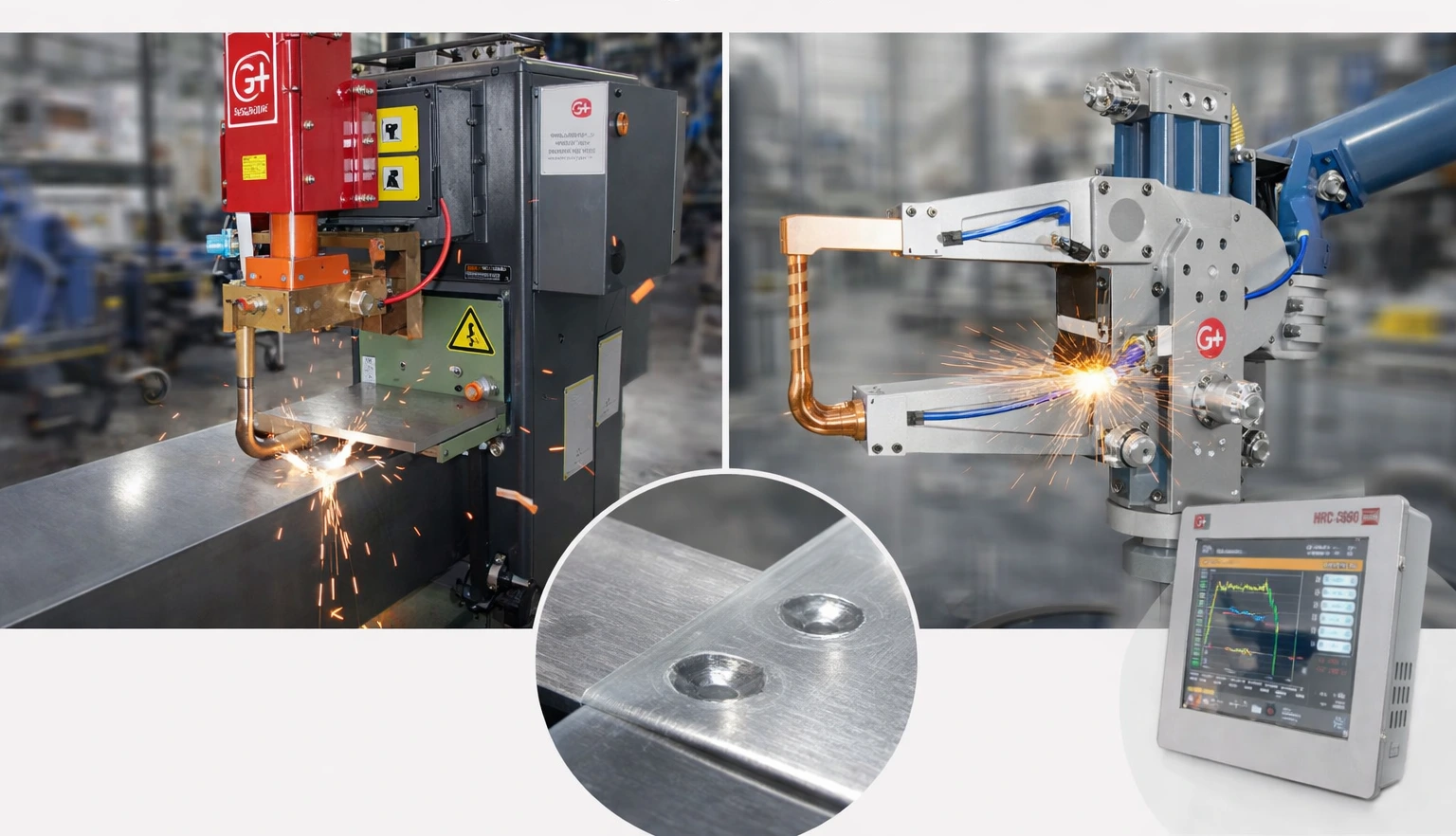
A spot resistance welder is a machine that joins two or more overlapping metal sheets by applying pressure and passing a controlled electric current through the contact point. The resistance generated at the interface produces heat, which melts the metal locally and forms a “weld nugget” that solidifies under pressure.

Unlike traditional welding methods, spot resistance welding does not require filler materials or shielding gases. The process is fast, precise, and ideal for mass production environments.

Core Working Principle

The process is based on Joule heating:

  • Electrical current passes through metal sheets
  • Resistance at the contact point generates heat
  • Metal reaches plastic or molten state
  • Electrode pressure forms a fused joint
  • Cooling under pressure solidifies the weld nugget

This controlled thermal and mechanical action ensures consistent weld quality with minimal distortion.


Types of Spot Resistance Welding Systems

Modern manufacturing requires different configurations depending on material type, production speed, and automation level. The most common systems include:

1. Manual Spot Welders

Used in small workshops or repair applications. Operators control electrode placement and welding cycles manually.

2. Pneumatic Spot Welders

Widely used in mid-scale production lines, these systems provide consistent electrode force and better repeatability.

3. MFDC Spot Welders

Medium Frequency Direct Current (MFDC) systems offer higher energy efficiency, stable welding current, and improved weld quality on coated or high-strength steels.

4. Capacitor Discharge Spot Welders

Ideal for thin metals and precision components, delivering extremely short weld times and minimal heat-affected zones.

5. Automated Spot Welding Systems

Integrated with robotics and production lines, these systems are essential for automotive and large-scale OEM manufacturing.

Heron Welder specializes in engineered spot welding solutions that integrate seamlessly into automated production systems, improving throughput and consistency.


Key Applications of Spot Resistance Welder

Spot resistance welding is used across multiple industries due to its speed and reliability.

Automotive Manufacturing

One of the largest users of spot welding. Applications include:

  • Car body panels
  • Chassis assembly
  • EV battery components
  • Structural reinforcements

Home Appliances

Used in:

  • Refrigerators
  • Washing machines
  • Air conditioners
  • Metal cabinets and housings

Electrical and Electronics Industry

  • Control cabinets
  • Busbars
  • Enclosures and grounding systems

Aerospace and Railways

  • Lightweight metal structures
  • Precision sheet metal assemblies

Industrial Fabrication

  • Metal furniture
  • HVAC duct systems
  • Sheet metal enclosures

The versatility of spot resistance welders makes them essential in any high-volume sheet metal production environment.


Advantages of Spot Resistance Welding

Manufacturers prefer spot resistance welding for its efficiency and consistency. Key advantages include:

High Production Speed

Weld cycles can be completed in milliseconds, making it ideal for assembly line production.

No Filler Materials Required

Reduces operational cost and simplifies supply chain management.

Clean and Precise Joints

Produces minimal spatter, smoke, or post-processing requirements.

Automation Compatibility

Easily integrates with robotic arms, PLC systems, and automated production lines.

Energy Efficiency

Modern MFDC systems reduce power consumption while improving weld stability.

Repeatability

Ensures consistent weld quality across thousands of cycles.

Heron Welder designs systems that maximize these advantages while maintaining industrial-grade durability and performance stability.


Spot Resistance Welder vs Other Welding Methods

Understanding how spot welding compares with other methods helps manufacturers choose the right process.

Spot Welding vs MIG Welding

  • MIG uses filler wire; spot welding does not
  • MIG is better for thick materials; spot welding for sheet metals
  • Spot welding is faster and more automation-friendly

Spot Welding vs TIG Welding

  • TIG offers higher precision but slower speed
  • Spot welding is ideal for mass production
  • TIG requires skilled operators; spot welding is easier to automate

Spot Welding vs Laser Welding

  • Laser welding provides deeper penetration and precision
  • Spot welding is more cost-effective for standard sheet metal joining
  • Laser systems require higher investment and safety measures

For OEM production environments, spot resistance welding remains the most cost-efficient and scalable solution.


Key Process Parameters for Optimal Welding

To achieve consistent weld quality, engineers must control several parameters:

Welding Current

Higher current increases heat generation but must be balanced to avoid material damage.

Electrode Force

Ensures proper contact and prevents expulsion of molten metal.

Welding Time

Critical for controlling nugget size and joint strength.

Electrode Material and Shape

Copper-based electrodes are commonly used for conductivity and durability.

Cooling System

Maintains electrode life and ensures consistent thermal control.

Advanced systems from manufacturers like Heron Welder integrate intelligent controls to automatically adjust these parameters for optimized performance.


Automation and Industry 4.0 Integration

Modern manufacturing is shifting toward fully automated welding lines. Spot resistance welders are now integrated with:

  • Robotic arms for precision positioning
  • PLC-based control systems
  • Real-time quality monitoring sensors
  • Data logging for production traceability

This enables predictive maintenance, reduced downtime, and improved quality assurance.

Heron Welder focuses on building intelligent welding systems that align with Industry 4.0 standards, helping manufacturers improve productivity and reduce operational variability.


How to Select the Right Spot Resistance Welder

When choosing a system, engineers and procurement teams should consider:

Material Type

Steel, stainless steel, aluminum, or coated metals require different configurations.

Production Volume

High-volume production requires automated or MFDC systems.

Sheet Thickness

Determines required current and electrode force.

Automation Level

Manual, semi-automatic, or fully robotic integration.

Energy Efficiency Requirements

Important for long-term operational cost control.

Maintenance and Support

Reliable service and electrode life cycle management are critical for continuous production.

Working with an experienced manufacturer like Heron Welder ensures that the system is tailored to specific production needs.


Future Trends in Spot Resistance Welding

The industry is evolving rapidly with innovations such as:

  • AI-based weld quality monitoring
  • Adaptive current control systems
  • Lightweight material welding solutions (EV and aerospace)
  • Smart predictive maintenance tools
  • Energy-optimized MFDC technologies

These advancements are making spot resistance welding more intelligent, efficient, and adaptable than ever before.


FAQs

1. What materials can a spot resistance welder join?

It is commonly used for low-carbon steel, stainless steel, coated steels, and in some cases aluminum alloys with specialized settings.

2. Is spot resistance welding suitable for automation?

Yes, it is highly compatible with robotic systems and widely used in automated production lines, especially in automotive manufacturing.

3. What is the lifespan of welding electrodes?

Electrode life depends on material, cooling efficiency, and usage intensity, but regular maintenance significantly extends lifespan.

4. How does MFDC improve spot welding performance?

MFDC systems provide stable current control, improved energy efficiency, and better weld consistency, especially for high-strength materials.

5. Can spot welding replace MIG or TIG welding completely?

No, each welding method has its own applications. Spot welding is ideal for sheet metal mass production, while MIG and TIG are used for thicker or specialized welds.


Conclusion

A spot resistance welder remains a cornerstone technology in modern manufacturing, offering speed, consistency, and cost efficiency for sheet metal joining applications. As industries demand higher automation and precision, advanced systems are becoming essential for maintaining competitive production performance.

With deep expertise in resistance welding technology, Heron Welder delivers customized spot welding solutions designed for automotive, appliance, and industrial manufacturing environments. From standalone machines to fully automated welding lines, Heron provides engineering-driven systems built for reliability and productivity.

For tailored welding solutions, technical consultation, or custom automation system requirements, contact Heron Welder to explore how advanced spot resistance welding technology can optimize your production line.


Sponsorisé
