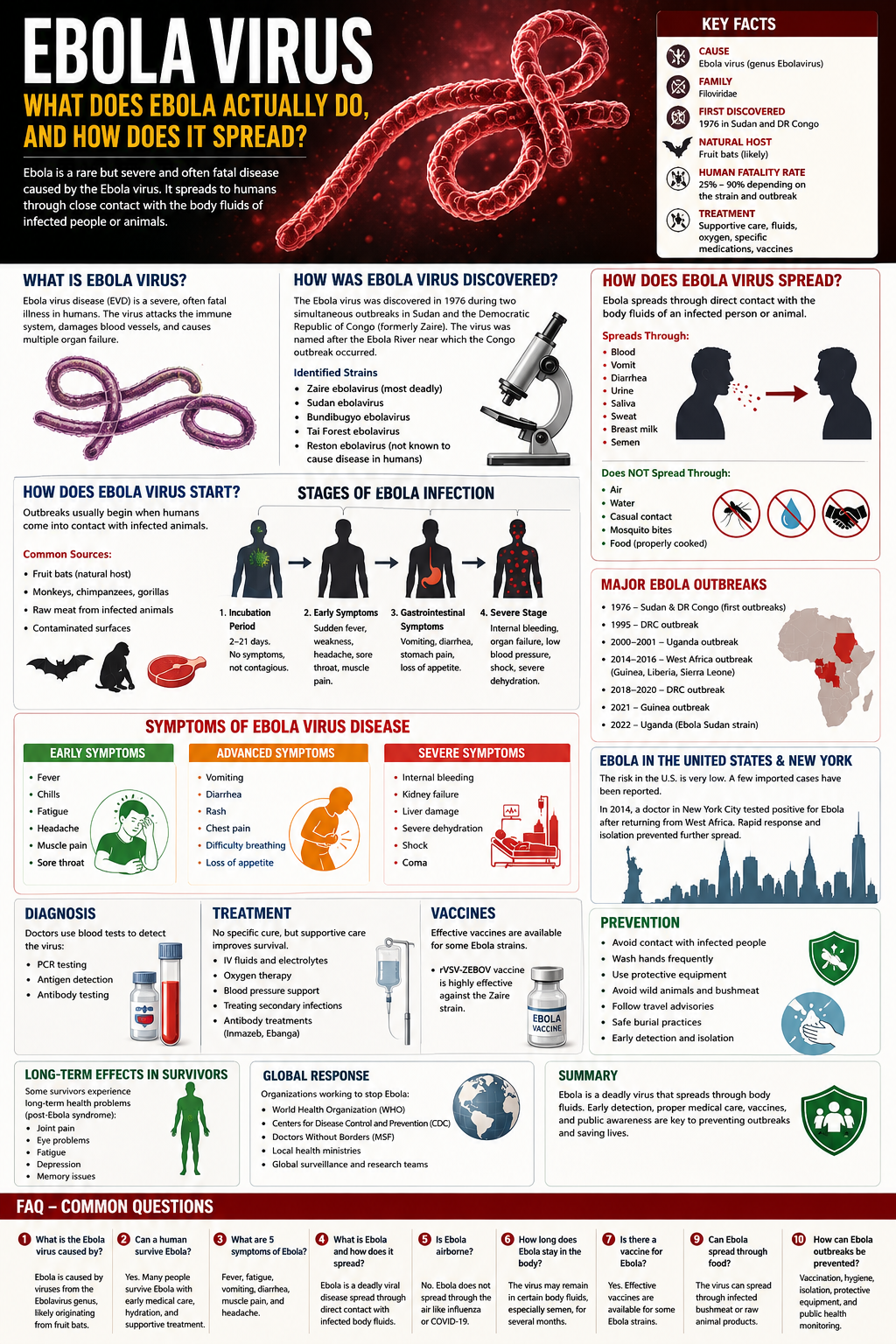
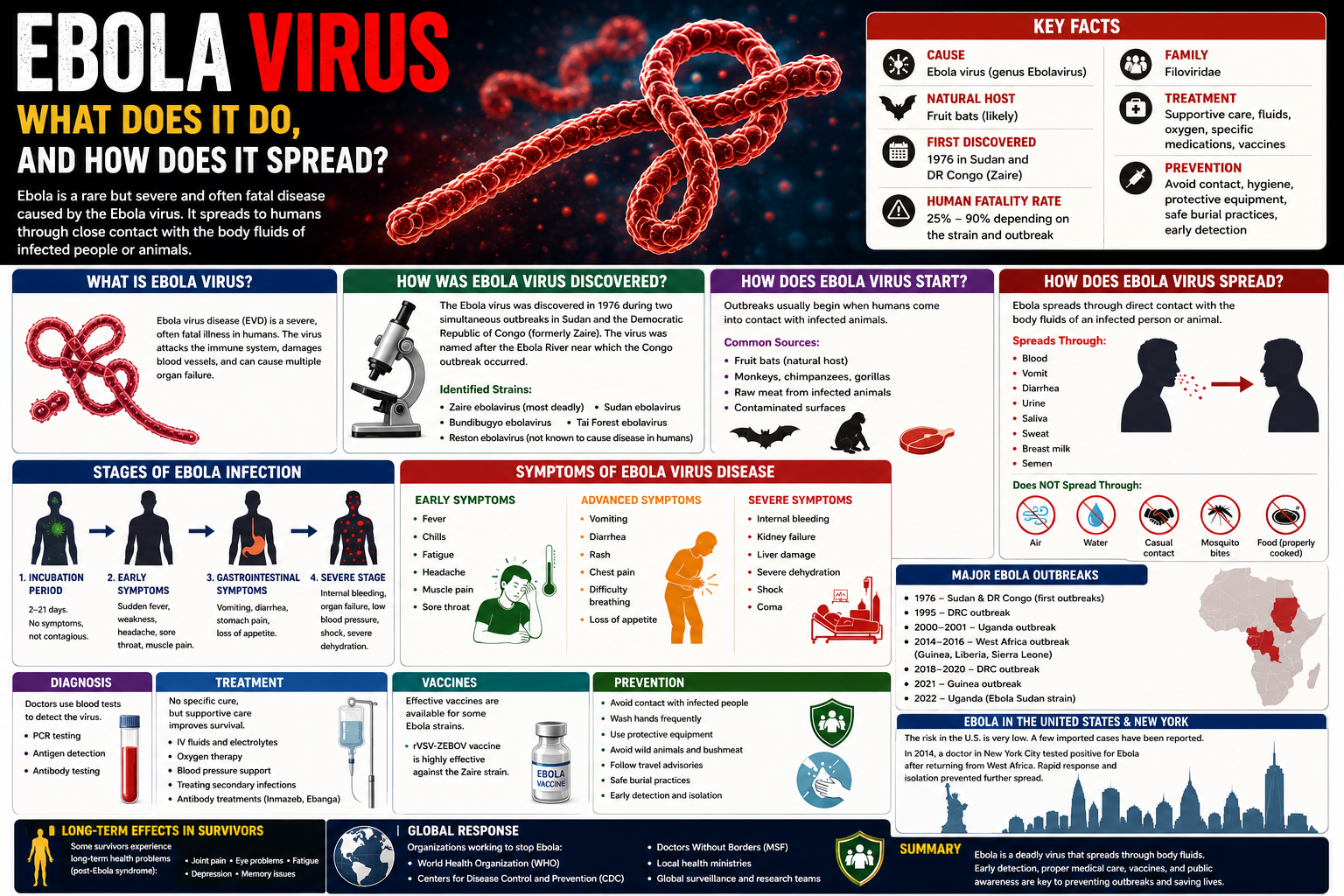
The Ebola virus is one of the deadliest infectious diseases known to humans. It has caused several dangerous outbreaks around the world and continues to be a major global health concern. Although rare, the disease spreads quickly in affected areas and can lead to severe illness and death if not treated early.
Understanding the Ebola virus, its symptoms, causes, treatment options, and prevention methods is important for protecting individuals and communities. Public awareness and fast medical response have played a major role in controlling recent outbreaks.
This article explains everything you need to know about Ebola virus in simple and easy language.
What Is Ebola Virus?
The Ebola virus is a severe viral infection that causes a disease known as Ebola Virus Disease (EVD). It affects both humans and animals and belongs to the Filoviridae virus family.
The virus was first identified in 1976 near the Ebola River in the Democratic Republic of Congo, which is where the name originated. Since then, multiple outbreaks have occurred in African countries, causing thousands of deaths.
The most serious Ebola outbreak happened between 2014 and 2016 in West Africa and was declared a global health emergency by the World Health Organization (WHO).
What causes Ebola?
Many people ask, What causes Ebola? The disease is caused by infection with the Ebola virus. Scientists believe the virus naturally lives in fruit bats, which are considered the likely carriers.
Humans can become infected through:
Contact with infected animals
Exposure to blood or body fluids of infected people
Handling contaminated objects
Unsafe burial practices
Poor infection control in hospitals
The virus spreads rapidly in areas where healthcare facilities are limited.
Is Ebola contagious?
Yes, Ebola virus is highly contagious through direct contact with infected bodily fluids.
The disease can spread through:
Blood
Saliva
Sweat
Vomit
Urine
Breast milk
Semen
A person becomes contagious only after symptoms begin. Unlike airborne diseases such as flu, Ebola does not usually spread through the air.
Close family members and healthcare workers are at higher risk because they may come into direct contact with infected patients.
Early Ebola symptoms
The first Ebola symptoms often resemble common illnesses such as flu or malaria, which can make early diagnosis difficult.
Common early Ebola symptoms include:
Fever
Severe headache
Fatigue
Muscle pain
Weakness
Sore throat
These symptoms usually appear 2 to 21 days after exposure to the virus.
Severe Ebola symptoms
As the disease progresses, patients may experience more dangerous complications.
Advanced Ebola symptoms include:
Vomiting
Diarrhea
Stomach pain
Skin rash
Bleeding from gums or nose
Internal bleeding
Organ failure
Without proper treatment, severe dehydration and shock can occur.
Is Ebola deadly?
One of the most common questions is: Is Ebola deadly?
Yes, the Ebola virus can be extremely deadly. Some outbreaks have recorded death rates of up to 90%. However, survival rates have improved significantly with modern medical care.
Factors affecting survival include:
Early diagnosis
Fast treatment
Access to healthcare
Hydration and supportive care
Patient’s immune response
Patients who receive immediate treatment are more likely to survive.
How Is Ebola Virus Diagnosed?
Doctors diagnose Ebola virus using laboratory testing because symptoms are similar to many other diseases.
Diagnostic tests include:
PCR testing
Blood tests
Antibody testing
Virus isolation tests
Rapid diagnosis helps prevent the spread of infection and allows quick isolation of patients.
Is Ebola curable?
Many people wonder, Is Ebola curable?
Currently, there is no guaranteed cure for the Ebola virus, but modern treatment methods greatly improve survival chances.
Treatment focuses on:
Rehydration with fluids
Maintaining oxygen levels
Controlling blood pressure
Treating infections
Managing pain and fever
Some antiviral medications and antibody therapies have shown promising results in recent years.
Early medical care remains the most important factor for survival.
The Importance of Ebola vaccine
Scientists have developed the Ebola vaccine to help prevent future outbreaks.
One of the most successful vaccines is called Ervebo, which has been used effectively in outbreak regions.
The Ebola vaccine is especially important for:
Healthcare workers
Family members of infected patients
People living in outbreak zones
Emergency response teams
Vaccination has helped reduce the spread of recent outbreaks.
Understanding the Ebola outbreak
An Ebola outbreak occurs when multiple cases of Ebola appear in a specific area.
Several factors contribute to an Ebola outbreak:
Poor healthcare infrastructure
Delayed diagnosis
Lack of public awareness
Unsafe funeral practices
Limited access to vaccines
The 2014 West African Ebola outbreak infected over 28,000 people and caused global concern.
Governments and international health organizations now respond more quickly to contain outbreaks.
Prevention of Ebola
The Prevention of Ebola depends heavily on awareness, hygiene, and quick medical response.
Important methods for Prevention of Ebola include:
Washing hands regularly
Avoiding contact with infected individuals
Using protective clothing and gloves
Avoiding contact with blood and body fluids
Safe burial practices
Proper sterilization of medical equipment
Reporting symptoms quickly
Travelers visiting outbreak areas should follow official health guidelines carefully.
Role of Healthcare Workers During Ebola
Healthcare workers play a major role in controlling the spread of Ebola virus.
They are responsible for:
Diagnosing patients
Providing treatment
Isolating infected individuals
Educating communities
Administering the Ebola vaccine
Protective equipment is essential because healthcare workers face a high risk of infection.
Myths About Ebola Virus
Many myths create unnecessary fear about the Ebola virus.
Myth 1: Ebola spreads through air
Fact: Ebola mainly spreads through direct bodily contact.
Myth 2: Every infected person dies
Fact: Many patients survive with proper treatment.
Myth 3: Traditional medicine cures Ebola
Fact: Medical treatment is necessary.
Myth 4: Ebola affects only Africa
Fact: International travel can spread infections globally.
Economic and Social Impact of Ebola
An Ebola outbreak affects more than health.
It can lead to:
School closures
Travel restrictions
Economic losses
Fear and panic
Overcrowded hospitals
Communities affected by Ebola often face long-term social and financial challenges.
Global Response to Ebola Virus
Organizations worldwide work together to control the spread of Ebola virus.
Important organizations include:
World Health Organization (WHO)
Centers for Disease Control and Prevention (CDC)
Red Cross
Local healthcare agencies
Their efforts focus on:
Emergency healthcare support
Public awareness campaigns
Vaccination programs
Medical research
Faster outbreak response systems
Future Research on Ebola
Scientists continue researching better ways to fight the Ebola virus.
Current research includes:
Improved antiviral medicines
Faster testing methods
More effective Ebola vaccine options
Better outbreak prediction systems
Technology and international cooperation are improving global preparedness for future outbreaks.
Conclusion
The Ebola virus remains one of the world’s most dangerous infectious diseases, but awareness and prevention can save lives. Understanding Ebola symptoms, causes, treatment options, and vaccination efforts helps communities respond more effectively during outbreaks.
Although Ebola can be deadly, medical advancements, improved healthcare systems, and the development of the Ebola vaccine have significantly improved survival rates and outbreak control.
The best protection comes from education, hygiene, early diagnosis, and strong public health systems.
Frequently Asked Questions (FAQ)
1. What is Ebola virus?
The Ebola virus is a deadly virus that causes severe illness and bleeding in humans and animals.
2. What causes Ebola?
Ebola is caused by infection with the Ebola virus, which may originate from infected animals such as fruit bats.
3. Is Ebola contagious?
Yes, Ebola spreads through direct contact with infected blood and body fluids.
4. What are common Ebola symptoms?
Common Ebola symptoms include fever, weakness, headache, vomiting, and bleeding.
5. Is Ebola deadly?
Yes, Ebola can be fatal, especially without early medical treatment.
6. Is Ebola curable?
There is no guaranteed cure, but supportive treatment improves survival chances.
7. What is the purpose of the Ebola vaccine?
The Ebola vaccine helps protect people from infection and controls outbreaks.
8. How does an Ebola outbreak start?
An Ebola outbreak usually starts through contact with infected animals or humans.
9. What are the best methods for Prevention of Ebola?
Good hygiene, protective equipment, vaccination, and avoiding infected individuals help prevent Ebola.
10. Can Ebola spread through air?
No, Ebola generally spreads through direct bodily contact rather than airborne transmission.