

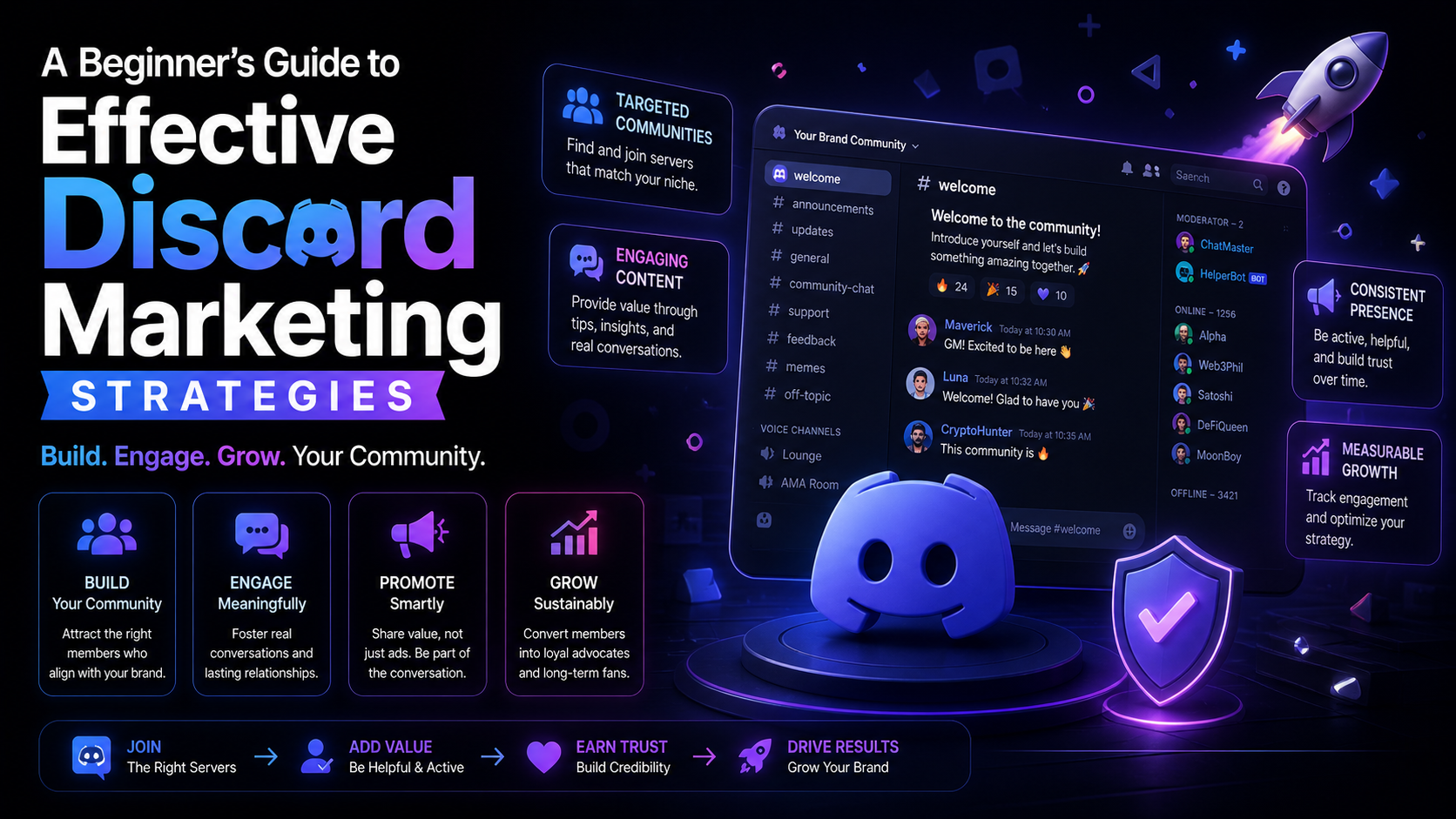

Discord started as a platform for gamers. Today, it's where crypto projects launch, brands build superfan communities, startups run beta programs, and creators deepen relationships with their most loyal followers. If your audience is online and under 35, there's a good chance Discord is where they actually want to engage with you.
But Discord is different from every other platform. It doesn't reward passive posting or broadcasting. It rewards community. This guide walks you through the essential Discord marketing strategies you need to build something that actually works.
What is Discord Marketing?
Discord marketing is the practice of using the Discord platform to build, engage, and grow a community around a brand, project, or product. Unlike social media platforms where you broadcast to followers, Discord is a two-way environment where the community itself becomes the product. Done right, a Discord server is part community hub, part support center, part exclusive club.
Setting Up Your Discord Server for Success
Design Your Server Architecture
Channel organization is everything. New visitors decide within seconds whether a server is worth their time. Structure your channels with clear categories: welcome and information channels at the top, general conversation channels in the middle, and resource or announcement channels that don't need daily attention at the bottom.
Common channel categories for brand servers: Welcome (rules, FAQ, introductions), Announcements, General Chat, Product or Project updates, Support, and Community channels for off-topic discussion.
Create a Strong First Impression
Your welcome channel and bot-driven onboarding sequence set the tone. A clear rules channel, a compelling server description, and a bot-gated role assignment (where new members pick a role that grants them access) all signal that this is a well-run, valuable community.
Core Discord Marketing Strategies
Strategy 1: Consistent Community Engagement
The biggest mistake new Discord marketers make is treating their server like a broadcast channel. Discord communities die when the only active voice is the brand account posting announcements. Build a team of moderators or community managers who participate genuinely, answer questions, and keep conversations going not just when there's something to promote.
Strategy 2: Exclusive Content and Early Access
Give Discord members something they can't get anywhere else. Early access to product features, exclusive announcements before other channels, behind-the-scenes content, or direct access to founders and team members. Exclusivity is the core value proposition of a Discord community use it.
Strategy 3: Regular Events
Discord's voice and stage channel features are underused by most brands. AMAs with founders or industry guests, live Q&A sessions, community game nights, and watch parties all drive attendance and create shared experience that deepens community bonds. The goal is to make people feel like members of something, not just followers of a brand page.
Strategy 4: Bot Automation for Scale
Bots like MEE6, Carl-bot, and Collab.Land handle the operational workload that would burn out any community team. Automate welcome messages, role assignments, moderation actions, and engagement tracking. In Web3 communities, token-gated access bots let you create exclusive channels for verified holders.
Strategy 5: Cross-Platform Promotion
Discord servers don't grow themselves. Drive traffic from Twitter/X, YouTube video descriptions, newsletter links, and website banners. Every piece of content you create elsewhere is an opportunity to direct engaged audience members into your Discord community where the real relationship building happens.
Moderation and Community Health
A toxic or spammy Discord server is worse than no server at all. Invest in moderation from day one. Set clear community guidelines, enforce them consistently, and build a moderation team that reflects your community values. A well-moderated server retains members and earns word-of-mouth growth. A poorly moderated one drives people away and damages your brand reputation.
Measuring Discord Marketing Success
Key Discord metrics to track: member count and growth rate, daily and monthly active users, message volume and engagement rate, event attendance, and retention rate (members who stay active after 30 and 90 days). Discord's built-in server insights and third-party tools like Statbot give you visibility into these numbers.
Common Beginner Mistakes to Avoid
Inviting thousands of members without a plan for engaging them is a fast track to a ghost server. Skipping bot setup and moderation leads to spam and poor first impressions. Creating too many channels fragments conversation and overwhelms new members. Only posting announcements with no genuine interaction kills community momentum. And failing to give members a reason to stay through exclusive value means they'll join and never come back.
Conclusion
Discord marketing is a long game, but it's one of the few channels where you can build a community that genuinely advocates for your brand. The servers that work are built on consistent engagement, real value, and the kind of access that makes members feel seen. Start lean, focus on quality over quantity, and let the community shape what it becomes.


